Las Fallas Tickets and Tours: 10 Essential Planning Tips
Discover the best Las Fallas tickets and tours for 2026. Includes expert advice on booking Mascletà balconies, museum tours, and 10 essential planning tips.
On this page
Las Fallas Tickets and Tours: 10 Essential Planning Tips
Valencia transforms into a vibrant stage of fire and art every March during the famous Las Fallas festival. Visitors flock to the city to witness the burning of massive monuments and hear the thunderous mascletà fireworks. Finding the right Las Fallas tickets and tours helps you navigate the crowds and see the best displays. This guide provides ten essential tips to ensure your visit to this UNESCO World Heritage event is unforgettable.
Part of our Best Festivals in Spain and Cultural Insights series.
Free guide: Europe's Festival Calendar
A month-by-month map of Europe's unmissable festivals — with the best dates to visit each and a local tip you won't find in the guidebooks.
Must-See Las Fallas Attractions
The festival fills Valencia with over 800 giant monuments called fallas, scattered across the city's streets and squares. These massive structures often reach heights of twenty meters or more, featuring satirical ninot figures that mock politicians, celebrities, and current events. Walking through the city center lets you see the most impressive displays without spending anything. Most visitors start at the Plaza del Ayuntamiento, where the largest municipal falla stands at the center of the action.
The Ruzafa neighborhood is worth a dedicated evening visit for its spectacular light installations, where local commissions string millions of LED bulbs choreographed to music. These street illuminations compete for prizes and rival the monuments themselves for spectacle. The Special Section fallas — the competition's top tier — are installed in key squares and draw the densest crowds. Exploring several neighborhoods on foot across multiple mornings gives you the fullest picture of the festival's creative range.
Fallas Events Calendar: What to Catch and When
The festival runs from late February through March 19, but the peak Semana Fallera (roughly March 14–19) is when the major events collide. Each event in the calendar has a different character, and knowing the schedule helps you prioritize which days to be in the city. If you can only attend for a few days, target the 17th through the 19th, when the three defining events all occur within 48 hours.
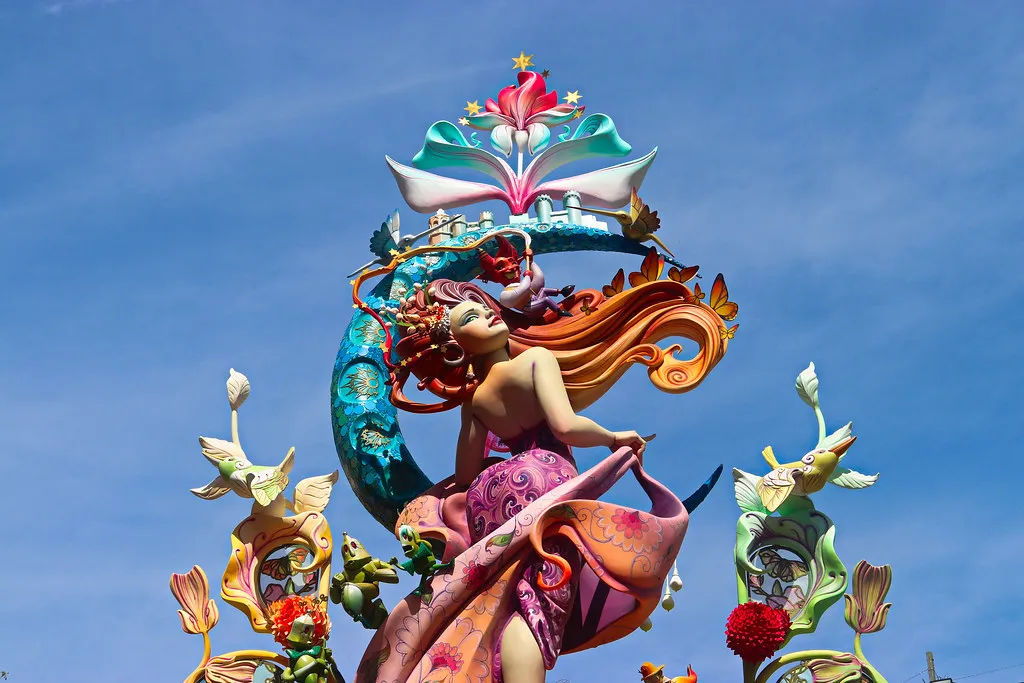
The key dates for 2026 follow the festival's established structure. The Ninot Exhibition opens in early February — visitors vote on which single figure is spared from the flames, and it goes to the Museo Fallero permanently. The Crida (late February) is the official opening ceremony at the Torres de Serranos, with speeches and fireworks. The Ofrenda de las Flores on March 17–18 brings over 150,000 costumed Valencians to Plaza de la Virgen to build a floral sculpture of the Virgin Mary. The Nit del Foc (Night of Fire, March 18–19) is the city's largest fireworks display, with over 2,500 kilos of pyrotechnic material launched above the Turia riverbed. La Cremà on the evening of March 19 is the finale — all fallas burn simultaneously across the city's neighborhoods, starting around 22:00.
Check the Las Fallas dates page for the confirmed 2026 schedule, as specific times for the Cremà and Nit del Foc are announced by the City Council in January each year.
Museums, Art, and Culture in Las Fallas
The Museo Fallero is essential for anyone wanting to understand the depth of this tradition. The museum houses every ninot that has been saved from the fire by popular vote since 1934 — one figure per year — giving visitors a timeline of Valencian satirical art spanning nearly a century. It is quieter than the streets outside and worth an hour of your time, especially in the days before the Cremà when the contrast between the permanent collection and the soon-to-be-burned monuments hits hardest.
The City of Arts and Sciences sits at the southern end of the Turia Gardens and offers a striking counterpoint to the old-town festival atmosphere. The Oceanogràfic within the complex is the largest sea aquarium in Europe, with over 70 meters of underwater tunnels and more than 45,000 specimens. Pairing a morning at the aquarium with an afternoon monument tour gives you a full day that spans Valencia's ancient and modern identities.
Parks, Gardens, and Outdoor Spots in Las Fallas
The Turia Gardens stretch for nine kilometers through the city in what was once a riverbed, and during Fallas they serve as the main north-south corridor connecting festival neighborhoods. Walking or cycling through the gardens is often faster than navigating the street-level crowds. The park stays significantly calmer than the surrounding festival zones, making it an ideal place to decompress between events.
Deciding is Las Fallas worth it often depends on your ability to pace yourself, and the gardens help enormously with that. Families with young children use the park for afternoon breaks between the midday mascletà and the evening light shows. The path from the Palau de la Música to the City of Arts and Sciences takes roughly 30 minutes on foot and passes several falla monuments along the way. It is one of the few festival routes where you can actually hear yourself think.
Mascletà Safety and Ear Protection
The daily mascletà in Plaza del Ayuntamiento reaches over 120 decibels — louder than a chainsaw at close range, and comparable to a jet engine at takeoff distance. This is not a metaphor. The concussive waves from the daytime firework display are felt physically in the chest and can cause temporary hearing damage without protection. Foam earplugs with a noise reduction rating (NRR) of at least 25 are the minimum; children and anyone with hearing sensitivity should use NRR 33 earplugs or professional-grade ear defenders.
The mascletà runs daily at exactly 14:00 from late February through March 19, and the Plaza del Ayuntamiento display is the biggest. Arrive at least 60 minutes early for a standing spot on the street. Position yourself toward the edges of the square rather than the center — the sound intensity is still overwhelming, but exiting is far easier when the display ends at around 14:05. If the main plaza feels too intense, over 300 smaller mascletàs fire simultaneously across the city's neighborhoods at the same hour, and some are significantly less crowded.
Do not bring dogs or infants to the main mascletà. The decibel level causes genuine distress to animals and can damage an infant's developing hearing. This is one of the most consistently overlooked practical points in general Las Fallas guides.
Family-Friendly and Budget-Friendly Options in Las Fallas
The festival is genuinely affordable if you know where to look. The monuments, street illuminations, and most neighborhood events are free. Budget around €40 per day per person for food, drinks, and small activities, not including accommodation. Local snacks like bunyols de carabassa (pumpkin fritters) and churros sold by street vendors cost €1–3 and are part of the authentic experience.
Families should focus their mornings on monument tours before the afternoon mascletà, when crowds are thinner and children can engage with the satirical figures more easily. Early morning is the calmest window — streets are quiet before 09:00 and some of the best monument photography happens in the first light. Avoid bringing children to the Plaza del Ayuntamiento mascletà without proper ear protection. Look for best fiestas in Spain guidance to compare Fallas with other festivals in terms of family suitability.
How to Plan a Smooth Las Fallas Day
A well-structured day at Fallas follows a consistent rhythm. Spend the morning walking the monument routes in your chosen neighborhood before the heat and crowds build. Arrive at the Plaza del Ayuntamiento no later than 13:00 if you want street-level viewing of the mascletà. After the display ends around 14:05, avoid the metro for at least 45 minutes — the platform crush is at its worst in the minutes immediately following the mascletà.
Mid-afternoon is the dead zone in terms of crowds, making it the ideal time to visit the Museo Fallero or grab a sit-down meal in the Ruzafa neighborhood. Knowing how to watch Las Fallas events at the right moment is half the battle. Evening light shows in Ruzafa and the old town typically start after 20:00 and run until midnight. If you are attending the Nit del Foc or La Cremà, position yourself at least two hours in advance and plan your exit route before the event starts.
Top-Rated Guided Tours and Walking Experiences
Booking a professional tour changes the quality of the experience significantly. Official Blue Badge guides provide context for the satirical meaning behind each monument — context that is nearly impossible to pick up as a non-Spanish speaker walking the streets alone. These licensed guides often have access to restricted monument areas and workshops where artists complete their ninots in the weeks before installation. A good tour covers three to five neighborhood clusters in a single morning without the navigational overhead of planning it yourself.
Walking tours in the Ciutat Vella vary widely in focus. Some cover the silk trade history and the Gothic cathedral alongside the festival monuments. Others are specifically Fallas-themed, tracing the competitive monument routes and explaining the judging criteria. Several tour operators offer English-language departures specifically aligned with the Semana Fallera schedule. Check booking availability in January — popular English-language tours on the peak days (March 17–19) sell out months in advance.
How to Secure Tickets for the Mascletà and Key Events
Most of the festival requires no ticket at all — the monuments, street illuminations, and neighborhood mascletàs are free. The main paid option is a balcony seat overlooking the Plaza del Ayuntamiento for the 14:00 mascletà. Balcony tickets provide an elevated view away from the ground-level crush and typically cost between €50 and €150 depending on floor height and proximity to the central pyrotechnics area. These are booked through operators linked from the Official Valencia Tourism - Fallas Section website, and they sell out by December for the peak days.
The balcony-versus-street decision comes down to budget and tolerance. Street viewing is free but requires arriving 60+ minutes early and exiting through a dense crowd afterward. Balconies cost more but give you a clean sightline, shelter from the debris and smoke, and an easier exit. For La Cremà, no ticket is needed — the burning happens in public squares across all neighborhoods simultaneously, and locals simply gather in the street around their neighborhood's falla. Some tour operators offer guided Cremà experiences with balcony access for a premium.
Best Areas to Stay and Accommodation Types
Staying in Ciutat Vella — the historic center — puts you in the middle of the action but guarantees constant noise. The districts of El Carmen, La Seu, and El Mercat sit within walking distance of the Plaza del Ayuntamiento and the top monument clusters. Expect firecrackers at unpredictable hours and revelers in the street until well past midnight during peak days. Bring earplugs for sleeping as well as for the mascletà.
The Eixample area, particularly Ruzafa, strikes a better balance for most visitors. It is central and lively but slightly removed from the loudest displays. The Gran Vía and Colón neighborhoods offer good transport links and tend to attract the mid-range hotel stock. Knowing where to stay for Las Fallas in relation to your planned events is the most important logistics decision you will make. Accommodation prices during the peak Semana Fallera roughly double for mid-range hotels (€100–150 per night, booked four months out) versus the same rooms booked a year in advance (€45–60 per night). Hostels in the center run €30–60 per night booked four months ahead and €17–30 booked a year ahead.
Navigating Valencia: Transport and Logistics
Walking is the primary way to move during the festival because large sections of the city center close to vehicles. The pedestrian zones expand significantly during Semana Fallera, and buses and taxis cannot enter the most congested streets. Wear proper footwear — comfortable shoes, not sandals — because daily walking distances of 8–12 kilometers are common during peak festival days.
The Valencia Metro (Metro Valenci) is fast but becomes overwhelmed immediately after the 14:00 mascletà. Avoid the Xàtiva and Colón stations in the 30 minutes following the daily display. Bicycle rental through the Valenbisi bike-share system is a practical alternative for moving between neighborhoods during the mid-morning and evening. A weekly Valenbisi pass costs around €14 and lets you take unlimited 30-minute trips. One important practical note: check the Valenbisi app before heading to a drop-off station during Fallas, as some stations near festival routes are temporarily blocked or full. Mobile data can be slow with crowds this dense, so download offline maps before leaving your accommodation. Learning how to get to Las Fallas hubs before the day saves considerable frustration in the moment.
When to Book and Planning Your Budget
The planning timeline for Fallas is longer than for almost any other European festival. The best hotels in Ciutat Vella and Eixample are reserved by January or February for the following year's event. Balcony tickets for the main mascletà days (March 17–19) sell out by late autumn. If you are planning for Fallas 2027, the time to start looking is immediately after the 2026 Cremà — hotels and apartments take deposits for the following year while the previous year's guests are still in the building.
For tours, flexibility helps. Some operators like Marriott offer a full refund if you cancel at least 24 hours before departure, which makes booking tours early lower-risk. Set your daily activity budget at €40 per person (excluding accommodation) as a realistic floor. Include a buffer of €20–30 per day for spontaneous purchases — a paella lunch at a sit-down restaurant in the old town typically runs €15–20 per person, and Agua de Valencia cocktails at festival bars average €8–10 each. A well-built budget ensures the festival does not become a source of financial anxiety on top of the sensory overload.
Frequently Asked Questions
How much do Las Fallas tickets cost?
Most of the festival is free to enjoy on the streets. However, private balcony tickets for the mascletà usually cost between €50 and €150. You may also pay small entry fees of €2 to €5 to see the most famous monuments up close.
Is it necessary to book a tour for Las Fallas?
A tour is not required but it is highly recommended for first-time visitors. Professional guides help you understand the satirical art and navigate the crowded streets efficiently. You can find more details in our is Las Fallas worth it guide.
Where is the best place to see the Mascletà?
The Plaza del Ayuntamiento is the most famous spot for the 2 PM mascletà. For a more comfortable experience, book a balcony overlooking the square. Arrive at least sixty minutes early if you plan to watch from the street level.
How do I get tickets for the Fallas burning ceremony?
The burning ceremony, or La Cremà, happens in public squares and does not require a ticket. Some tour companies offer VIP viewing areas from balconies for a fee. Check official tourism sites for the most current schedule and safety zones.
Visiting Valencia for more than one festival? See our complete guide to festivals and events in Valencia.
Las Fallas is a spectacular display of creativity and tradition that everyone should see once. By booking your Las Fallas tickets and tours early, you can avoid the stress of peak crowds. Use these ten planning tips to make the most of your time in beautiful Valencia. Prepare for a week of incredible art, loud fireworks, and unforgettable Spanish culture.
Free guide: Europe's Festival Calendar
A month-by-month map of Europe's unmissable festivals — with the best dates to visit each and a local tip you won't find in the guidebooks.
You might also like


Continue reading
More guides you'll find useful