How to Watch Las Fallas: 8 Essential Tips for the 2026 Festival
Master how to watch Las Fallas with our 2026 guide. Includes Mascletà timing, La Cremá viewing spots, transport costs, and local secrets for a perfect trip.
On this page
How to Watch Las Fallas: 8 Essential Tips for the 2026 Festival
Last updated May 2026. Las Fallas is a massive fire festival that transforms Valencia into an open-air art gallery. Every March, the city celebrates the arrival of spring with giant monuments and loud pyrotechnics. Knowing how to watch Las Fallas requires careful planning to navigate the massive crowds.
This event is recognized as a UNESCO Intangible Cultural Heritage of Humanity. Millions of visitors arrive to see the intricate statues before they are burned to the ground. You will encounter a unique blend of traditional costumes, brass bands, and incredible street food. Understanding the local rhythms is the secret to a successful and stress-free visit.
Valencia becomes largely pedestrianized during the peak days of the festival. The city offers something for every budget, from free street shows to luxury balcony views. Planning your where to stay for Las Fallas should happen months in advance. Use this guide to master the logistics of this world-famous Spanish celebration.
Free guide: Europe's Festival Calendar
A month-by-month map of Europe's unmissable festivals — with the best dates to visit each and a local tip you won't find in the guidebooks.
Understand the History and Significance of Las Fallas
The festival originated in the Middle Ages when local carpenters burned old wood to celebrate spring. These bonfires honored Saint Joseph (San José), the patron saint of carpenters, on March 19. Over centuries, simple bonfires evolved into dressed-up figures and eventually into the elaborate satirical monuments seen today. By the 1700s, neighborhoods were competing to build the most impressive statues, a rivalry that still drives the festival today.
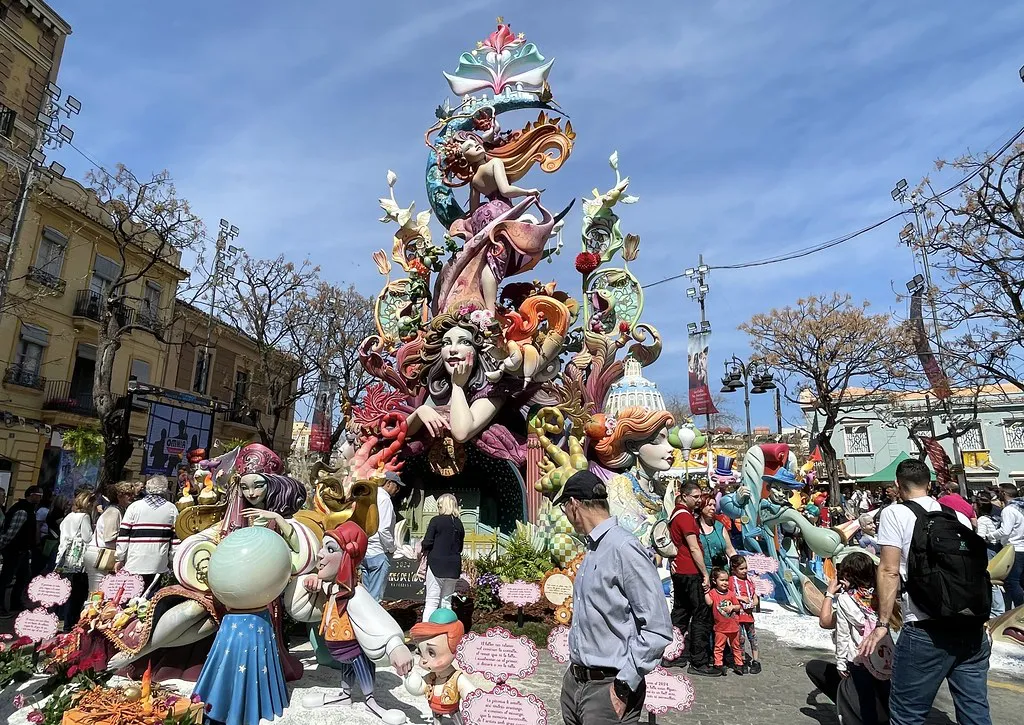
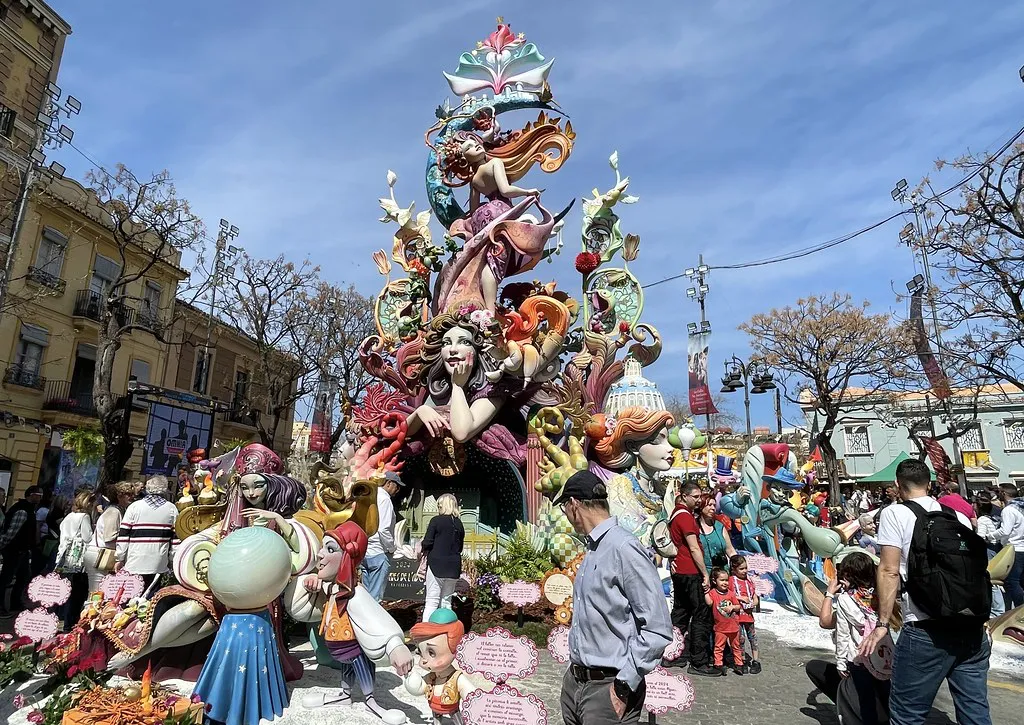
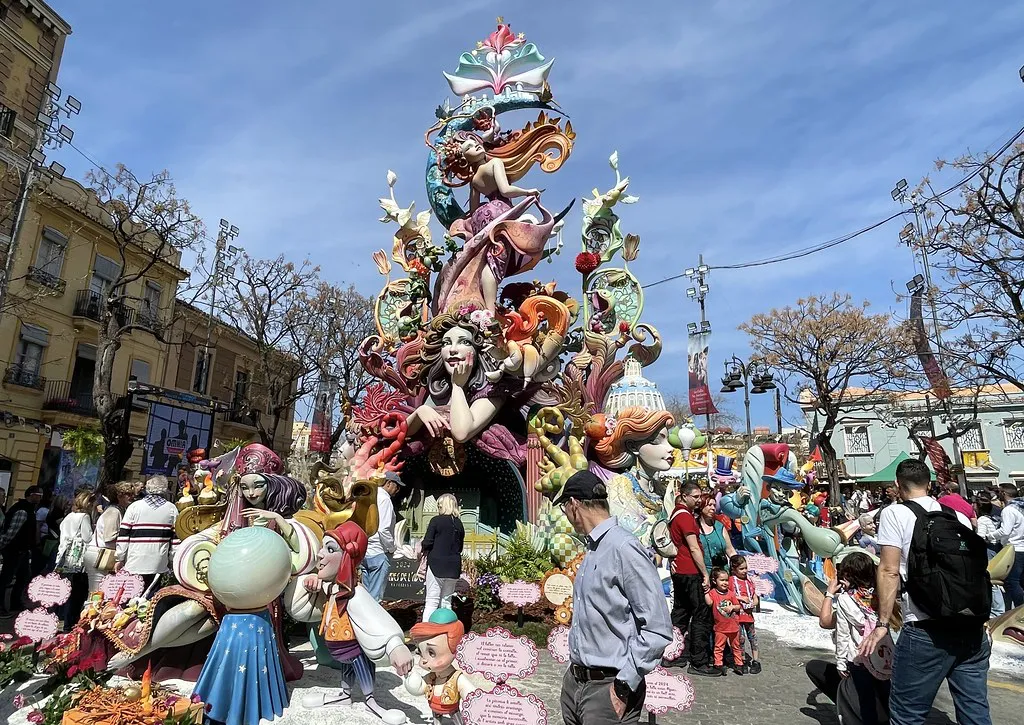
Modern fallas are massive structures made of wood, cardboard, polystyrene, and increasingly fiberglass. Each monument features satirical themes mocking politicians, celebrities, or current events. The smaller individual figures within a monument are called ninots. One ninot is saved from the fire every year by public vote and permanently displayed in the Fallas Museum.
This is one of the best festivals in Spain for art lovers. The neighborhood associations, known as casals fallers, work all year to fund these projects. In 2018, the nine Seccion Especial monuments ranged from €90,000 to €200,000 each, while the 2009 record-holder reached €1,000,000. Even the smallest neighborhood displays contribute to the extraordinary atmosphere across the city. In 2016, UNESCO inscribed Las Fallas on its Intangible Cultural Heritage list, cementing its global importance.
Mark Your Calendar: Key 2026 Festival Dates and Times
The official festival runs from March 15 to 19, but the action starts much earlier. La Crida, the solemn opening ceremony, took place on Sunday, February 22, 2026 at 19:30 at the Torres de Serranos. From March 1 onward, a daily Mascletà fires at 14:00 in Plaza del Ayuntamiento right through to March 19. Refer to the Official Program for exact daily timings.
The final five days follow a packed schedule. On March 15, children's fallas go up and the Ninot exhibition closes; at midnight, L'Albà de les Falles launches with fireworks at Plaza del Ayuntamiento. March 16 sees all adult fallas assembled (the Plantà), with a midnight fireworks display at Turia Garden near Palau de les Arts. March 17 and 18 add the Ofrenda de Flores processions at 15:30, culminating in the Nit del Foc at midnight on March 18.
March 19 is the finale. La Cremà begins at 20:00 with children's fallas, escalates through the night, and ends with the falla at Plaza del Ayuntamiento burning at approximately 01:00 — one hour later than all other monuments. Plan your departure for March 20 or later; leaving on the night of March 19 means fighting crowds and limited transport.
- Step 1: Attend the Crida Opening Ceremony
- Visit the Torres de Serranos on the last Sunday of February for the opening.
- The event is free to attend and lasts approximately 45 minutes.
- Arrive two hours early to find a spot with a view of the towers.
- Step 2: Watch the Daily Mascletà at 2 PM
- Head to Plaza del Ayuntamiento every day from March 1 to March 19.
- Expect to spend €0 / ~$0 as this is a public street event.
- Keep your mouth slightly open during the loud explosions to protect your ears.
- Step 3: See the Plantà Monument Assembly
- Walk the streets on March 15 to see the final pieces being joined.
- This takes all day and night as artists finish the massive statues.
- Avoid getting in the way of the cranes and workers during this busy time.
- Step 4: Visit the Special Section Monuments
- Follow a map to the nine largest fallas located throughout the city center.
- Budget about 4 to 6 hours to walk between the top-tier locations.
- Buy a ticket for €5 / ~$5.40 if you want to enter the inner fences.
- Step 5: Observe the Ofrenda Flower Offering
- Watch thousands of locals in traditional dress carry carnations to Plaza de la Virgen.
- This beautiful event takes place on March 17 and 18 from late afternoon at 15:30.
- Stay behind the barriers to avoid disrupting the solemn procession of the falleros.
- Step 6: Secure a Spot for La Cremá
- Find a safe standing area near your favorite monument on March 19.
- Children's fallas burn from 20:00 and adult fallas from 22:00.
- Wear old clothes as ash and sparks often drift through the air.
Master the Mascletà: How to Experience the Daily Sound Fireworks
The Mascletà is not a visual firework show but a rhythmic sound performance. Thousands of firecrackers explode in a coordinated sequence to create a deafening roar that you feel in your chest and teeth. It takes place every day at 14:00 sharp in Plaza del Ayuntamiento from March 1 through 19. The finale is called the terremoto — the earthquake — because the ground visibly shakes.
Spectators begin gathering in the Plaza del Ayuntamiento as early as 12:30. If you arrive late, you will be stuck in the narrow side streets with no view. Local bars with balconies sell tickets for premium viewing and drinks. These balcony spots can cost €50–€150 / ~$54–$162 depending on the package. The event itself is free to watch from the street.
Safety is paramount during these extremely loud pyrotechnic displays. Parents should provide high-quality ear protection for young children. The local tip: keep your mouth open and your ears open too — closing them creates painful pressure. Do not try to push through the crowd once the event begins. Most locals stand completely still and let the vibrations wash over them.
Strategize Your Route to See the Best Falla Monuments
There are over 700 monuments scattered throughout Valencia during the festival, split into budget tiers determined by production cost. The Seccion Especial contains the nine most expensive and visually spectacular fallas — in 2018, these cost between €90,000 and €200,000 each. The lowest tier, Seccion 8C, ranges from €600 to €2,300; these are smaller but often tucked into charming neighborhood plazas with far fewer crowds. Prioritize the big names — Convento Jerusalén, Na Jordana, Cuba, Sueca, and Exposición — but leave time for surprise discoveries in the side streets.
Walking is the only viable way to see the monuments in the city center. Plaza del Ayuntamiento to Na Jordana is a 20-minute walk covering about one mile, but expect the actual journey to take two or three hours as you stop along the way. Wear broken-in shoes because you will likely cover more than 10 miles in a single day. The El Turista Fallero magazine — sold at tables near the fallas especiales — contains concept art and maps for every monument from Seccion Especial down to 8C, and is worth the small cost for serious monument hunters.
The monuments look completely different under the bright sun versus night lights. Many neighborhoods host elaborate illuminated archways that switch on around 20:00. Calle Sueca and Calle Cuba are famous for their massive light tunnels. On March 16, the historic center is the least crowded it will be all festival — use that day to tick off the major fallas especiales before the Ofrenda processions on March 17 and 18 block key roads.
Know the Language: Essential Las Fallas Vocabulary
Valencia is officially bilingual — Spanish and Valencian — so street signs and maps may use different names for the same places. Plaza del Ayuntamiento is Plaça de l'Ajuntament in Valencian; Avenida del Oeste becomes Avinguda de l'Oest. Do not panic if your GPS map does not match the sign on the corner. These are the festival terms every visitor should know before arriving.
- Falla — the entire monument constructed and burned by a neighborhood association. Plural: fallas.
- Ninot — an individual figure within a falla. One ninot per monument is spared from burning each year by public vote and kept permanently in the Fallas Museum.
- Plantà — the act of assembling and erecting the fallas. It happens on March 15 (children's fallas) and March 16 (adult fallas).
- Mascletà — the daily 14:00 firecracker performance at Plaza del Ayuntamiento. A rhythmic sound show, not a visual display.
- Despertà — meaning "awakening." Early-morning processions where participants throw firecrackers in the street to wake the neighborhood. Loud and chaotic by design.
- La Crida — the official opening ceremony at Torres de Serranos, traditionally held on the last Sunday of February.
- La Cremà — the burning of all fallas monuments on the night of March 19. Arguably the most emotional moment of the entire festival.
- Nit del Foc — Night of Fire. The grand fireworks show on March 18 at midnight, considered the most spectacular of the festival week.
- Fallero / Fallera — a male or female member of a casal faller (neighborhood association) who participates in the festival wearing traditional Valencian dress.
- Ofrenda — the flower-offering ceremony on March 17 and 18, in which falleras and falleros carry carnations to the Plaza de la Virgen to decorate the statue of the Virgin.
- Verbenas — street parties with music, dancing, and food that run throughout the festival nights.
Understanding these terms transforms the experience from "chaotic noise" into a legible cultural ritual with deep roots. Locals appreciate when visitors use the correct names — ordering buñuelos at a churrería stall instead of pointing and gesturing earns visible goodwill.
Witness the Fire: How to Watch La Cremá and the Nit del Foc
The Nit del Foc is the grandest firework display of the entire festival. It occurs at midnight on March 18. The best viewing spots are along the Paseo de la Alameda near the Turia riverbed. This show lasts over 20 minutes and is designed to outshine the displays on the preceding three nights.
La Cremà is the emotional finale where all monuments are burned. Children's fallas burn first at 20:00, adult fallas at 22:00, and the final official falla — the one in Plaza del Ayuntamiento — burns at approximately 01:00 on March 20. The burning is staggered precisely so the fire brigade can monitor every site across the city simultaneously. Pick one monument to watch burn fully rather than rushing between several; the sight of a six-storey structure collapsing into embers is worth staying for.
Watching the fire requires patience and a tolerance for heat and smoke. Firemen spray nearby buildings with water to prevent them from catching fire, creating a dramatic scene of steam, fire, and falling ash. Wear old clothes on this night and expect them to smell of smoke afterward. It is a powerful symbol of rebirth — the neighborhood associations begin planning next year's monument the very next morning.
Navigate Valencia: Transport, Trains, and Getting Around
Getting to Valencia is easy via the high-speed AVE train from Madrid Atocha. This journey takes under 2 hours and arrives at Joaquín Sorolla station. Trains from Barcelona Sants take just over 3 hours on the Euromed line. Book your how to get to Las Fallas tickets months early — trains sell out weeks before March 15.
The Metro Valencia Official Site covers 9 lines, though only lines 1, 2, 3, 5, and 7 are relevant to most festival visitors. Lines 3 and 5 run direct from the airport to Xàtiva station in 20 minutes (airport surcharge applies — around €4.80 / ~$5.20 total). Within the city center, a single one-way ticket costs €1.50 / ~$1.60.
Choose your transit pass based on your stay. The 10-trip Bonometro card costs €7.60 / ~$8.20 and is best for visitors staying centrally who plan to walk most of the time — one card easily lasts four days in the festival zone. The Valencia Tourist Card costs €13.50 for 24 hours, €18 for 48 hours, or €22.50 for 72 hours; it includes unlimited transport plus discounts at museums and attractions. The Tourist Card makes sense if you arrive by air and want a single card that covers the airport journey and all city rides without counting trips. Note that many bus routes are diverted during the festival due to street closures, so the metro is more reliable than buses during peak days.
Fuel Your Festival: Must-Try Traditional Fallas Foods
Street food is a major part of the Las Fallas experience. You will see mobile kitchens called churrerías on almost every street corner. The must-try snack is buñuelos de calabaza — pumpkin-based fritters fried fresh in front of you. A dozen fritters usually costs between €6 / ~$6.50 and €10 / ~$10.80, and pairing them with a cup of thick hot chocolate is the traditional way to fuel up for a long night of walking.
For a full meal, seek out a local restaurant serving authentic Paella Valenciana. The highest concentration of food stalls is around the Valencia Nord train station, the Mercat Central area, and the Ruzafa district near the Cuba and Sueca fallas especiales. Be aware that many popular restaurants require reservations weeks in advance; book before you leave home. Most street stalls operate cash-only, so carry at least €30–€50 in small notes for the day.
Many shops, offices, and some pharmacies close during the core days of March 15–19. However, bars, street stalls, supermarkets, and tourist attractions stay open — often running 24 hours during the final nights. If you need a pharmacy during the peak weekend, look for the on-duty farmacias de guardia signs in windows, which rotate by neighborhood. Prices for accommodation and restaurant meals run 20–40% higher than normal during festival week, so budget accordingly.
Frequently Asked Questions
Is Las Fallas safe for young children?
Las Fallas is family-friendly but very loud. Use high-quality ear protection for children during the 2 PM Mascletà. Avoid the densest crowds at night to ensure a safe and comfortable experience for little ones.
What should I wear to the festival?
Wear comfortable walking shoes for long days on your feet. Bring layers as March weather in Valencia can be cool at night. Avoid expensive clothing on the final night to protect against drifting ash and sparks.
Do I need tickets to see the monuments?
Viewing monuments from the street is free for everyone. You only need a ticket to enter the fenced-off areas for a closer look. These tickets usually cost around €5 / ~$5.40 at the monument entrance.
How do I get from the airport to the center?
Take Metro Line 3 or 5 directly from the airport to Xàtiva station. The journey takes about 20 minutes and costs around €4.80 / ~$5.20. Taxis are also available but may face traffic delays due to street closures.
Can I bring my dog to Las Fallas?
Bringing dogs is not recommended due to constant loud explosions. The noise from firecrackers can cause extreme stress for most pets. If you must bring a dog, stay in a quiet neighborhood far from the city center.
Visiting Valencia for more than one festival? See our complete guide to festivals and events in Valencia.
Watching Las Fallas is a bucket-list experience that requires stamina and a love for noise. The combination of world-class art and pyrotechnic skill is unlike anything else in Europe. By following the local schedule and staying prepared, you can enjoy the magic of the fire. Valencia is waiting to show you its most vibrant and explosive tradition.
Remember to book your travel and lodging as early as possible to save money. Respect the local traditions and the hard work of the neighborhood associations. Whether you come for the art or the fireworks, Las Fallas will leave a lasting impression. Enjoy your time in this beautiful Spanish city during its most famous celebration.
Free guide: Europe's Festival Calendar
A month-by-month map of Europe's unmissable festivals — with the best dates to visit each and a local tip you won't find in the guidebooks.
You might also like


Continue reading
More guides you'll find useful