Where To Stay For Las Fallas: Best Neighborhoods & Hotels
Discover the best areas to stay in Valencia for Las Fallas. From Ciutat Vella hotels to budget hostels in Ruzafa, plan your festival stay with our local guide.
On this page
Where To Stay For Las Fallas
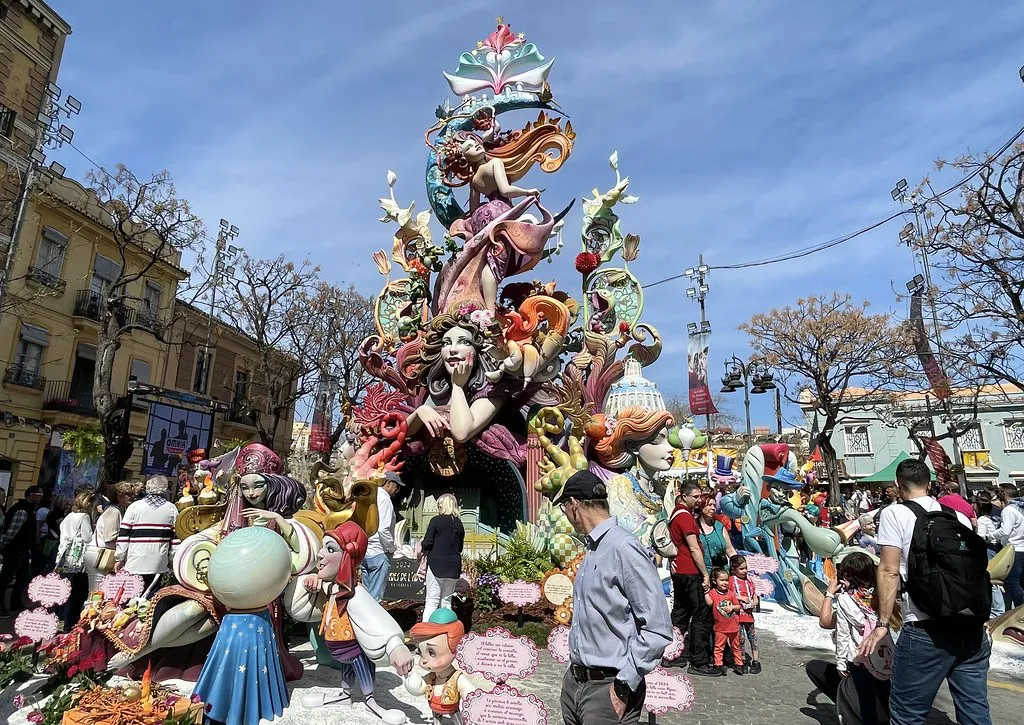
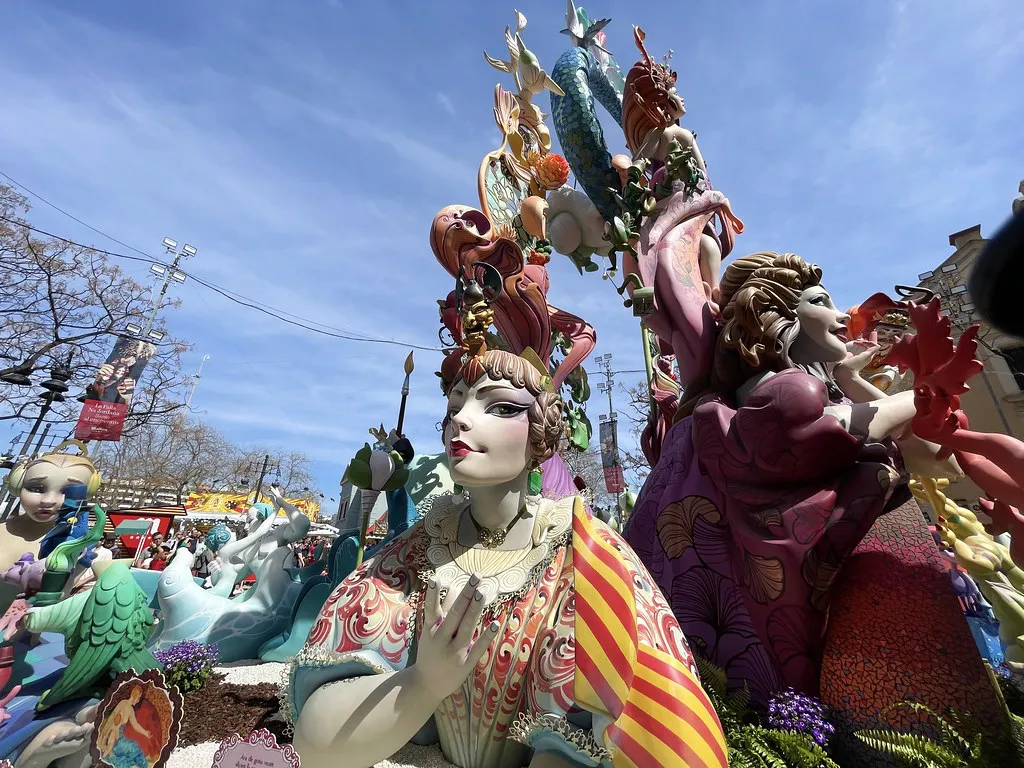
Las Fallas is Valencia's defining annual celebration, running from the 1st to the 19th of March each year. Hundreds of enormous sculptural monuments — called fallas — appear on street corners across the city, and the air fills with the thunder of daily fireworks displays called mascletàs. On the final night, La Cremà, every monument is set on fire simultaneously.
Part of our Best Festivals in Spain and Cultural Insights series.
Finding the right place to stay is essential for enjoying this unique Spanish cultural celebration to its fullest. You need a location that balances proximity to the monuments with your personal need for rest and quiet.
This guide covers the best neighborhoods, accommodation types, and practical booking advice to help you decide where to stay for Las Fallas in 2026.
Free guide: Europe's Festival Calendar
A month-by-month map of Europe's unmissable festivals — with the best dates to visit each and a local tip you won't find in the guidebooks.
Best Neighborhoods to Stay in Valencia During Fallas
Choosing the right district depends on whether you prefer to be near the fire or in a quieter corner of the city. There is no single best neighborhood — it comes down to your travel style and how much noise you can sleep through.
The Ciutat Vella district is the historic heart where the largest monuments stand and the main parades take place. Staying in El Carmen or La Seu means you are never more than a few steps from the festival action, but expect very little sleep from the 15th onward. The neighborhood's centuries-old streets and the Torres de Serrano towers make it the most atmospheric base in the city.
Ruzafa (Russafa in Valencian) sits just south of the center and hosts several special-category fallas — the biggest and most expensive monuments outside the central zone. It also has Valencia's densest concentration of restaurants and coffee shops, making it the preferred base for travelers who want to eat well between events. Noise levels are high but slightly more manageable than in El Carmen.
Extramurs and Pla del Reial are traditional residential districts within easy walking distance of the center. They feel like local Valencia rather than tourist Valencia, with their own street-level fallas monuments but fewer people pushing through the narrow streets. These neighborhoods suit families and light sleepers who still want to walk to the Plaza del Ayuntamiento in under 20 minutes.
Benimaclet, Valencia's student district near the Polytechnic University, offers a youthful atmosphere, a metro station, and a genuinely authentic fallas experience without the tourist crush. It is roughly 30 minutes on foot from the center, or two stops on the metro.
Staying Near the Beach: A Quieter Alternative
El Cabanyal and Canyamelar, Valencia's traditional fishing neighborhoods at the edge of La Malvarrosa beach, are worth serious consideration. They host their own local fallas monuments and casales, but with far fewer visitors than the city center. The atmosphere is more like a neighborhood party than a tourist spectacle.

The practical bonus is the beach itself. March weather in Valencia is unpredictable — heavy rain one morning, warm sunshine the next afternoon. Staying in El Cabanyal means you can walk to the water when the sun appears, which none of the central neighborhoods can offer. Pack a swimsuit even in March.
Public transport connects El Cabanyal to the city center reliably. Tram line 4 and bus routes run frequently during the festival, and the journey to Plaza del Ayuntamiento takes around 15 minutes. This makes it a genuinely workable base rather than a compromise.
Another beach-area option is the Quatre Carreres district near the Ciudad de las Artes y las Ciencias. This modern neighborhood has high-quality hotels and a calmer festival atmosphere, but it holds one major advantage: the main fireworks display, La Nit del Foc, is launched from the Palau de les Arts Reina Sofía, making this the best area in the city for watching the pyrotechnics show without fighting through crowds.
Why Nowhere in Valencia Is Truly Quiet During Fallas
A common misconception is that staying outside the historic center guarantees a good night's sleep. It does not. Every neighborhood in Valencia — not just the tourist zones — has its own falla monument and its own casal, the party tent where local falleros (festival participants) gather and play music until the early hours of the morning.
The casales operate from around March 1st and become increasingly loud as the main days approach. From March 15th onward, street celebrations run until 04:00 or later in most districts. The specific noise level on any given street depends entirely on whether a casal happens to be operating on that block.
Before booking any apartment or smaller hotel, ask the host whether there is a casal or falla monument within 100 metres of the property. This is the single most useful question you can ask, and most experienced Valencian hosts will answer it honestly. Larger hotels with soundproofed rooms in the center are often a better bet for light sleepers than a quiet-seeming apartment in a peripheral neighborhood that turns out to have a casal around the corner.
If noise is a serious concern, book accommodation explicitly advertising soundproofed rooms, bring earplugs regardless, and plan to adjust your sleep schedule to the festival rhythm rather than fight it.
Top-Rated Hotels Near the Action
The Ayre Astoria Palace Hotel (Plaça Rodrigo Botet, 5, 46002 Valencia) is a 5-minute walk from Plaza del Ayuntamiento, where the daily Mascletà fires at 14:00. Its central location allows you to return quickly after the afternoon fireworks, and the hotel has soundproofed rooms that make a real difference during the peak nights.
The Vincci Palace Hotel (Carrer de la Pau, 42, 46003 Valencia) sits slightly further from the main square near Calle Paz, a 4-star property with a rooftop terrace and comfortable rooms. It offers a good balance between proximity and slightly lower noise exposure than the hotels directly on or beside Plaza del Ayuntamiento.
Many visitors choose to book Las Fallas tickets and tours to see the best monuments with a guide, which pairs well with a centrally located hotel that puts the main parade routes within walking distance.
Budget-Friendly Hostels and Apartments
The Home Youth Hostel Valencia (Calle Lonja, 4, 46001 Valencia) offers a social atmosphere near the historic Silk Exchange and the Central Market. It is small but clean and well-located, with staff who can advise on daily festival schedules. Solo travelers and those on a tight budget consistently rate it well for the Fallas period.
Red Nest Valencia Hostel (Carrer de la Pau, 36, 46003 Valencia) is another reliable option, decorated in a colorful 1970s style and always well-maintained. It sits close enough to the center to walk to the Mascletà, but on a street that is slightly less overwhelmed than the core of El Carmen.
For groups and families, the Blue Moon Valencia Apartments (Calle Portal de Valldigna, 8, 46003 Valencia) in El Carmen offer studios, lofts, and family-sized apartments in a modernly decorated building in the old town. The Edificio Palomar Valencia Apartments (Calle de Palomar, 13, 46001 Valencia) are approximately a 10-minute walk from the city center and offer private terraces and kitchen facilities, making them practical for longer stays.
When to Book and How Prices Change
Central hotels for Las Fallas sell out earlier than almost any other event in Spain. By September of the previous year, many properties in Ciutat Vella and Ruzafa are already fully booked for the peak days of March 15th to 19th. If you find availability in January or February, expect to pay a significant premium over early-bird prices from the summer.
The booking timeline works roughly as follows. Hotels in the center begin filling from June onward for the following March. By October, choices narrow considerably for peak dates. From December to February, last-minute availability exists mainly at elevated prices or in peripheral neighborhoods. If you are planning to attend in 2027, starting your search in the summer of 2026 is not excessive.
The peak price days are March 17th, 18th, and 19th, which align with the Flower Offering (Ofrenda) on the 17th and 18th and La Cremà on the night of the 19th. If your schedule allows flexibility, arriving on March 14th and staying through the 19th captures all the major events without requiring you to book two or three separate properties at different price points.
Proximity to Las Fallas Fireworks and Mascletà
The Mascletà starts daily at 14:00 at the Plaza del Ayuntamiento from March 1st to March 19th. These are not ordinary fireworks — they are choreographed percussion performances using firecrackers, mortars, and aerial shells designed to be felt as much as heard. Arriving at least an hour early secures a good viewing position as the square fills to capacity quickly.
Nightly fireworks displays happen in and around the Turia Garden, the long park that runs through the center of the city. The most spectacular of these is La Nit del Foc on March 18th, which launches from beside the Ciudad de las Artes y las Ciencias and draws enormous crowds. Staying in the Quatre Carreres area puts you closest to the launch site, but the display is visible from a wide area of the city.
Deciding how to watch Las Fallas events depends partly on your accommodation choice — a hotel within walking distance of the plaza removes the transport logistics entirely during the busiest hours of the day.
Getting Around València During the Festival
Walking is the most reliable way to navigate Valencia when the streets fill with massive sculptural monuments and millions of visitors. Many roads in the historic center are closed to all vehicles during the peak days to protect the monuments and manage crowd flow. Taxis cannot reach the front doors of most hotels in Ciutat Vella during the busiest periods.
The metro system is the most efficient motorized option. Metrovalencia runs extended 24-hour service during the final peak days from March 15th to 19th. A rechargeable transport card (tarjeta de transporte) saves time at ticket machines and can be topped up at any metro station. Consult the Valencia Metro Map (Official) to plan routes to the beach, the Palau de les Arts, or the airport.
Check our guide on how to get to Las Fallas for more detailed arrival and departure logistics around the festival dates.
Parking and Driving in Valencia During Fallas
Driving into the city center during the festival is not practical. The historic center is almost entirely pedestrianized from March 15th onward, and street parking is prohibited across a wide zone to protect the monuments from accidental damage. Police enforce these restrictions actively.
The official Park and Ride lots (P+R) on the city outskirts are the correct solution if you are arriving by car. These connect to metro and bus lines that bring you into the center without the parking problem. The Valencia Parc Central and Valencia Nord lots are the best-positioned. Plan to use them from the first day of your visit and do not assume you will find street parking within 2 kilometres of Plaza del Ayuntamiento during peak days.
If you are staying in El Cabanyal or another peripheral neighborhood, some residential street parking remains available, but distances to the center still make public transport the better daily option during the festival.
Essential Tips for a Smooth Las Fallas Stay
Pack earplugs and bring them to bed every night, regardless of your neighborhood. The 15th of March, known as La Plantà, is when monuments are fully assembled across the city and the festival energy shifts into a higher gear. From this date, noise continues around the clock in most districts.
The Flower Offering (Ofrenda de Flores) on March 17th and 18th sees thousands of falleras in traditional dress carrying flowers through the center to build a giant floral portrait of the Virgin Mary near the cathedral. Booking a viewing spot near Calle de la Paz or the Plaza de la Virgen provides the best perspective. Your hotel's proximity to this route matters for these two evenings in particular.
Check what to wear to Las Fallas to stay comfortable during March's variable weather — cold mornings and warm afternoons are common, and the long hours on foot mean comfortable footwear matters as much as clothing layers. Most restaurants and cafes stay open throughout the festival, but book dinner in advance from March 15th onward as the city becomes extremely busy.
Frequently Asked Questions
Where is the best place to see the Mascletà in Valencia?
The best place to see the Mascletà is the Plaza del Ayuntamiento in the city center. This event happens every day at 2:00 PM sharp from March 1st to March 19th. Arrive at least one hour early to secure a good viewing spot among the dense crowds.
Is it better to stay in El Carmen or Ruzafa for Las Fallas?
El Carmen is better for traditional monuments and historic parades within walking distance. Ruzafa is ideal for travelers who enjoy trendy restaurants and massive street light displays. Both areas are very loud, so choose based on your preferred festival atmosphere.
How far in advance should I book a hotel for Las Fallas?
You should book your accommodation at least six to nine months in advance for the best prices. Many central hotels sell out by September for the following March festival. Early booking ensures you find a room that fits your budget and location needs. Is Las Fallas worth it if you book late? Prices will be much higher.
Are shops and restaurants open during Las Fallas?
Most restaurants and cafes remain open to serve the millions of visitors exploring the city. Some smaller shops may close or have reduced hours during the main holidays from March 15th to 19th. Always book your dinner tables in advance as the city becomes extremely busy.
Visiting Valencia for more than one festival? See our complete guide to festivals and events in Valencia.
Choosing where to stay for Las Fallas determines how much rest you will get during this intense festival.
Whether you pick a luxury hotel in Ciutat Vella or a quiet apartment near the beach, plan early.
Valencia offers an unforgettable experience of fire and art that every traveler should see at least once.
Prepare your walking shoes and get ready to join the most explosive street party in all of Spain.
Free guide: Europe's Festival Calendar
A month-by-month map of Europe's unmissable festivals — with the best dates to visit each and a local tip you won't find in the guidebooks.
You might also like


Continue reading
More guides you'll find useful