How to Experience Notting Hill Carnival 2026
Learn how to experience Notting Hill Carnival with step-by-step tips on transport, timing, food, and safety for a brilliant 2026 weekend in London.
On this page
How to Experience Notting Hill Carnival: A Practical Guide
Notting Hill Carnival is Europe's biggest street festival, drawing over one million visitors to west London every August bank holiday weekend. The two-day event is a celebration of Caribbean culture rooted in the Windrush Generation communities who settled in Notting Hill from the 1950s. Last updated June 2026 — this guide covers everything you need to plan your visit, from transport restrictions to the best spots for jerk chicken.
The carnival is entirely free to attend, and no ticket is required for the streets or the parade. That said, knowing how the weekend works — and what to bring — makes the difference between a smooth, memorable day and a frustrating one. Read on for a step-by-step breakdown of how to experience Notting Hill Carnival at its best.
Free guide: Europe's Festival Calendar
A month-by-month map of Europe's unmissable festivals — with the best dates to visit each and a local tip you won't find in the guidebooks.
The Origins and History of Notting Hill Carnival
The carnival we know today traces back to 1966, when local social worker Rhaune Laslett organised a street festival to bring together Notting Hill's many communities. She later said the idea came to her in a dream: streets "thronged with people in brightly coloured costumes, dancing and following bands." When Trinidadian musician Russell Henderson and his steel band began walking through the surrounding streets, Caribbean residents poured out of their homes to follow — and a tradition was born.
But the roots go even deeper. In January 1959, activist and newspaper editor Claudia Jones organised the first Caribbean carnival at St Pancras Town Hall in Camden. That event was held indoors because of the cold, but it was a direct response to the racist violence that had swept Notting Hill the previous year — including the 1958 attacks on Black Londoners and the murder of Antiguan man Kelso Cochrane in 1959. Carnival was always, from the very start, an act of cultural resistance as much as celebration.
By 1973, the event had grown into a pan-Caribbean festival under organiser Leslie Palmer, incorporating performers from Dominica, Grenada, and St Lucia. Static sound systems and live music stages were added, reflecting the explosion of reggae and dub. "The sound systems were the voice of the youth," said Palmer. By 1976, the event was drawing over 150,000 people — today that figure exceeds one million across the full weekend.
How to Experience Notting Hill Carnival: Step by Step
The carnival runs across two days: Sunday (traditionally Children's Day) and Monday (the main parade day). Most first-timers aim for Monday, when the full procession of mas bands, steel bands, and sound systems takes over the streets. If you prefer a calmer, family-friendly atmosphere, Sunday is quieter and far less crowded.
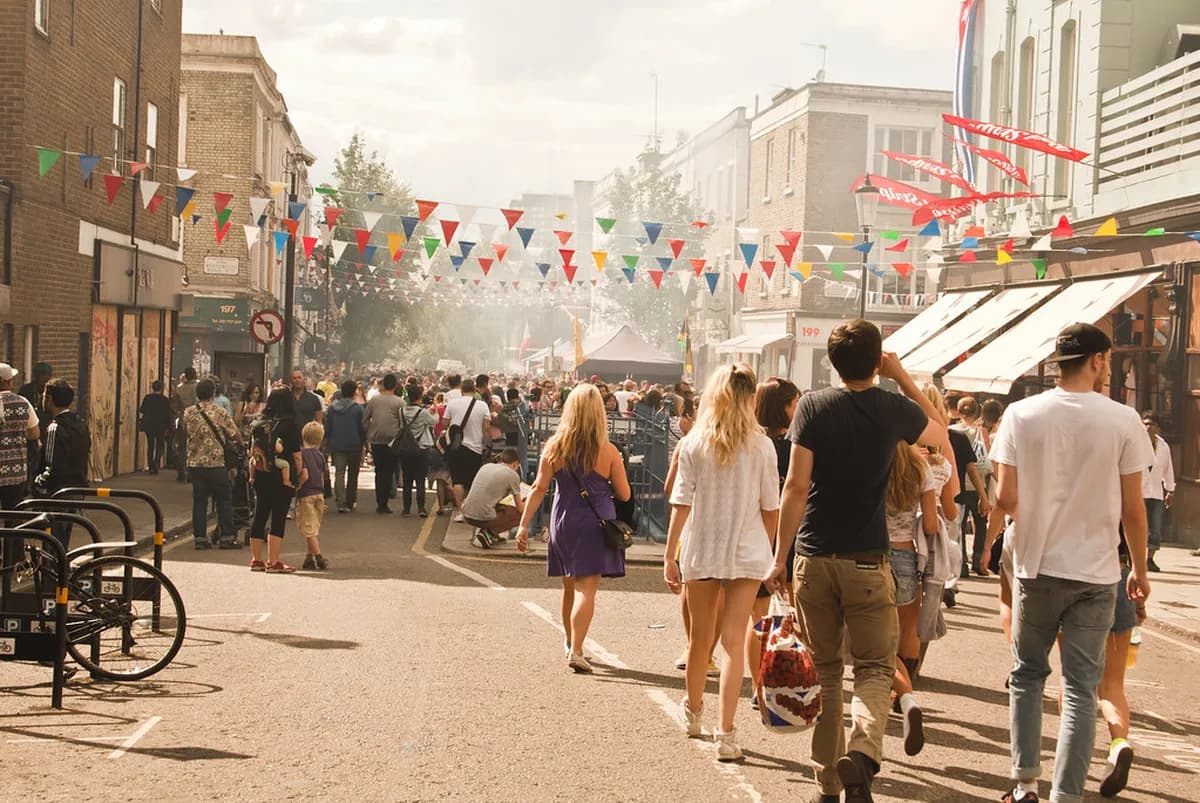
The official parade route runs along Ladbroke Grove, Westbourne Grove, and Chepstow Road — a loop through the heart of Notting Hill. Arriving before 11am gives you the best chance of finding a decent spot along the route before the crowd builds. By early afternoon on Monday, the main streets are packed solid, and moving quickly becomes difficult.
The sound systems — including Channel One, which has performed since 1983 from the corner of Leamington Road Villas and Westbourne Park Road — are positioned at fixed spots off the main route. Exploring these side streets between sound systems is one of the highlights many first-timers miss entirely. Check the official NHC map before you go to mark your preferred stages.
- Step 1: Choose your day — Sunday or Monday
- Sunday is Children's Day, with a relaxed family feel and lower crowd density throughout the afternoon.
- Monday brings the full main parade; the crush peaks between 1pm and 5pm along Ladbroke Grove.
- First-timers who find crowds overwhelming often find Sunday the better introduction to the carnival.
- Step 2: Plan your transport route in advance
- Ladbroke Grove and several surrounding Tube stations close or restrict entry during peak carnival hours.
- The nearest open stations are typically Notting Hill Gate (District/Circle) and Shepherd's Bush (Central/Overground).
- Arriving from either station on foot takes around 10–15 minutes and avoids the worst of the crowd bottlenecks.
- Step 3: Arrive early and agree on a meeting point
- Aim to arrive by 10:30am to claim a spot before the parade begins around 11am.
- Phone signal degrades sharply once the crowds build, so agree on a physical meeting spot before you split up.
- A quiet side street one or two blocks from the main route works better than the parade road itself.
- Step 4: Follow the parade along Ladbroke Grove
- The parade moves slowly along a roughly 2 km loop, so you can reposition as it passes.
- The mas bands wear elaborate handmade costumes — many themed and coordinated within each group.
- Steel bands and soca trucks follow the parade route; the whole procession typically takes 3–4 hours to complete.
- Step 5: Explore the food stalls and sound systems
- Caribbean food stalls line the side streets, with Jamaican jerk chicken, curry goat, and rice and peas as staples.
- Most stalls are cash-only and queues can run 20–30 minutes for the most popular spots by midday.
- Sound systems on side streets — blasting reggae, dancehall, soca, and jungle — are free to approach and often less crowded than the parade itself.
- Step 6: Plan your exit before the crowd peaks
- The densest crowd on Monday builds between 2pm and 6pm; leaving before 5pm makes transport far easier.
- Brixton and Shoreditch host after-parties once the street carnival winds down in the early evening.
- Check TfL's carnival travel advice for live updates on Tube closures and bus diversions on the day.
Sound Systems: The Sonic Heart of Carnival
Notting Hill has its own sonic identity — a layered mix of steel pan whistles, live soca trucks, and the thumping bass of static sound systems spread across the side streets. The music still carries a strong Caribbean influence, but today's sound systems play far more than reggae and dub. Expect dancehall, jungle, Afrobeats, and grime coming from different corners of the same block.

Channel One sound system has operated from the corner of Leamington Road Villas and Westbourne Park Road every year since 1983 — one of the longest-running fixtures at the carnival. Sound systems like these are carefully constructed speaker arrangements that take days to build and represent a deep tradition of community music-making in British Caribbean culture. They are not a side feature. For many regulars, the sound systems are the main event.
The best approach is to treat the sound systems as a circuit rather than a single destination. Move between two or three over the course of the afternoon, spending 30–45 minutes at each. The atmosphere at a good sound system — dense, joyful, almost completely unmediated by any stage or barrier — is something ticketed music festivals rarely replicate. First-timers often underestimate how much of the carnival's energy comes from these fixed points rather than the moving parade.
What to Expect on the Day
Sunday and Monday have very different personalities. Sunday brings children's troupes, family picnics on side streets, and a slower pace that makes it easy to linger near food stalls and talk to stallholders. Monday accelerates into a full-scale street party — mas bands in towering feathered costumes, soca trucks with speakers stacked metres high, and the sound of whistles echoing across the entire neighbourhood.
The mas tradition comes from 19th-century Trinidad, where masquerade costumes allowed wearers to take on a new character during carnival season. "We brought carnival to Britain in our bones," said writer and broadcaster Darcus Howe. "Carnival wasn't a memory, it was an instinct." Each mas band designs and coordinates their costumes as a group, competing for prizes — the results range from elegant to spectacular. You can explore the full NHC guide for more on the culture and the parade route in detail.
The police presence has evolved significantly since the tensions of the 1970s. In 1976, the "sus" law — which allowed officers to stop and search anyone they suspected of intending to commit a crime — was used aggressively against young Black men at the carnival, and violence broke out. In the decades since, the Metropolitan Police have adopted a community-focused approach: lower profile, engagement over enforcement. The carnival today is policed very differently, and the relationship between the event and the authorities is genuinely cooperative rather than adversarial.
What to Bring and Wear to Carnival
Packing light is essential when you are navigating packed streets for several hours. A small crossbody bag or belt pack keeps your essentials close and leaves your hands free for food. Backpacks are a common mistake — they make moving through dense crowds awkward and invite opportunist theft.
British August weather is notoriously unpredictable, so layers are essential even in a heatwave year. A lightweight rain jacket folds flat and is easy to tie around your waist when not needed. Comfortable, flat shoes are non-negotiable; cobblestones and standing for three to four hours will end a day early for anyone in heels.
- What to bring to Notting Hill Carnival
- Bring at least £20–30 in cash for food stalls and drinks, as most vendors do not accept cards.
- Wear bright colours or a costume — the dress code is celebratory, and you will feel more comfortable joining in.
- Pack a lightweight rain layer even in good weather; August afternoons in London can turn quickly.
- Bring a portable phone charger, as battery drain is rapid in a crowd with poor signal.
- Wear comfortable, flat shoes you do not mind getting dusty by the end of the day.
- Leave expensive jewellery and valuables at your accommodation for the day.
Getting There: Transport Tips for Carnival Weekend
Transport for London restricts or closes several Tube stations around Notting Hill during peak carnival hours on both days. Ladbroke Grove, Westbourne Park, and Royal Oak typically see entry restrictions from mid-morning on Monday; check the TfL website for the confirmed 2026 closures before you travel. Notting Hill Gate (District and Circle lines) and Shepherd's Bush (Central line and London Overground) are usually the most reliable entry points.
Walking from Notting Hill Gate takes around 12 minutes east to west along Pembridge Road into the carnival area. From Shepherd's Bush, head north along Uxbridge Road for about 15 minutes to reach the southern end of the route. If you are coming from further afield, the 52 and 452 bus routes serve the area, though diversions apply on the day — budget extra travel time.
Driving is strongly discouraged; parking restrictions extend across the surrounding streets, and road closures make navigation unpredictable. Cycling is a faster option for those approaching from central London, with several Santander Cycles docking stations within a 10-minute walk of the parade route. Whatever your route, avoid arriving after 1pm on Monday if you want smooth access to the parade — the crowd crush is real.
After the Parade: Evening Options
The street carnival on Monday officially winds down in the early evening, typically around 21:00, but the celebrations continue well into the night across London. Brixton is the traditional after-party destination — Coldharbour Lane and the surrounding area fill with sound systems and Caribbean-influenced venues keeping the energy going past midnight. The journey from Notting Hill to Brixton by Tube takes around 35 minutes on the Victoria line from Notting Hill Gate to Brixton station.
Shoreditch and Hackney also host unofficial after-parties, skewing toward a younger crowd and mixing carnival sounds with UK jungle, drum and bass, and Afrobeats. Check dedicated carnival event listings in August for specific venues and ticket requirements — many of these parties do require advance tickets and sell out in the weeks before the bank holiday weekend.
One thing worth knowing: the Tube on Monday evening after the carnival finishes can be extremely busy, particularly from Notting Hill Gate and Shepherd's Bush. If you are heading to an after-party rather than home, consider walking east toward Bayswater or Paddington to pick up a less crowded service. The 23 night bus along Westbourne Park Road is a slower but often less chaotic alternative if the Tube platforms are overwhelming.
Safety, Common Problems, and How to Handle Them
Notting Hill Carnival is generally a safe and welcoming event, and the vast majority of attendees have a trouble-free day. The Metropolitan Police maintain a visible but low-key presence, having adopted a community-focused approach since the tensions of the 1970s. First aid stations are positioned at regular intervals along the route — check the official map for their locations before you go.
The most common issues are practical rather than serious: dead phone batteries, losing friends in the crowd, and very long food queues. Agreeing on a backup meeting point before the carnival starts — and one that is away from the main route — solves the biggest single cause of a stressful day. The best European cultural festivals all share this lesson: logistics planning before you arrive is worth more than any tip you find on the day.
- Common carnival problems and quick fixes
- Phone signal drops in the crowd — screenshot your meeting point and the route map before you arrive.
- Food queues at popular jerk chicken stalls can hit 30 minutes; arrive before noon for shorter waits.
- Pickpocketing risk rises in dense crowds — use a zipped front pocket or a belt pack, not a back pocket.
- Alcohol cannot be sold in glass containers at carnival; canned drinks are fine, glass bottles are confiscated at entry points.
- If someone in your group needs help, St John Ambulance first aid points are marked on the official NHC map.
- Portable toilets are available but queues build fast; locate them early and plan ahead rather than waiting until urgent.
Frequently Asked Questions
Can you just turn up to Notting Hill Carnival?
Yes — Notting Hill Carnival is free to attend and no ticket is required for the streets or the parade. You can walk in from the nearest open Tube stations and join the crowd at any point along the route. Arriving before 11am on Monday gives you the easiest access.
How much does it cost to go to Notting Hill Carnival?
Entry to the street carnival is free. Budget around £20–30 in cash for food and drinks from street stalls, as most vendors are cash-only. Travel costs vary by starting point; a standard Tube fare into the area is typically £2.80–£5 depending on your Oyster zone.
Is Notting Hill Carnival worth it?
For most visitors, yes — there is nothing else like it in Europe. The combination of live mas bands, Caribbean food, and sound systems spread across an entire neighbourhood is genuinely unlike any ticketed festival. Sunday suits families and first-timers; Monday is the full spectacle. Find more on how to experience major European street celebrations if you want to compare.
Is Notting Hill Carnival safe to attend?
Yes, for the overwhelming majority of the millions who attend each year. Keep valuables at home, use a zipped belt pack rather than a backpack, and agree on a meeting point away from the main parade route before you lose phone signal in the crowd.
Visiting London for more than one festival? See our complete guide to festivals and events in London.
Notting Hill Carnival is one of the most exhilarating free events anywhere in Europe, and with the right preparation, it is also one of the most rewarding. The key decisions are simple: choose your day, arrive early, bring cash, and agree on a meeting spot before the crowd swallows your phone signal. Everything else — the jerk chicken, the sound systems, the mas costumes — takes care of itself.
If you are building a wider European festival itinerary, the best cultural festivals in Europe guide covers comparable street events worth adding to your calendar. Notting Hill Carnival 2026 takes place on the August bank holiday weekend — mark your diary and plan your transport early.
Free guide: Europe's Festival Calendar
A month-by-month map of Europe's unmissable festivals — with the best dates to visit each and a local tip you won't find in the guidebooks.
You might also like


Continue reading
More guides you'll find useful