8 Essential Tips for a Finnish Juhannus Midsummer Guide
Master the magic of Finnish Midsummer with our guide to Juhannus traditions, bonfires, midnight sun hiking, and Helsinki's best seaside saunas.
On this page
8 Essential Tips for a Finnish Juhannus Midsummer Guide
Last updated May 2026. Juhannus falls on the Saturday between 20 and 26 June each year, with the main festivities running from Friday evening through Sunday. This Finnish Juhannus Midsummer guide covers what to expect — from the near-total silence of Helsinki's streets to the roar of lakeside bonfires in the Finnish countryside.
Midsummer is Finland's most significant national holiday and the unofficial start of the summer vacation season. Most residents leave the cities for private summer cottages, creating a rare window of quiet in Helsinki. The holiday is built around light, nature, and rituals that stretch back to pre-Christian pagan customs. Understanding the logistics and the traditions makes the difference between a confusing long weekend and a genuinely memorable Finnish summer experience.
Travelers who arrive without preparation often find shops shuttered, transport reduced, and popular sauna spots fully booked. We'll walk through everything you need — from the bonfires to the birch whisks to the underground swimming halls — so you can learn how to experience Finnish Juhannus Midsummer on your own terms.
Free guide: Europe's Festival Calendar
A month-by-month map of Europe's unmissable festivals — with the best dates to visit each and a local tip you won't find in the guidebooks.
Midsummer as Finland's Main National Holiday
Juhannus holds a different weight than most public holidays. It is not merely a day off — it is the single moment in the year when the entire country collectively exhales. Finland has more than half a million summer cottages for a population of 5.5 million, and by Friday evening of Midsummer weekend, the motorways out of Helsinki are lined with cars heading north and east toward lakes, forests, and family cabins.
The holiday celebrates the summer solstice and the return of warmth after the long dark winter. In the north of Finland — above the Arctic Circle — the sun does not set at all. Even in Helsinki, the sky never fully darkens; a deep twilight replaces night for just a few hours. Locals call this the yötön yö, the nightless night. Celebrations continue without pause because there is no natural signal to stop.
Midsummer also has Christian roots, celebrated as the feast of Saint John the Baptist — hence the name Juhannus. In practice, the holiday blends pagan and Christian elements in a way that feels entirely Finnish: outdoors, close to water, and conducted with a certain quiet intensity. For visitors, understanding this dual nature explains why the celebrations feel both ancient and joyfully modern at the same time.
Core Traditions: Bonfires, Saunas, and Toasts
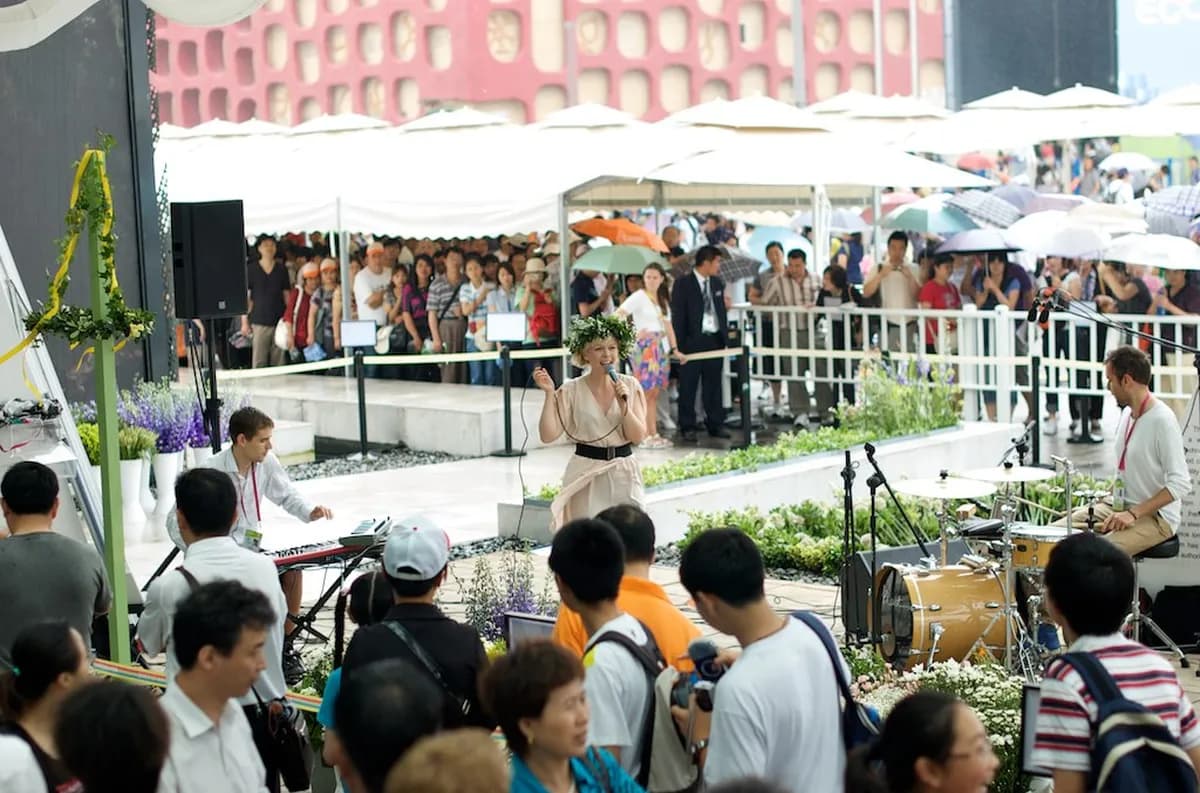
The kokko — the Midsummer bonfire — is the most recognisable symbol of Juhannus. Traditionally built near water, these fires were believed to drive away evil spirits and secure a good harvest. In Helsinki, the largest public bonfire is lit on Seurasaari island, an open-air museum island with historic wooden buildings, folk dancing, and kantele music. Entry is around €10–15; arrive early for a good spot by the water's edge.
Juhannussauna — the Midsummer sauna — is not optional in Finnish culture, it is the centrepiece of the holiday. The key ritual element is the vihta (or vasta in eastern dialects): a bundle of fresh birch branches bound together and used to gently beat the skin, releasing birch oil and increasing circulation. The traditional sequence is sauna heat, vihta, cold water — either a lake plunge or a cold shower — repeated until you feel entirely cleansed.
Midsummer decorations complete the picture. Birch branches called juhannuskoivu are cut and hung on either side of doorframes to bring fertility and good health to the household. Flower crowns appear on children and adults alike. You can find similar communal celebrations across the region in other midsummer celebrations in Europe, but the Finnish version is distinctively quieter and more nature-centred than its Swedish or Latvian counterparts.
The Magic of Juhannus: Spells and Folklore
Ancient Finnish custom holds that Midsummer night is the most magically charged moment of the year. The practice is called juhannustaika — Midsummer magic. Most rituals centre on love and partnership. A young woman picks seven different wildflowers from a meadow, ideally in silence, and places them under her pillow; the face of her future partner is supposed to appear in her dreams.
In a more daring version, she peers into a well at midnight while naked, looking for her suitor's reflection. Green fern was said to bloom only on Midsummer night — finding it meant luck in love. Even the dew collected from grass on Midsummer morning was once believed to have healing properties, and walking barefoot through it remains a folk practice in rural areas today.
The god Ukko, the pre-Christian Finnish deity of weather, thunder, and harvest, was historically honoured through noise and fire. The louder the celebrations, the more evil spirits were kept at bay and the better the harvest would be. These pagan roots persist in modern Juhannus: the bonfires, the noise, the staying awake all night all carry traces of that original intent, even for Finns who have never consciously thought about Ukko in their lives.
Endless Sunlight: Night Hiking and the Midnight Sun
The midnight sun is the defining physical reality of a Finnish Midsummer. In Helsinki (60°N), the sun sets around 23:00 and rises again before 04:00, with the sky never darkening past a pale orange twilight. Head north to Rovaniemi (66°N) and the sun does not set at all. The experience disorients your body clock in the best possible way — midnight walks feel like late afternoon, and strangers gather on rocky shores simply to watch the light change colours without ever going dark.
Night hiking is practical during Midsummer in a way it never is at any other time of year. Nuuksio National Park is 35 km northwest of Helsinki by car or bus, with well-marked trails through old-growth forests and past glassy lakes. The 3 km Haukkalampi loop is manageable in trail runners; the 11 km Maahisentaival route suits those with proper hiking boots. Go between 22:00 and 02:00 for the most otherworldly light. The trails are free to access under Finland's Everyman's Rights.
Two practical notes for midnight hiking: mosquitoes peak in June in forested areas near water. Carry strong DEET repellent (30%+ concentration) and wear long sleeves. Navigation is straightforward in continuous light, but the trails use orange trail markers — the pale glow at midnight can make these harder to spot than expected, so downloading an offline map (AllTrails or Maps.me) before you leave Helsinki is worth the five minutes it takes.
Where to Celebrate: Summer Cottages vs. Open-Air City Events
The authentic Finnish Midsummer takes place at a mökkielämä — the cottage lifestyle. A lakeside cabin, a wood-fired sauna, a rowboat, a barbecue: this is the template. If you know a Finnish person, being invited to their mökki for Juhannus is as significant as a Christmas dinner invitation. If you don't, there are a handful of companies offering organised cottage rentals, including Lomarengas (lomarengas.fi), which lists hundreds of properties near Helsinki within a two-hour drive.
For those staying in Helsinki, the city does not shut down entirely. Seurasaari Open-Air Museum runs its official Midsummer program from mid-afternoon through the lighting of the bonfire, with folk dancing, traditional games, and kantele concerts. The evening at Helsinki Midsummer Tips page collects any new 2026 additions. The Kallio neighbourhood traditionally has a street party atmosphere, and some bars on Iso Roobertinkatu stay open later than the rest of the city.
A practical note on transport: the last ferry to Seurasaari from the Lauttasaari bridge side is on foot, not by boat, and the island closes its gates for the public event around 01:00. Trams 1, 2, and 4 run reduced schedules on Midsummer Saturday — plan an extra 20 minutes on any journey. Ride-share apps function normally but prices surge during peak exodus hours on Friday afternoon.
Helsinki's Seaside Sauna Renaissance
Helsinki has built some of Europe's most architecturally striking public saunas in the past decade, and Midsummer weekend is when they are at maximum demand. Book slots at least a week in advance for any of the top venues.
- Löyly (Hernesaari, Hernesaarenranta 4) — a stunning spruce-clad structure with smoke sauna, wood sauna, and direct sea swimming. Adult entry runs €19–24 depending on the session. The terrace restaurant is open until late. This is the modern benchmark.
- Allas Sea Pool (Market Square, Katajanokanlaitta 2a) — three outdoor pools including one heated, plus a two-storey sauna building. More central and social than Löyly, with a bar deck and DJ sets during Midsummer weekend. Day passes start at €16.
- Kulttuurisauna (Hakaniemi, Haapaniemenkatu 17) — a smaller, quieter architect-designed sauna with a wood-heated kiuas and outdoor sea pool. Entry around €15. No restaurant, which keeps the atmosphere calm and unhurried.
Traditional cottage saunas around Helsinki are a completely different register: rough timber walls, stronger heat, birch smoke, and lake water instead of the Baltic. If you are renting a cottage even 60 km outside the city, the sauna there will feel more authentically Finnish than any of the above — and cost nothing extra. Both experiences are worth having; they just serve different needs.
Helsinki Underground: Where the City Plays and Shelters
One genuinely under-discussed aspect of Helsinki's Midsummer weekend is the city's underground leisure infrastructure. Built largely during the Cold War as civil defence shelters, Helsinki has one of the world's most extensive networks of underground public spaces — and several of them are open for recreation year-round, including during the holiday weekend when many surface attractions close early.
Itis Swimming Hall (Itäkeskus shopping centre, Itäkeskus metro station) is the most accessible example: a full 25m indoor pool, waterslides, and a jacuzzi complex, open to the public for around €7 per adult. It runs standard hours even on Midsummer Saturday. For families with children who need an activity on a day when most of Helsinki's parks are either empty or packed with bonfire crowds, this is the practical solution. The metro ride from city centre takes 12 minutes.
The Temppeliaukio Church (Lutherinkatu 3), known as the Rock Church, is also underground — carved directly into a granite outcrop in Töölö. It holds regular concerts during summer weekends, and the acoustic quality of the rock walls is extraordinary. Check the 2026 concert schedule at the church's website before your trip; Midsummer weekend often has a special evening performance. This is a genuinely distinctive Helsinki experience that most Juhannus guides don't mention.
Practical Planning: Trams, Food, and Holiday Closures
The single biggest logistical trap of Midsummer is food. Almost all supermarkets and grocery stores close by 14:00 on the Friday before Midsummer, and state Alko liquor stores close even earlier — they follow Sunday hours on both Saturday and Sunday of the holiday weekend. Do your food and drink shopping on Thursday evening or Friday morning. Gas station convenience stores (ABC, Neste) stay open throughout the weekend and are genuinely the backup for forgotten essentials.
Public transport runs on a Sunday schedule across the full Midsummer weekend. Helsinki trams 1, 2, 3, 4, 6, 7, 8, and 9 all operate, but at 20–30 minute intervals rather than the usual 7–10 minutes. The metro runs until around 02:00 on Saturday night, which is useful for getting back from Seurasaari. Taxis are available but demand is very high on Friday evening — book via the Valopilkku or Yango apps in advance rather than flagging one down.
Restaurants in the city centre behave unpredictably: some close entirely, some open late with a special Midsummer menu. The Kallio and Töölö neighbourhoods tend to have more options that stay operational. If you are planning a specific dinner, call the restaurant directly before Thursday to confirm hours. Most hotels continue normal service throughout the weekend without interruption.
Frequently Asked Questions
What is the best place to see Midsummer bonfires in Helsinki?
The Seurasaari Open-Air Museum is the premier location for traditional bonfires. It offers a festive atmosphere with folk dancing and music. Tickets usually cost around €25 per person.
Are shops and restaurants open during Juhannus in Finland?
Most shops and restaurants close from Friday afternoon until Sunday morning. Some essential kiosks and gas stations remain open. Always stock up on groceries before Friday noon.
What is the significance of the Midnight Sun during Juhannus?
The Midnight Sun represents the victory of light over darkness. It provides constant energy for celebrations and outdoor rituals. In the south, the sun barely dips below the horizon.
Finnish Midsummer is a time of magic, light, and deep cultural pride. Whether you choose a quiet cottage or a city sauna, the experience is unique. Following this Finnish Juhannus Midsummer guide ensures you won't miss the best parts.
Prepare for the closures, embrace the constant light, and join the local traditions. The memories of a nightless night in Helsinki will stay with you forever. Plan your 2026 trip now to secure the best seaside accommodations.
Free guide: Europe's Festival Calendar
A month-by-month map of Europe's unmissable festivals — with the best dates to visit each and a local tip you won't find in the guidebooks.
You might also like


Continue reading
More guides you'll find useful