Festivals and Events in Warsaw 2026: The Complete Calendar
Warsaw festivals 2026: Wianki midsummer on the Vistula, free Chopin concerts in Łazienki Park, Warsaw Film Festival, Christmas markets, and New Year's Eve.
On this page
Festivals and Events in Warsaw 2026: The Complete Calendar
Warsaw's event calendar is one of the most varied in Central Europe, and I have spent several seasons here working out which events genuinely reward a visit and which ones to plan a trip around. Updated June 2026. The city's rebuilt Old Town — a UNESCO World Heritage Site reconstructed brick by brick after the Second World War — provides a historic backdrop to summer street markets, Christmas celebrations, and the solemn civic commemorations that make Warsaw unlike any other European capital. The official Warsaw tourism site publishes updated event dates each season and is the most reliable source for programme changes.
The defining signature events are two: Wianki, the Slavic midsummer celebration on the Vistula riverbanks in late June, and the free Chopin Piano Concerts in Łazienki Park every Sunday from May to September. Both are free, both draw large and genuinely local crowds, and both root the visitor in something specific to Warsaw rather than in a generic European festival format. The spring-to-autumn season also brings the Orange Warsaw Festival, jazz programming at multiple venues, and the Warsaw Film Festival in October — an A-list-accredited event that is underrated by Western European festival tourists.
This guide covers every major event on the 2026 Warsaw calendar in the order they fall across the year, with practical details on location, access, timing, and what to expect as a visitor. Warsaw rewards a slow approach — the events are spread across distinct neighbourhoods, from the royal parks in the south to the Praga district across the Vistula, and each has its own character.
Free guide: Europe's Festival Calendar
A month-by-month map of Europe's unmissable festivals — with the best dates to visit each and a local tip you won't find in the guidebooks.
Wianki: Midsummer Night on the Vistula
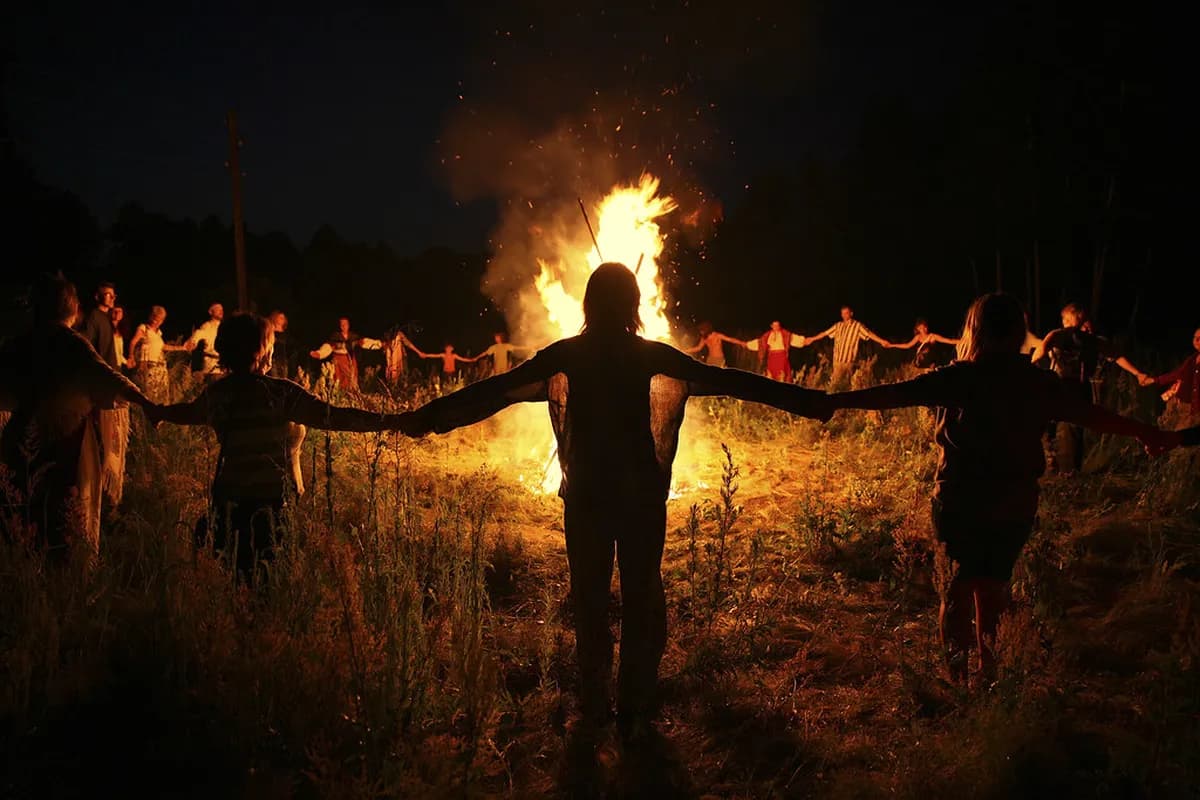
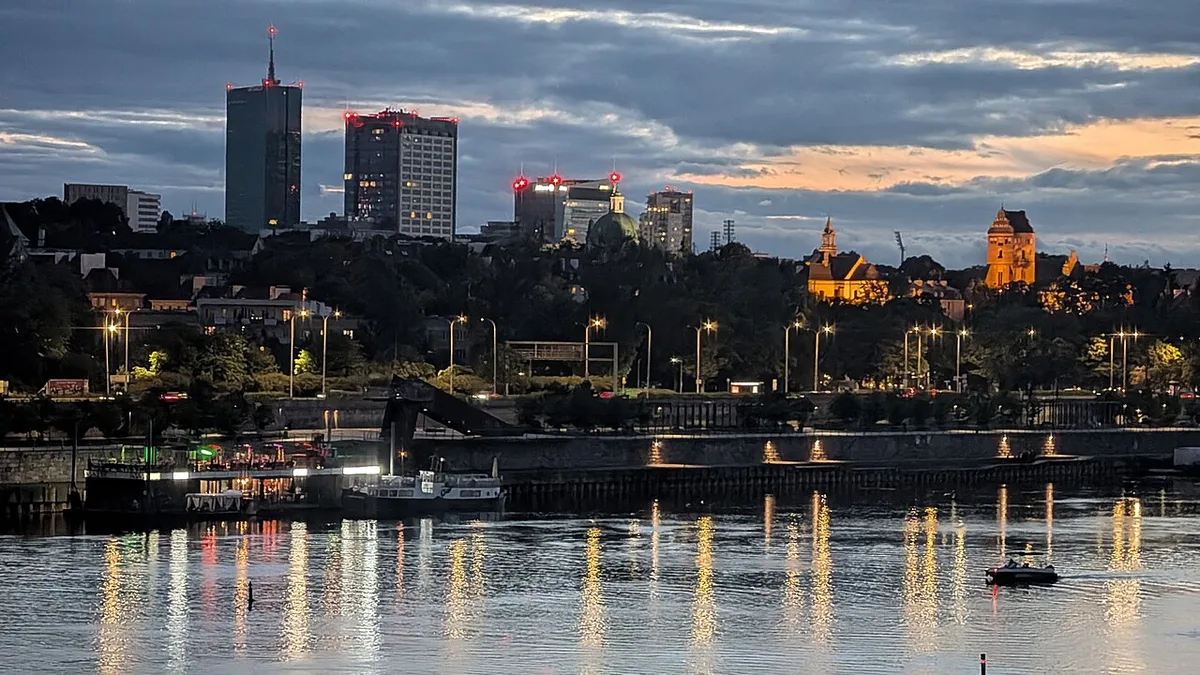
Wianki is Warsaw's most atmospheric event of the year. The name comes from the Polish word for wreaths, and the celebration marks St John's Eve — called Noc Świętojańska or Noc Kupały in Polish — on the night of 21–23 June. The tradition is rooted in pre-Christian Slavic midsummer ritual: young women float flower wreaths on the river to read their romantic fortunes, fires are lit along the banks, and the shortest night of the year is celebrated with music, dancing, and fireworks. In Warsaw, this Slavic folklore has grown into a full city festival on the Vistula embankment.
The main gathering point is the Podzamcze area below the Royal Castle, where the city sets up a concert stage on the riverside promenade and the Multimedia Fountain area nearby adds water and light displays after dark. I arrived at the riverbank around 20:00 and found the promenade already packed with families and groups of friends sitting on the grass with blankets and picnic food. The free outdoor concert builds through the evening, and the fireworks launch over the Vistula after dark, reflecting off the water in a way that is genuinely striking. The Kupala Night guide sets out the wider Slavic midsummer tradition and explains why the same festival appears across Poland, Ukraine, and the Baltic states under different names.
If you want to participate in the wreath-floating ritual rather than simply watch, how to experience Kupała Night covers where to buy the flower wreaths (kwiaciarnie across the city stock them in the week before the festival) and which stretches of the Vistula embankment work best for floating them. Organisers confirm the exact 2026 dates and programme details in May each year; check the Warsaw events calendar for the final schedule as it is confirmed.
Chopin in the Park: Free Sunday Concerts
Between mid-May and late September, Łazienki Park hosts one of the most civilised free events in Europe: open-air Chopin Piano Concerts every Sunday afternoon beside the composer's monument. Frédéric Chopin is Poland's defining cultural figure and Warsaw was his adoptive city — the apartment where he gave some of his earliest recitals still stands near the Old Town. The concerts run at 12:00 and 16:00 each Sunday, performed by Polish and international pianists on a Steinway grand positioned directly in front of the 1926 bronze monument of Chopin seated under a weeping willow, now one of Warsaw's most photographed landmarks.
I attended the 16:00 concert on a Sunday in early June and found several hundred people settled on the grass around the monument — local families with picnic rugs, tourists who had wandered up from the Ujazdów area, and elderly Varsovians who have been attending for decades. The audience is quiet and genuinely engaged. The programme varies each week and covers solo works across the full range of Chopin's output: nocturnes, mazurkas, ballades, and études. Admission is always free, with no ticket or registration required. The season closes with the last Sunday of September.
Summer Festival Season: Orange Warsaw, Jazz and Fountain Shows
The Orange Warsaw Festival is the city's headline outdoor music event, typically held in June or July at a large venue on the Vistula riverbank. The festival has a strong track record for international headliners spanning indie, electronic, and pop; 2026 lineup and ticketing details are confirmed on the official Orange Warsaw Festival website in late spring. Tickets sell quickly once the lineup is announced, so early booking is advisable for popular acts.
Warsaw's jazz programming runs parallel to the outdoor calendar. The Warsaw Summer Jazz Days take place in late June and July at venues across the city centre — a mix of free outdoor stages and ticketed club nights. Jazz Jamboree, one of Europe's oldest jazz festivals with a history stretching back to 1958, returns in late October at indoor venues including the Palace of Culture and Science concert hall. Both festivals draw strong international lineups and are well worth planning around if jazz is your interest.
Separate from the ticketed concert calendar, the Warsaw Multimedia Fountain Park in Park Praski — on the Praga east-bank side of the Vistula — puts on free illuminated water and light shows on Friday and Saturday evenings throughout summer. The shows run from around 21:00 and last 20–30 minutes. The park is a short tram ride from the Old Town across the Świętokrzyski Bridge, and the surrounding Praga district is worth exploring for its street food scene and bohemian cafés.
Warsaw Film Festival: October's A-List Event
The Warsaw Film Festival holds FIAPF A-list accreditation — the same classification awarded to Cannes, Venice, and Berlin — making it one of the most significant competitive film festivals in Central Europe. The 2026 edition will be the festival's 42nd year. Screenings take place across several cinema venues in the city centre over approximately ten days in mid-to-late October, with an international competition section, Polish film programme, documentary strand, short films, and retrospectives running in parallel.
Tickets for individual screenings are straightforward to buy — typically PLN 25–35 per film — through the festival website from late September. Opening-night gala events often take place at the Palace of Culture and Science courtyard. I found the atmosphere notably relaxed compared to Western European festivals of similar standing: queues move efficiently, the venues are comfortable, and the audience is a genuine mix of film professionals and Warsaw residents rather than a purely industry crowd. No accreditation is needed for public screenings, and the programme is published in full on the festival website roughly two weeks before opening.
Christmas Markets and Easter on the Old Town Square
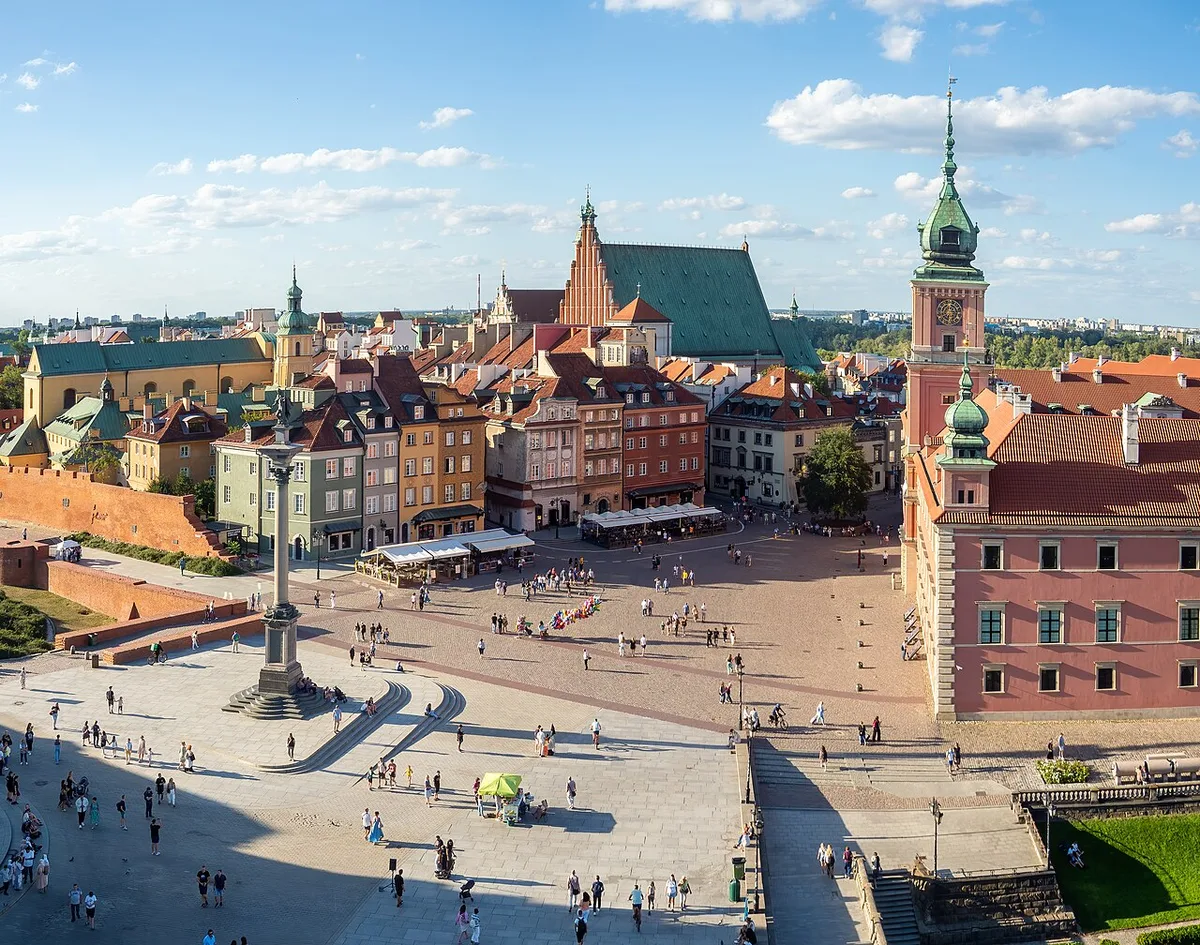
Warsaw's Christmas market on the Old Town Market Square (Rynek Starego Miasta) is one of the most atmospheric in Central Europe. The square is framed by the reconstructed Baroque townhouses that form the core of Warsaw's UNESCO-listed Historic Centre, and the combination of the Christmas tree, craft and food stalls, and candlelit facades makes for a setting that genuinely rewards a winter visit. The market runs from late November to early January, with mulled wine (grzaniec), roasted nuts, traditional Polish handicrafts, and amber jewellery among the reliable offerings. A second market operates around the Palace of Culture and Science in the commercial centre of the city.
For planning a wider Christmas market itinerary, Christmas markets in Europe for first-timers covers what to expect across different countries and how to pace a winter city-break. If you are combining Warsaw with Kraków on the same trip — a popular and very practical pairing, roughly two hours by express train — the Kraków Christmas market on the Main Market Square is its own UNESCO-framed spectacle and runs in the same late-November-to-January window. Beyond the festive season, the full calendar of festivals and events in Krakow runs year-round and pairs naturally with Warsaw's on a two-city Poland itinerary.
Warsaw's Easter celebrations centre on Wielkanoc traditions visible across the city's markets and churches. Palm Sunday processions bring elaborately decorated palms — some reaching two metres tall, made from dried flowers and coloured grasses — to the Old Town. In the days before Easter, the market square fills with pisanki (decorated eggs) sellers and stalls offering żurek (sour rye soup) and biały barszcz (white borscht), the traditional Easter foods that are easy to sample directly from the market stalls. The Old Town atmosphere at Easter is lively but not overcrowded, making it one of the better times to visit the historic centre without summer crowds.
Warsaw Uprising Commemoration: 1 August
On 1 August each year at exactly 17:00 — the precise hour the 1944 Warsaw Uprising began — the entire city falls silent as air-raid sirens sound across Warsaw for one minute. Trams stop. Cars pull over. Pedestrians pause mid-step on the pavement. It is one of the most striking civic moments I have witnessed in any European city: a spontaneous, city-wide act of collective memory that requires no audience and no stage. The 'W-hour' siren is followed by formal ceremonies at the Warsaw Uprising Museum in the Wola district and at the Powstańców Warszawy Square monument.
This is a solemn commemoration, not a festival or public entertainment event, and it should be understood in that spirit. Visitors who happen to be in Warsaw on 1 August should observe the silence respectfully. The Warsaw Uprising Museum at ulica Przyokopowa 28 is one of the finest modern history museums in Europe and is worth a full morning's visit at any time of year to understand the context behind the annual remembrance.
New Year's Eve on the Vistula
Warsaw closes the year with a large free New Year's Eve concert on the Vistula riverbank, typically centred on the Poniatowski Bridge area or the Podzamcze waterfront — the same stretch that hosts Wianki in June. The free outdoor concert draws major Polish acts and ends with a midnight fireworks display reflected over the river. The event is genuinely popular with locals rather than being a tourist-facing occasion: this is a city-wide celebration that continues well past the countdown. The Old Town itself is also lively on New Year's Eve, with bars and restaurants fully booked by mid-December. If you want a table indoors, reserve at least three to four weeks in advance.
Getting Around Warsaw: Practical Notes
Warsaw's Old Town is compact and walkable from the main transport hub at Centrum metro station — around 15–20 minutes on foot through the Saxon Garden (Ogród Saski). The metro runs two intersecting lines: M1 runs east–west through the city centre, and M2 runs north–south connecting the main rail station (Warszawa Centralna) with the southern residential districts. Trams cover the ground the metro misses, including routes to Łazienki Park (tram 116 or 180 from Aleje Ujazdowskie) and across the Vistula to the Praga district for the Multimedia Fountain Park.
- Currency: Polish złoty (PLN) — exchange at city-centre kantory (exchange bureaux) for the best rates; airport kiosks are significantly worse
- Warsaw Pass covers public transport and selected museum entries; useful for multi-day visits
- Chopin Airport (WAW) is the main international gateway, around 20 minutes to the city centre by SKM commuter rail
- Old Town accommodation puts you within walking distance of Wianki, the Christmas market, and the Royal Castle; Śródmieście (city centre) hotels give better metro access for Łazienki Park and the film festival venues
Frequently Asked Questions
What is the best time to visit Warsaw for festivals?
May to September is Warsaw's peak outdoor festival season, covering the free Chopin concerts in Łazienki Park every Sunday, Wianki midsummer on the Vistula in late June, and summer music festivals. October is excellent for the Warsaw Film Festival. December brings the Old Town Christmas market on the UNESCO-listed Market Square.
What is Wianki in Warsaw?
Wianki is Warsaw's midsummer celebration, held on St John's Eve (Noc Świętojańska or Noc Kupały) around 21–23 June. The event centres on the Vistula riverbank below the Royal Castle at the Podzamcze area, with wreath-floating on the river, free outdoor concerts, and fireworks. It is rooted in pre-Christian Slavic midsummer ritual and is entirely free to attend.
Are the Chopin concerts in Łazienki Park free?
Yes. The Sunday Chopin Piano Concerts run at 12:00 and 16:00 every Sunday from mid-May to late September and are always free. No ticket or registration is needed. The concerts take place beside the Chopin Monument in Łazienki Park and last approximately 45 minutes each.
Does Warsaw have a Christmas market?
Yes. Warsaw's main Christmas market is held on the Old Town Market Square (Rynek Starego Miasta) from late November to early January. The square is part of Warsaw's UNESCO World Heritage Historic Centre. A second market operates near the Palace of Culture and Science in the city centre. Both run mulled wine, craft, and food stalls through the festive season.
What currency does Warsaw use?
Poland uses the Polish złoty (PLN), not the euro. Despite being an EU member, Poland has retained its own currency. Exchange money at city-centre kantory (exchange bureaux) rather than at the airport, where rates are significantly worse. Cards are widely accepted at most festival venues, restaurants, and shops.
Related: festivals and events in Gdansk · Kupala Night guide · Kraków Christmas Market · Christmas markets in Europe for first-timers.
Warsaw's festival calendar is defined by contrasts: the communal joy of wreath-floating at Wianki and the civic gravity of the 1 August sirens; the unhurried elegance of the Chopin Monument concerts and the energy of Orange Warsaw; the Old Town's UNESCO-framed Christmas market and the A-list film screenings in October. Planning around two or three anchors — rather than trying to cover everything — gives each event the attention it deserves and leaves room for the city to surprise you.
Start with the free Sunday Chopin concerts as a low-commitment first afternoon in Warsaw, then build outward depending on your timing. If you are visiting in late June, Wianki on the Vistula is worth rearranging your travel dates for. If you are here in December, the Old Town Christmas market is the kind of setting that makes a winter trip feel obviously worthwhile. Warsaw rewards visitors who arrive with a plan and then let the city revise it.
Free guide: Europe's Festival Calendar
A month-by-month map of Europe's unmissable festivals — with the best dates to visit each and a local tip you won't find in the guidebooks.
You might also like


Continue reading
More guides you'll find useful