Festivals and Events in Athens 2026: The Complete Calendar
Athens's 2026 festival calendar: Athens Epidaurus Festival, Greek Orthodox Easter, the August Full Moon Festival, Rockwave and the Athens Marathon.
On this page
Festivals and Events in Athens 2026: The Complete Calendar
Athens does not do things by halves. I arrived in the city on the evening of Good Friday, following the crowds down from Monastiraki towards the Plaka, the air thick with incense and the low, rhythmic chanting of the Epitaphios procession winding through the neighbourhood streets. That moment — the candlelit cortege, the ancient hill above, and the feeling that the entire city had agreed to pause — is the clearest demonstration I know of what Athens does with its festivals. The city lives inside its history rather than beside it, and that makes its events feel genuinely singular. The Athens Epidaurus Festival guide captures the same quality in a summer context: ancient Greek drama performed on the Acropolis slope and in a two-thousand-year-old theatre at Epidaurus is simply not something you can replicate anywhere else.
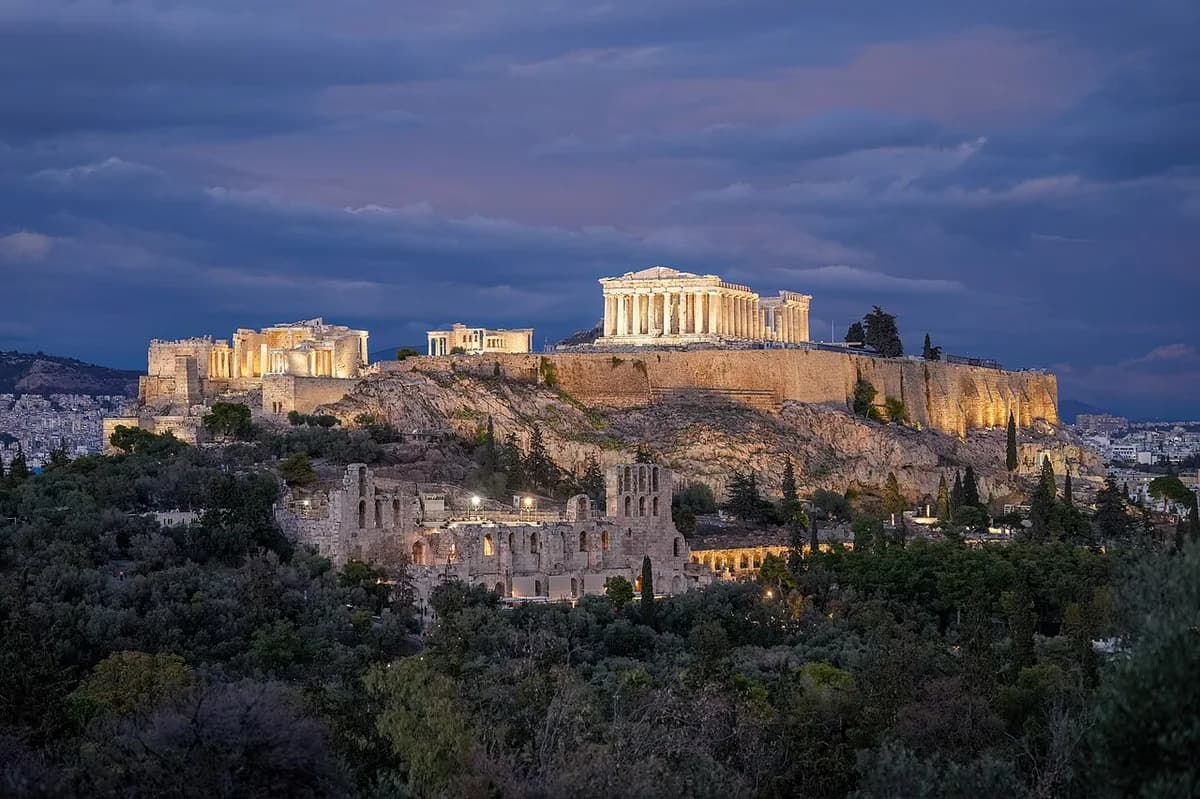
Athens is the capital of Greece and home to just under four million people in its greater metropolitan area. The Acropolis dominates the skyline from almost every neighbourhood; the Plaka, Monastiraki, and Syntagma form a dense historic core that rewards unhurried exploration; and the Athens Riviera stretches south along the coast, giving the city a relationship with the sea that most European capitals lack. The climate is firmly Mediterranean — warm and dry from May through October, mild in winter — which means outdoor events from Easter through to late autumn work reliably, and the city's squares and ancient sites become natural stages. For the broader picture of how Athens fits into the European festival landscape, the guide to festivals and events in Europe by city covers the full continent by destination.
This guide maps Athens's 2026 festival calendar month by month — from the Orthodox Easter processions of April through the marathon finish at the Panathenaic Stadium in November. Whether you are planning a short break around a single event or building a longer Greek itinerary, the sections below will help you decide when to come and what to expect when you arrive.
Free guide: Europe's Festival Calendar
A month-by-month map of Europe's unmissable festivals — with the best dates to visit each and a local tip you won't find in the guidebooks.
Athens Festival Calendar 2026 at a Glance
Pinning down the Athens calendar before I arrived saved me from missing the Release Athens ticket window — here is the full picture at a glance.
| Festival | When (2026) | Where | Good to know |
|---|---|---|---|
| Greek Orthodox Easter | April 2026 (Easter Sunday 12 April) | Metropolitan Cathedral, Lycabettus Hill church, neighbourhood streets across the city | Midnight Resurrection service on Holy Saturday is the emotional centrepiece; arrive 30–45 minutes early |
| Athens Technopolis Jazz Festival | Late May–June | Technopolis, Gazi (5 min walk from Kerameikos Metro) | Free entry; evening concerts begin around 21:00 |
| Release Athens | Late May–July | Plateia Nerou, Faliro coast | Individual headline nights spread across early summer; buy tickets per specific date well ahead |
| Athens Epidaurus Festival | June–August | Odeon of Herodes Atticus (Acropolis slope) & Ancient Theatre of Epidaurus | Programme announced February–March; Epidaurus tickets sell out early; return coaches bookable via the festival box office |
| Rockwave Festival | July | TerraVibe Park, Malakasa (approx. 40 km north of Athens) | Buses run from central Athens on festival days; journey approximately one hour |
| August Full Moon Festival | August (date shifts with lunar calendar) | Roman Agora, Ancient Agora, Odeon of Herodes Atticus | Free entry from around 20:00; programming announced by the Greek Ministry of Culture in July |
| Athens Marathon "the Authentic" | November | Marathon town → finish inside the Panathenaic Stadium | International registration opens in spring and fills quickly; stadium finish is free to watch |
Why Athens for Festivals?
Athens's festival culture is inseparable from its geography and its history. The city sits in the Attica basin, ringed by mountains and opening onto the Saronic Gulf, and much of its cultural life has been shaped by that relationship between enclosed interior and open sea. The ancient Greeks built their theatres into hillsides to exploit natural acoustics; the Odeon of Herodes Atticus on the southern slope of the Acropolis is a direct descendant of that tradition and remains in use for major performances throughout the summer. Staging Aeschylus or Euripides in the same city where those plays were first written and performed gives Athens a cultural density that no amount of purpose-built festival infrastructure can replicate.
Practically, the city is easier to navigate than its size suggests. The Metro system is modern, well-signed in English, and connects the main arrival hubs — Athens International Airport and Piraeus port — with the historic centre in under 40 minutes. An Athens City Pass or a multi-day transport pass bundles unlimited Metro, tram, and bus travel and is worth acquiring on arrival if you plan to move between festival venues. Taxis and ride-shares are plentiful, and the Acropolis Museum, the Roman Agora, Monastiraki, and Syntagma Square are all within comfortable walking distance of each other. The warm Mediterranean climate also means that even an evening arriving late for a festival is rarely a cold or wet one.
Athens Epidaurus Festival: Ancient Drama Under the Stars (June–August)
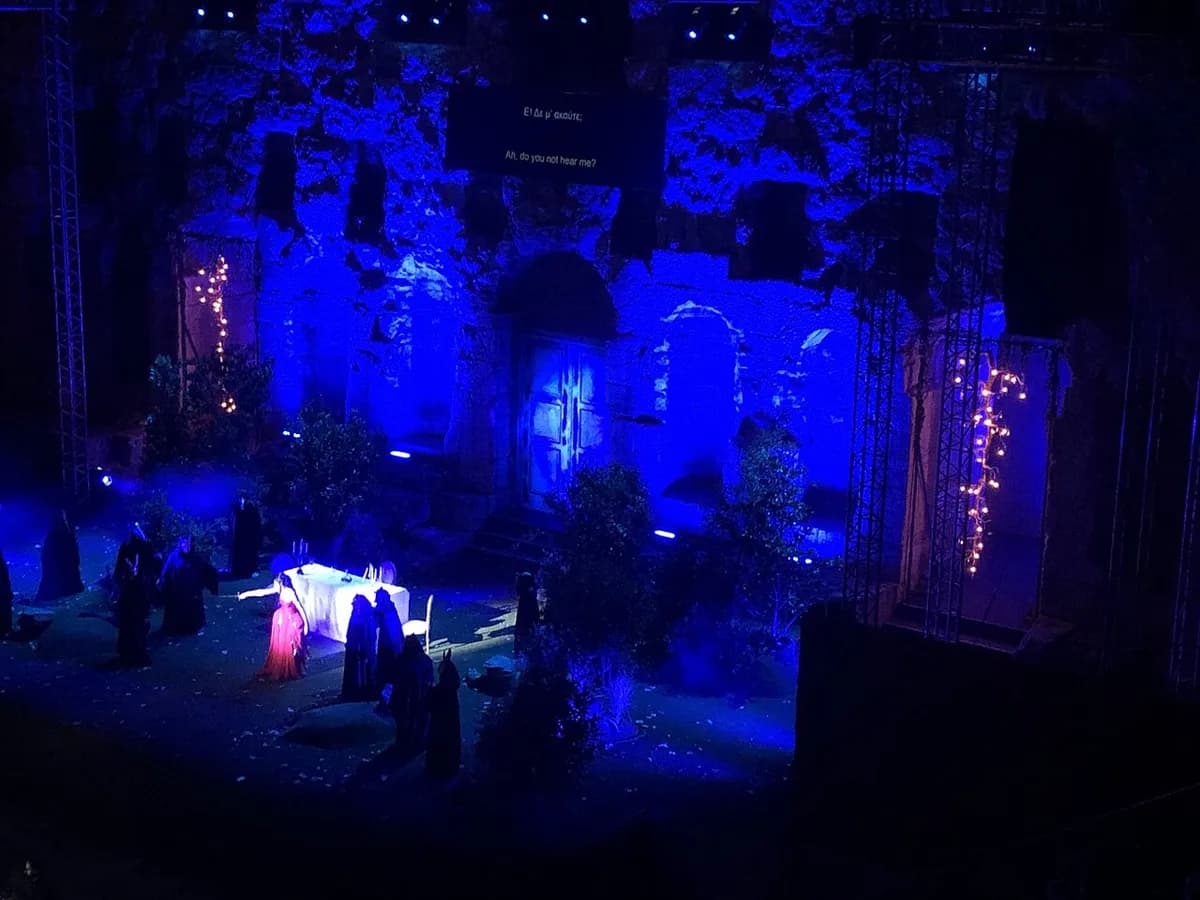
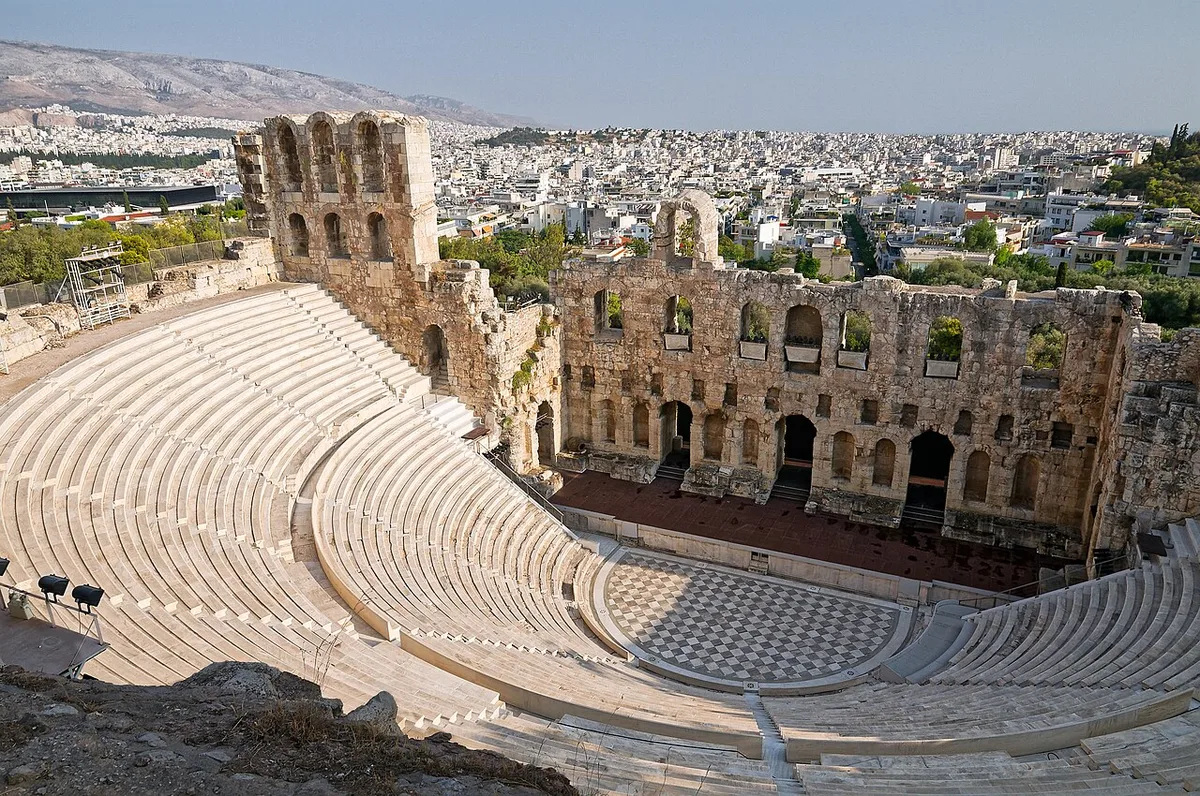
The Athens Epidaurus Festival — formally the Athens & Epidaurus Festival, known locally as the Greek Festival — is the flagship summer event and one of the most prestigious arts festivals in the Mediterranean. Founded in 1955, it programmes ancient Greek drama, theatre, opera, dance, and orchestral music across two main venues: the Odeon of Herodes Atticus on the Acropolis slope, and the ancient theatre of Epidaurus, approximately 150 kilometres southwest of Athens in the Peloponnese.
The Herodeon, as the Odeon is widely called, seats around 5,000 and opens onto the illuminated Acropolis above it — making even a moderately staged performance visually extraordinary. The ancient theatre of Epidaurus is one of the best-preserved Greek theatres in the world, famous for its near-perfect acoustics: a coin dropped on the orchestra floor can be heard in the back row. Performances at Epidaurus traditionally include original Greek tragedies and comedies, often directed by leading European and Greek directors, and the experience of watching Sophocles in a theatre he could have walked past is not one that translates to any other setting. The 2026 season runs from June to August.
For full booking guidance, what to expect at both venues, transport options between Athens and Epidaurus, and the complete 2026 programme, see the Athens Epidaurus Festival guide.
Greek Orthodox Easter in Athens (April 2026)
Orthodox Easter is the most important festival in the Greek calendar, and Athens marks it with a depth and seriousness that sets it apart from Easter celebrations elsewhere in Europe. In 2026, Orthodox Easter Sunday falls on 12 April — several weeks after the Western Easter date, as the Orthodox church follows the Julian calendar for calculating the moveable feast. The difference between Western and Eastern Easter can make planning a visit initially confusing; in most years they diverge by one to five weeks, though they occasionally coincide.
Holy Week (Megali Evdomada) builds across the preceding seven days, but the two unmissable moments are Good Friday and Holy Saturday. On Good Friday evening, each parish church carries the Epitaphios — a decorated bier representing the body of Christ — through the surrounding streets in candlelit procession. In Athens the most striking of these descends from the Lycabettus Hill church, moving through the Kolonaki neighbourhood below, but every neighbourhood has its own procession and they are all open to respectful observers. The city falls unusually quiet on Good Friday; restaurants reduce hours and the atmosphere has none of the festive lightness of the Christmas period.
The complete guide to Easter in Greece covers the full Holy Week sequence, the regional differences across the country, and practical advice on where to watch the Epitaphios and the midnight Resurrection service in Athens. For visitors approaching Greece for the first time during Holy Week, the broader guide to Easter and Holy Week celebrations in Europe provides useful context for how the Greek Orthodox traditions compare to those in other countries across the continent.
Athens Technopolis Jazz Festival (Late May–June)
The Athens Technopolis Jazz Festival takes place in late May and early June at Technopolis, the former Athens Gas Company industrial complex in the Gazi neighbourhood. Entry is free, which is unusual for an event of this scale and consistent quality, and the industrial setting — red-brick gasometer towers, wide open courtyards, and mature trees — gives the performances a character quite different from a conventional concert hall or outdoor stage. Evening concerts typically begin around 21:00 local time, after the day's heat has diminished, and the Gazi area around Technopolis has one of the densest concentrations of restaurants and bars in Athens, making dinner before or after the performance entirely straightforward.
The festival programmes jazz across its various strands: mainstream, contemporary, Greek jazz, and crossover acts that move between jazz and electronic music. The emphasis on free access and the relaxed industrial setting create an audience that mixes local Athenians with visitors in roughly equal proportion, which gives the event a more genuinely neighbourhood-rooted feel than most major festival events in the city. Technopolis is reached on foot from Kerameikos Metro station in around five minutes.
For bigger-name international acts, the city's headline summer music event is Release Athens, a series of open-air concerts staged from late May through July at Plateia Nerou on the Faliro coast, a short tram ride south of the centre. Rather than a single weekend, Release Athens spreads individual headline nights across the early summer, each built around a major rock, pop, or electronic act, so it pays to check the lineup calendar and buy tickets for specific dates well ahead. Combined with the Technopolis jazz programme and the Athens Epidaurus Festival, it means that by June the city offers something live almost every night of the week.
The August Full Moon Festival
On one evening each August — timed to coincide with the full moon — archaeological sites and monuments across Athens open for free and host concerts and cultural performances under the moonlit sky. This is the August Full Moon Festival, an event that is specifically Athenian in concept: it uses the ancient monuments as both stage and backdrop, so that the full moon over the Acropolis becomes part of the visual design of every performance. In a city that has spent three millennia being dramatic, the August Full Moon delivers on the premise.
In Athens the principal venues are the Roman Agora, the Ancient Agora, and the Odeon of Herodes Atticus, with access to the Acropolis hilltop itself authorised in some editions. Exact programming varies each year and is announced by the Greek Ministry of Culture in July; the same format is replicated at archaeological sites across Greece on the same evening, from Delphi to Thessaloniki and Nafplio. Free entry to the sites opens from around 20:00 and the event is well attended — arriving early at the Roman Agora and the Ancient Agora is advisable. The exact date shifts with the lunar calendar each year, so checking the Ministry of Culture's official announcements in advance of your trip is essential.
Rockwave Festival and Athens Summer Music
Rockwave Festival is Greece's largest outdoor rock and music festival, typically held over two or three days in July at TerraVibe Park in Malakasa, approximately 40 kilometres north of central Athens. The site is a large open-air park, and the lineups across Rockwave's history have included a consistent run of major international rock, alternative, and heavy metal acts alongside emerging European artists. Buses run from central Athens to TerraVibe on festival days; the journey takes approximately one hour, and the park's size comfortably accommodates the crowds that the larger headliners draw.
Summer in Athens also sustains a wider range of live music events across the city itself, particularly at the Technopolis complex in Gazi and at several rooftop and open-air venues in Monastiraki and Psyrri. The season from May through September is when the city's outdoor venue culture comes fully into its own: concerts run late, the warm nights encourage lingering, and the combination of performance and urban setting — ancient stones, warm air, the smell of jasmine from someone's balcony — gives even modest events a quality that indoor venues elsewhere cannot easily match.
The Athens Marathon and Getting Around in Autumn
The Athens Marathon "the Authentic" takes place in November and follows one of the most historically resonant courses in distance running. The race starts in the town of Marathon, approximately 42 kilometres northeast of Athens, and follows a coastal and urban route to finish inside the Panathenaic Stadium — the marble stadium built for the 1896 modern Olympic Games and the only stadium in the world built entirely of marble. For running enthusiasts, crossing the finish line inside the Panathenaic Stadium is a specific and unrepeatable experience; for those watching, the stadium finish is open to spectators and free to attend.
The 2026 Athens Marathon is expected to follow the same November pattern as previous editions; registration opens in spring and fills quickly for international participants, so securing a place well in advance is advisable. November is also one of Athens's quieter tourist months, which makes accommodation and restaurant bookings easier to arrange and gives the city a calmer character than the summer peak. Sightseeing — the Acropolis, the National Archaeological Museum, the Acropolis Museum — is genuinely more pleasant in the cooler autumn temperatures.
- Metro Lines 1, 2, and 3 — modern, English-signed; Line 3 connects the airport directly to Syntagma in around 40 minutes; Line 1 runs from Piraeus port to the centre
- Athens City Pass or multi-day transport pass — covers Metro, tram, and bus; available at the airport and major stations
- Walking — the Acropolis Museum, Roman Agora, Monastiraki, and Syntagma are all within 20 minutes on foot of each other
- Coaches to Epidaurus — run on festival performance evenings; book alongside your festival tickets through the official Athens Epidaurus Festival box office
- Athens Riviera tram (Line T5) — runs south along the coast to Vouliagmeni; useful for a half-day seaside break during a longer festival visit
Frequently Asked Questions
When is the best time to visit Athens for festivals?
The two peak periods are spring and summer. April brings Greek Orthodox Easter — in 2026 this falls on Sunday 12 April — the most important festival in the Greek calendar, with Holy Week processions and the midnight Resurrection service on Holy Saturday. June to August is the Athens Epidaurus Festival season, with ancient Greek drama and music at the Herodeon on the Acropolis slope and at the ancient theatre of Epidaurus. The August Full Moon Festival and Rockwave Festival also fall in summer. November brings the Athens Marathon for running enthusiasts, and the city is quieter and cooler throughout the autumn.
What is the Athens Epidaurus Festival and where does it take place?
The Athens Epidaurus Festival — also known as the Greek Festival — is Greece's flagship summer arts event, running from June to August. It programmes ancient Greek drama, theatre, opera, dance, and orchestral music at two main venues: the Odeon of Herodes Atticus (Herodeon) on the southern slope of the Acropolis in Athens, and the ancient theatre of Epidaurus, approximately 150 kilometres southwest of Athens in the Peloponnese. Tickets for Epidaurus performances in particular sell out early; booking as soon as the programme is announced each spring is strongly advised.
Is Greek Orthodox Easter a significant event to attend in Athens?
Yes. Orthodox Easter is the most important festival in the Greek calendar and Athens marks it with considerable depth. In 2026, Orthodox Easter Sunday falls on 12 April. The two key moments are the Good Friday Epitaphios procession — a candlelit cortege that moves through neighbourhood streets — and the midnight Resurrection service on Holy Saturday, when the Holy Light is passed from the altar to the congregation and out into the streets. The Metropolitan Cathedral on Mitropoleos Square and the church on Lycabettus Hill are among the best-attended locations in central Athens.
What is the August Full Moon Festival in Athens?
The August Full Moon Festival is a one-evening annual event timed to coincide with the August full moon, during which archaeological sites across Athens — including the Roman Agora, the Ancient Agora, and the Acropolis when access is authorised — open for free and host concerts and cultural performances under the moonlit sky. The exact date shifts each year with the lunar calendar. Programming is announced by the Greek Ministry of Culture in July; arriving early at popular sites such as the Roman Agora is advisable as the event is well attended by Athenians and visitors alike.
When is the Athens Marathon 2026?
The Athens Marathon "the Authentic" takes place in November 2026 and follows the historic course from the town of Marathon to the finish line inside the Panathenaic Stadium — the marble stadium that hosted the first modern Olympic Games in 1896. The exact date for the 2026 edition will be confirmed on the official Athens Marathon website; international registration typically opens in spring and fills quickly. November is one of Athens's quieter tourist months, making it a good time to combine the marathon with sightseeing at the Acropolis and the city's major museums.
Related: Athens Epidaurus Festival 2026 — Full Guide.
Athens's festival calendar works because the city's history is not in a museum — it is the stage. Watching ancient drama at the Odeon of Herodes Atticus with the Acropolis lit behind the performers, or following a candle procession through the Plaka on Good Friday, the past and present occupy the same frame rather than separate rooms. That is what makes planning a trip around the calendar here feel different from festival tourism elsewhere: the events are not overlaid on the city's character, they are expressions of it.
If your Mediterranean interests extend beyond Greece, the guide to festivals and events in Venice is the nearest cultural comparison — a city equally shaped by water and antiquity, with an equally layered events calendar. But Athens, at its best, offers something Venice cannot quite match: the feeling that the festivals you are watching are the same festivals, on the same ground, that gave Western culture most of its vocabulary for what a festival is supposed to be.
Free guide: Europe's Festival Calendar
A month-by-month map of Europe's unmissable festivals — with the best dates to visit each and a local tip you won't find in the guidebooks.
You might also like


Continue reading
More guides you'll find useful