Athens Epidaurus Festival 2026: The Complete Guide
Athens Epidaurus Festival 2026: ancient drama at the Herodeon and Epidaurus, June–August. Tickets, venues, getting there, and what to expect.
On this page
Athens Epidaurus Festival 2026: The Complete Guide
Greece has been staging tragedy and comedy in stone amphitheatres for more than two thousand years, and the Athens Epidaurus Festival is where that tradition is most fully alive today. Running each year from June to August, the festival splits its programme between two venues of almost surreal historical weight: the Odeon of Herodes Atticus on the south slope of the Acropolis, and the Ancient Theatre of Epidaurus deep in the Peloponnese countryside. The first time I saw a performance at the Herodeon — a June night, the floodlit Parthenon directly above, the stone seats filling with an Athenian crowd that seemed entirely at ease with the grandeur around them — I understood immediately why this is one of the most visited arts festivals in Europe. For the full picture of what is happening in Athens across the summer and beyond, the festivals and events in Athens guide covers the wider city calendar.
The festival is also known as the Greek Festival or the Hellenic Festival (Greek: Festival Athinon kai Epidavrou), and it has been the primary vehicle for Greek cultural life in the summer months since the 1950s. The programme spans ancient Greek tragedy and comedy, contemporary theatre, classical concerts, opera, ballet, and modern dance, drawing both Greek national companies and major international directors and performers. The two venues complement each other: the Herodeon is the city setting, compact and intimate despite its nearly five thousand seats; Epidaurus is the pilgrimage — a two-and-a-half-hour drive from Athens that rewards the effort with what are widely regarded as the finest theatrical acoustics in the world.
This guide covers the 2026 programme and what to expect of each venue, how to get to Epidaurus from Athens, the ticket-booking process, and all the practical details — what to bring, when performances start, and how to plan the broader Athens visit around the festival. The official programme for 2026 is confirmed by the festival in spring each year; I will note where you should verify current details directly with the organisers before travelling.
Free guide: Europe's Festival Calendar
A month-by-month map of Europe's unmissable festivals — with the best dates to visit each and a local tip you won't find in the guidebooks.
Athens Epidaurus Festival 2026: Quick Facts
Before diving into the detail, here is every practical fact you need for the 2026 festival — pulled together so you can plan venues, travel, and tickets in a single glance.
| Detail | Information |
|---|---|
| Dates 2026 | June to August 2026; Herodeon programme opens in June, Epidaurus ancient drama weekends concentrated in July and August; all performances begin around 21:00 |
| Main venues | Odeon of Herodes Atticus (Herodeon), south slope of the Acropolis, Athens (~4,800 capacity); Ancient Theatre of Epidaurus, Argolid, Peloponnese (~14,000 seats) |
| What's performed | Epidaurus: ancient Greek tragedy and comedy (Sophocles, Euripides, Aeschylus, Aristophanes), Friday and Saturday evenings; Herodeon: contemporary theatre, classical concerts, opera, ballet and modern dance |
| Tickets | Official Athens Epidaurus Festival website and box offices; main Athens box office on Panepistimiou Street; secondary box office at the Herodeon on performance nights; Epidaurus nights sell out within days — book as soon as the programme is announced |
| Getting to Epidaurus | ~150 km from central Athens, 2–2.5 hours by road via the A7 Moreas motorway; KTEL coaches run from Athens on performance evenings (book alongside your ticket); Nafplio (~30 minutes from the theatre) is the ideal overnight base |
| Best time / tips | Arrive at least an hour before the performance; bring a cushion (stone seats), a light jacket (temperature drops after sunset), comfortable flat shoes, and water; at Epidaurus, explore the sanctuary site in the afternoon — the theatre and museum are on the same grounds |
What Is the Athens Epidaurus Festival?
The Athens Epidaurus Festival is Greece's foremost annual performing arts event, presenting a concentrated season of high-calibre productions across its two flagship venues from June through August. Its origins lie in the early 1950s, when the newly restored Herodeon hosted its first modern performances and a connection was made to ancient Greek drama. Over the following decades the festival expanded its remit, added Epidaurus as a permanent partner venue, and grew from a local cultural initiative into an internationally recognised programme that attracts companies and soloists from across Europe and beyond.
The name Hellenic Festival is sometimes used interchangeably with Athens Epidaurus Festival, though since 2006 the official organisation has operated as the Athens Epidaurus Festival S.A., responsible for both venues and the programming that links them. What distinguishes it from other European summer arts festivals is the specificity of its setting: every performance at either venue is staged in a space that was designed, or at least shaped by history, for exactly this purpose — not a converted warehouse or a purpose-built modern hall, but buildings where performance and landscape are fully integrated. Seeing Sophocles staged at Epidaurus is not a novelty. It is a continuation.
Greece's cultural calendar carries many important occasions — the Orthodox Easter celebrations across the country are perhaps the most deeply rooted of them, connecting communities from Corfu to Crete in a shared liturgical tradition — but the Athens Epidaurus Festival occupies a different register entirely: it is the secular centrepiece of the Greek summer, the event that defines the season for performing arts audiences in Athens and draws international visitors who plan their entire trip around a single performance date.
The Herodeon: Athens at Night
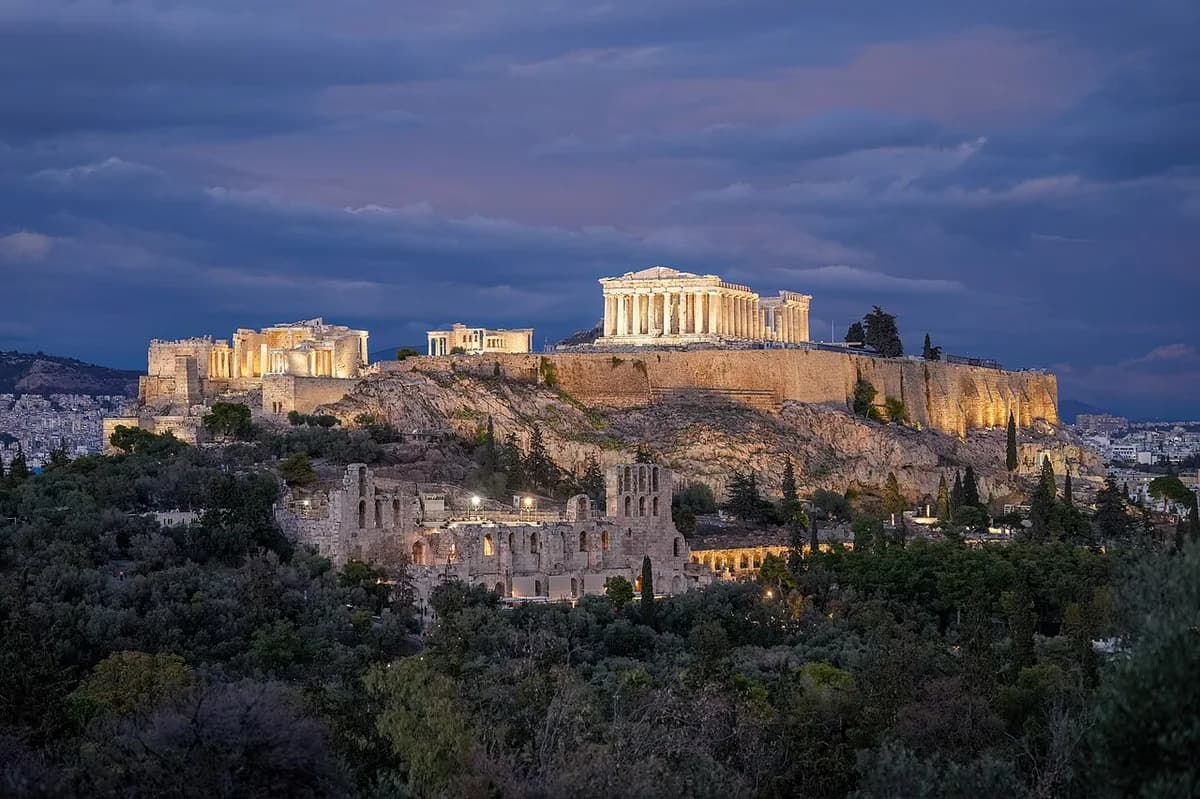
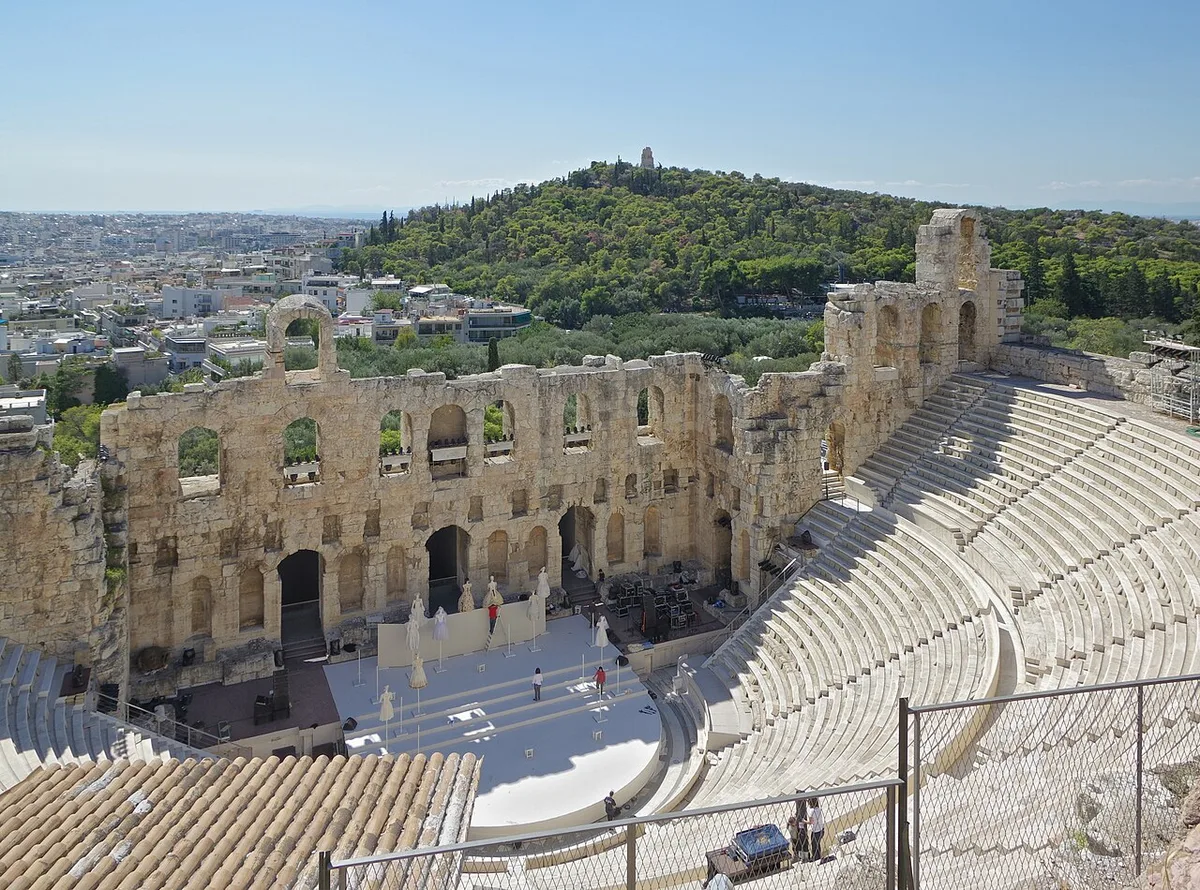
The Odeon of Herodes Atticus — universally referred to in Athens as the Herodeon — was built in AD 161 by the wealthy Athenian scholar and patron Herodes Atticus in memory of his wife Aspasia Annia Regilla. It sits on the south slope of the Acropolis, cut into the rock, and was originally roofed with cedar of Lebanon. The roof is long gone; what remains is one of the best-preserved Roman-era theatre structures in the Mediterranean, with a capacity of around 4,800 and a stage backdrop — the original three-storey Roman arched façade — that has been partially restored to its ancient height. Above and behind it, the Parthenon is visible throughout an evening performance, floodlit after dark in a shade of amber that makes it look almost unreal from your seat in the stalls.
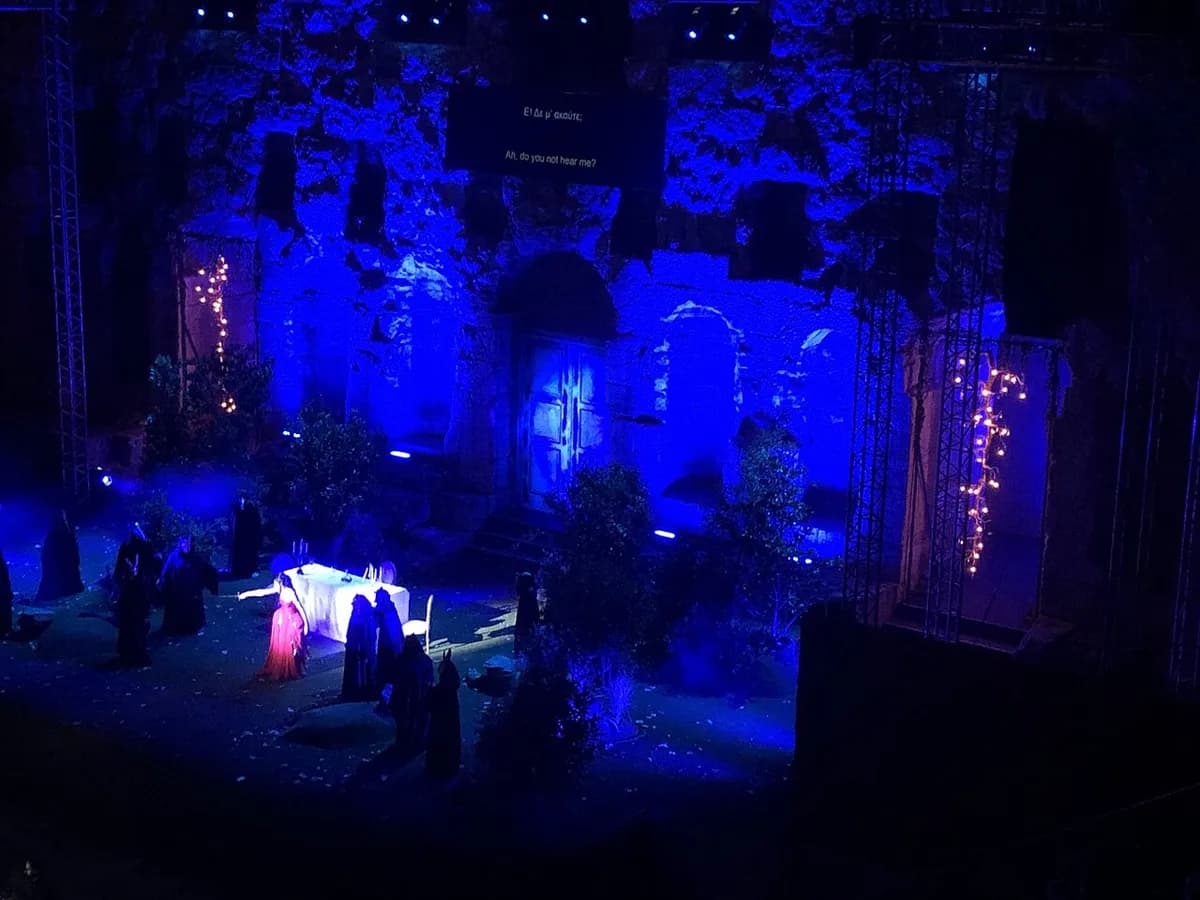
The Herodeon hosts the most eclectic part of the festival programme: international ballet companies, classical concerts by the Greek National Symphony Orchestra and visiting ensembles, opera productions, and theatrical performances ranging from ancient drama in modern Greek to major international theatre companies performing in their own languages. The acoustics are good but not in the same category as Epidaurus; the experience at the Herodeon is less about sonic perfection and more about the extraordinary setting. When I attended a concert there on a late June evening, the temperature had dropped to something comfortable, the city hummed faintly below, and the light on the Acropolis shifted perceptibly as the hours passed. The setting does a great deal of the work, and the productions that succeed here tend to be those willing to use rather than fight it.
The Ancient Theatre of Epidaurus
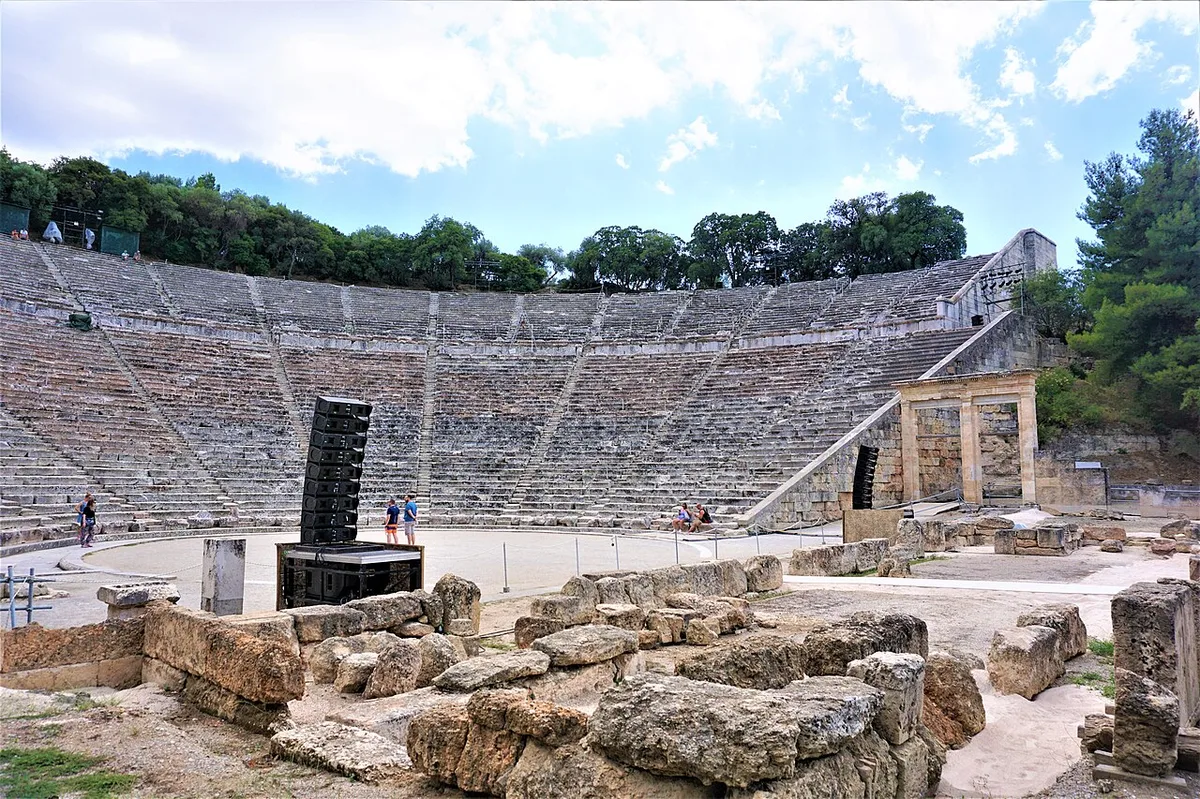
If the Herodeon is Athens on its own terms — urban, layered, confident — then the Ancient Theatre of Epidaurus is Greece at its most elemental. The theatre dates from the 4th century BC, designed by the architect Polykleitos the Younger as part of the sanctuary of Asclepius in the Argolid region of the Peloponnese. It seats approximately 14,000 people across its 55 tiers of limestone seating, built into the natural hillside in a near-perfect half-circle. The acoustics are the reason people travel from across Europe on festival performance evenings: a coin dropped on the circular orchestra floor at the centre of the stage is clearly audible from the highest row, without amplification, without modern acoustic engineering. Ancient Greek drama was written for spaces of this scale and geometry, and Epidaurus is the only surviving ancient theatre where those original conditions are substantially intact.
The Epidaurus programme focuses on ancient Greek tragedy and comedy — works by Sophocles, Euripides, Aeschylus, and Aristophanes — typically staged by Greek national companies and guest directors, with occasional productions from international companies performing in translation. Performances run on Friday and Saturday evenings during the festival's Epidaurus season, which falls within the broader June–August programme but occupies a defined window, usually July and August. The specific dates and productions are confirmed in spring; check the official festival website for the 2026 Epidaurus calendar before planning the journey out from Athens.
The site is a UNESCO World Heritage monument, and the experience of being there on a performance night has a quality that resists easy description. The Peloponnese countryside is dark and quiet; the drive from Athens passes through mountains and coastal plain; and arriving at the theatre — which sits at the end of a pine-shaded access road — after two hours of travel has its own sense of preparation built into it. The journey is part of the event.
The 2026 Programme: What to Expect
The Athens Epidaurus Festival programmes both venues across the full June-to-August season, with the Herodeon opening first and the Epidaurus weekend nights concentrated in July and August. A typical programme across the two venues includes:
- Ancient Greek tragedy and comedy — Epidaurus, Friday and Saturday evenings; the core of the festival's identity, performed by Greek and international companies
- Contemporary theatre — both venues; Greek and international productions, often premieres or co-productions with major European festivals
- Classical concerts and recitals — Herodeon; the Greek National Symphony Orchestra is a recurring presence, alongside visiting ensembles and soloists
- Opera — Herodeon; Greek National Opera productions and occasionally international touring companies
- Ballet and modern dance — Herodeon; major international companies have included celebrated European ballet companies in recent seasons
The 2026 programme will be confirmed and announced by the festival in spring. Specific productions, performance dates, and any additional or satellite venues are listed on the official Athens Epidaurus Festival website once released. One thing I would not leave to chance: the Epidaurus ancient drama nights are the most in-demand events across the entire programme and have historically sold out within days — sometimes hours — of ticketing opening. If there is a specific Epidaurus performance you want to see, you need to know when booking opens and be ready to purchase immediately.
Getting to Epidaurus from Athens
The Ancient Theatre of Epidaurus is approximately 150 kilometres from central Athens, in the Argolid region of the Peloponnese. The drive takes two to two and a half hours via the A7 Moreas motorway and the road through the Corinth Canal crossing, then south through the Argolid. It is manageable in a hire car but means leaving Athens in the early to mid-afternoon to arrive before the performance, which starts after sunset — usually around 21:00. The return drive after midnight on mountain and motorway roads is tiring; factor this into the decision.
The festival and a number of licensed tour operators run dedicated KTEL coaches from Athens on performance evenings. These buses depart from a central Athens location in the late afternoon and return to Athens after the performance concludes, arriving back in the early hours. It is the most common option for independent travellers and removes the strain of driving unfamiliar roads after midnight. Coach seats for popular Epidaurus productions should be booked in advance alongside the performance ticket itself — they are sold separately and also go quickly.
The nearest base town for combining a performance at Epidaurus with a longer stay in the region is Nafplio, approximately 30 minutes from the theatre. Nafplio is one of the most attractive small towns in Greece — a former Venetian and Ottoman port with a Baroque old town built on a narrow peninsula, a waterfront promenade, and the Palamidi fortress sitting on a cliff above the bay. Staying there for two or three nights gives you time to see the theatre at Epidaurus, the nearby Bronze Age citadel at Mycenae (under an hour by car), and the old town at leisure. It is a significantly better base for this corner of the Peloponnese than treating the performance as a pure day trip from Athens.
Tickets: How to Book and What to Budget
Tickets for the Athens Epidaurus Festival are sold through the official festival website and its box offices. Both online booking and walk-up purchase at physical box offices — the main Athens office is typically on Panepistimiou Street in the city centre, with a secondary box office at the Herodeon on performance nights — are available, though online is strongly recommended for anything in demand. Full details, contact information, and booking links are on the official festival website once the programme is announced.
Prices vary considerably by venue, production, and seat tier. The stone seating at both venues is graded into zones, and prices reflect proximity to the stage and sight-line quality. As a rough guide to what to budget:
- Upper-tier seats (both venues): accessible budget range; at Epidaurus particularly, the upper tiers still offer exceptional acoustic quality
- Mid-tier seats: mid-range pricing, the most common choice for first-time visitors wanting a good overall experience
- Orchestra and front sections: premium pricing, especially for high-profile Herodeon productions with international companies or soloists
Specific prices are confirmed when each season's programme is released. The most in-demand performances — ancient drama nights at Epidaurus, opera and major dance companies at the Herodeon — sell out quickly once booking opens. If your trip is structured around a particular production, buy tickets the moment they become available rather than waiting. The festival has in recent seasons offered a notification option for the new programme release; worth using if you are planning travel from abroad.
Practical Guide: What to Bring and When to Arrive
Both venues share the same fundamental character: outdoor ancient stone theatres where performances happen after dark on summer evenings. The practical requirements are almost identical, and none of them are complicated — but skipping them creates a noticeably uncomfortable evening.
The essentials for either venue:
- A cushion — stone seats are the original hard surface; every regular attendee brings one. Thin foam travel cushions are sold near the venues on performance nights, but bringing your own is more reliable and usually better quality.
- A layer for the evening — Athens and the Peloponnese in July are extremely hot during the day, but stone amphitheatres cool rapidly after sunset. A light jacket or wrap is needed by the end of a two-hour performance, especially at Epidaurus in the open countryside.
- Comfortable flat shoes — the paths at Epidaurus and the approach to the Herodeon involve uneven stone and gravel; shoes with any kind of heel are impractical on the way in and genuinely difficult on the way out in the dark.
- Water — both venues have limited refreshment facilities; arrive hydrated and carry a bottle for the performance itself.
For timing: performances begin approximately at 21:00, which means arriving at 20:00 or earlier is advisable to find your seat without rushing. At Epidaurus, the archaeological site is worth exploring in the late afternoon before the performance — the theatre, the sanctuary of Asclepius, and the small on-site museum are all on the same grounds and justify two hours of unhurried exploration before the evening programme begins. The site closes to general visitors before the performance starts; ticketholders are guided through separately. At the Herodeon, the Acropolis grounds close before performance time, but the walk up from the entrance at the base gives you views across Athens at dusk that are worth accounting for in your arrival schedule.
Athens Beyond the Festival
The Athens Epidaurus Festival runs through the hottest months in the city's calendar, and building a stay around it means planning the wider Athens visit for the conditions. Mornings before 11:00 are the window for the Acropolis and Acropolis Museum without the worst of the midday heat; afternoons are best spent in shaded cafés, covered markets, or air-conditioned museums. The Benaki Museum, the Museum of Cycladic Art on Vasilissis Sofias Avenue, and the National Archaeological Museum in Exarcheia all provide exceptional alternatives to outdoor site visits in July and August and deserve far more time than most visitors give them.
The neighbourhoods below and around the Acropolis — Plaka, Monastiraki, Psyrri, and the quieter streets of Koukaki and Pangrati — shift noticeably in character after dark. Athens in summer comes alive in the evening in a way that northern European capitals rarely manage: dining after 21:00 is entirely normal, the tavernas stay busy past midnight, and the rooftop bars of the Monastiraki area have direct lines of sight to the floodlit Acropolis. A festival performance at the Herodeon, followed by a late dinner in the streets below the hill, makes one of the better evening arrangements available anywhere in Europe this summer. For a broader overview of what Athens has to offer across its full calendar, the Athens festivals and events guide is the most complete starting point. Visitors interested in classical culture and extraordinary urban settings may also find useful reference in the festivals and events in Venice guide — another city where a summer arts festival and ancient architecture define the season in equal measure.
Frequently Asked Questions
When does the Athens Epidaurus Festival 2026 take place?
The Athens Epidaurus Festival 2026 runs from June to August, with the Herodeon programme typically opening in June and the Epidaurus ancient drama weekends concentrated in July and August. Exact performance dates and programme details are confirmed by the festival in spring each year — check the official Athens Epidaurus Festival website for the full 2026 schedule before finalising your travel plans.
What kinds of performance are shown at the festival?
The Athens Epidaurus Festival presents ancient Greek tragedy and comedy (primarily at Epidaurus), contemporary theatre, classical concerts, opera, and ballet and modern dance (primarily at the Herodeon). Greek national companies are joined each year by major international ensembles, directors, and soloists. The Epidaurus programme focuses on ancient drama — Sophocles, Euripides, Aeschylus, Aristophanes — staged in the 4th-century BC amphitheatre.
How do I get to the Ancient Theatre of Epidaurus from Athens?
Epidaurus is approximately 150 kilometres from central Athens — about two to two and a half hours by road. The festival and licensed tour operators run dedicated KTEL coaches from Athens on performance evenings, departing in the late afternoon and returning after the show. Driving is also possible but involves an extended night-time return on motorway and mountain roads; the coach is the most practical option for most visitors. Nafplio, around 30 minutes from the theatre, is the ideal base if you want to spend more than one day in the area.
How do I buy tickets for the Athens Epidaurus Festival?
Tickets are sold through the official Athens Epidaurus Festival website and its box offices in Athens and at the venues on performance nights. Online booking is the most reliable method, especially for high-demand productions. Epidaurus ancient drama nights and popular Herodeon concerts sell out quickly once the programme is announced — book immediately when ticketing opens and do not wait until closer to your travel dates for the most sought-after performances.
What should I wear or bring to a performance at Epidaurus or the Herodeon?
Bring a cushion — both venues have original ancient stone seating which is hard without one. Pack a light jacket or wrap, as the temperature drops noticeably after sunset even in July and August. Wear comfortable flat shoes for the uneven stone paths at both venues. Arrive at least an hour before the performance; at Epidaurus, the sanctuary site is worth exploring in the afternoon before the evening programme begins, and the approach and exit involve walking unlit paths in a large crowd.
Related: Festivals and Events in Athens — the complete Athens cultural calendar, from summer concerts to winter traditions.
The Athens Epidaurus Festival earns its reputation on the quality of its programming and the irreplaceable character of its venues — but what makes it genuinely different from any other European summer arts festival is the continuity it represents. Athenian audiences have been filling the Herodeon for decades; Greeks have been making the summer pilgrimage to Epidaurus on performance Fridays and Saturdays since the festival first claimed the ancient theatre for the modern season. Attending as a visitor, you are entering a living tradition rather than a curated heritage experience, and that distinction is palpable the moment you take your seat in a two-and-a-half-thousand-year-old landscape and the orchestra begins.
Plan the Herodeon visit around a production that interests you specifically — the programme is broad enough to suit most tastes, and almost any event benefits from the setting. Plan the Epidaurus visit around the ancient drama season, allow time in the afternoon to explore the sanctuary site, and stay in Nafplio if the schedule allows more than a single night. Book performance tickets and the Athens-to-Epidaurus coach as soon as the 2026 programme is announced. Greece in June, July, and August is at its most vivid — the light is extraordinary, the evenings are long, and the festival is the finest anchor available for a summer visit to Athens.
Free guide: Europe's Festival Calendar
A month-by-month map of Europe's unmissable festivals — with the best dates to visit each and a local tip you won't find in the guidebooks.
You might also like


Continue reading
More guides you'll find useful