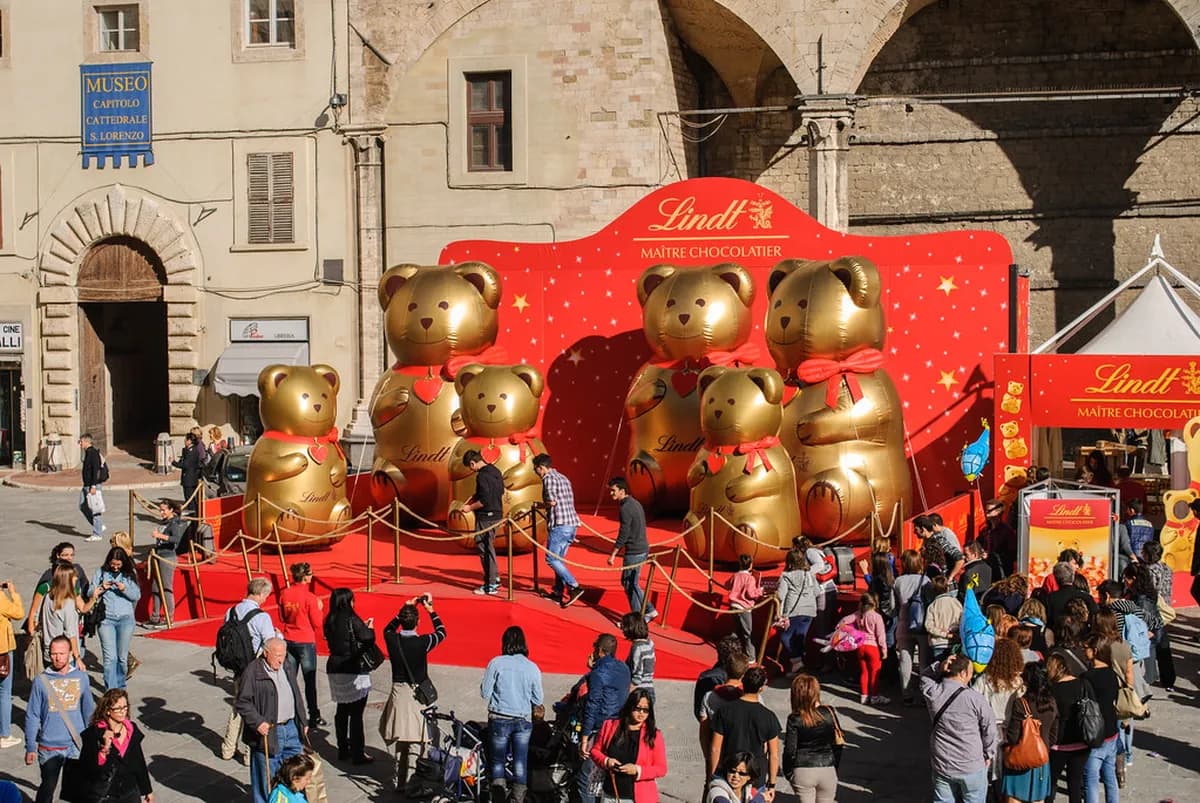
7 Key Facts About Eurochocolate Perugia Dates and Planning
Plan your trip with the official Eurochocolate Perugia dates for 2026 and 2027. Includes transport tips, the "Choco Cloud" theme, and booking advice.
On this page
7 Key Facts About Eurochocolate Perugia Dates and Planning
Last updated March 2026. Eurochocolate is Europe's largest chocolate festival and it takes place every autumn in the medieval hilltop city of Perugia, Umbria. Nearly one million visitors descend on the historic centre across ten days of tastings, live demonstrations, and massive cocoa sculptures. Knowing the exact Eurochocolate Perugia dates before you book is essential — hotels in the centre fill up months in advance.
Perugia transforms into a sugary paradise every November. Artisanal stalls and imposing chocolate sculptures line Corso Vannucci, the city's main promenade. The festival started in 1994 as a tribute to the city's most famous export, Perugina chocolate and its iconic Baci. It is now one of the best food festivals in Europe for families and chocolate professionals alike.
This guide covers the confirmed 2026 dates and what to expect for 2027, the festival theme, the historic-centre highlights, how to reach Perugia without a ZTL fine, ticket and entry details, and where to stay. Everything you need is below.
Free guide: Europe's Festival Calendar
A month-by-month map of Europe's unmissable festivals — with the best dates to visit each and a local tip you won't find in the guidebooks.
Official Eurochocolate Perugia Dates for 2026 and 2027
The official Eurochocolate Perugia dates for 2026 are 20 to 29 November. This ten-day event covers two full weekends of chocolate-themed celebrations. Crowds are consistently largest on the Saturdays and Sundays of the festival. Visiting on a Tuesday or Wednesday offers a noticeably quieter experience and shorter queues at the workshops. (For reference, the 2025 edition ran 14 to 23 November.)
For those planning further ahead, the 2027 edition is expected in late November 2027 — the festival traditionally occupies the second half of November, which aligns with Perugia's cool dry-autumn window — ideal conditions for chocolate storage and outdoor tastings. Exact 2027 dates are not yet confirmed, so check the official Eurochocolate website for the published schedule and any last-minute changes before travelling.
Most stands and events run from approximately 09:00 until late evening. The main hub is the historic centre near Piazza IV Novembre. Expect temperatures between 6–13°C / 43–55°F during the festival. The crisp November air makes the warm drinking chocolate sold along Corso Vannucci one of the simplest and best festival pleasures.
The 2026 Theme: The Festival Among the Clouds
The 2026 edition carries the "Choco Cloud" theme — formally titled "The Festival Among the Clouds." Organizers designed the experience around lightness and elevation, with floating sensory installations and cloud-shaped chocolates available at the main festival stands along Corso Vannucci. Local artists spend days carving large-scale sculptures from solid cocoa blocks; shavings are often handed to the crowd for free during the opening weekend.
The Spazio Nuvola in Piazza Matteotti is the centrepiece for 2026, hosting tastings from the Costruttori di Dolcezze artisan collective. The Chocolate Show and Eurochocolate World feature 40 brands from 22 cocoa-producing countries, with a focus on premium Caribbean and Colombian Arauca-region cacao. Interactive Nuvolab sessions are designed specifically for families and children.
Interactive workshops are a major part of every year's programme. You can learn to temper chocolate, make your own truffles, or attend guided pairings at the ChocoLab. These sessions frequently sell out, so advance booking via the official event portal is strongly advised. Plan to arrive early on workshop days — particularly on weekdays, when smaller groups make the experience far more hands-on than the crowded weekend sessions.
Must-See Eurochocolate Attractions in the Historic Centre
The festival occupies Perugia's elegant centro storico, with Corso Vannucci serving as the beating heart of the event. Master chocolatiers demonstrate their craft alongside hundreds of artisan producers from Italy and abroad, offering everything from single-origin dark bars to experimental flavour combinations. The Palazzo dei Priori, one of Italy's finest Gothic civic buildings, forms the backdrop for the main sculptures — a pairing of medieval grandeur and cocoa artistry that no other festival can replicate.
Beyond the main promenade, the festival spreads into the surrounding squares. Piazza IV Novembre houses the Fontana Maggiore, a 13th-century masterpiece in pink-and-white marble that becomes an unlikely focal point for the evening crowd. The Etruscan Arch at the northern edge of the centre is a quieter spot where smaller artisan stands cluster, often selling the most interesting single-origin products away from the main crowds.
The Galleria Nazionale dell'Umbria inside the Palazzo dei Priori stays open during festival week and is an excellent 90-minute escape from the chocolate noise. Perugia also rewards those who walk beyond the festival perimeter: the surrounding countryside of rolling hills and olive groves provides immediate context for why Umbria is called the green heart of Italy. For a full overview of the city's year-round appeal, the best food and wine festivals in Europe guide covers Perugia alongside other Umbrian highlights.
Navigating the Festival: Transport and Minimetrò
Driving into the centre of Perugia during Eurochocolate is nearly impossible and expensive if you get it wrong. The city enforces a strict ZTL (Zona a Traffico Limitato) system that restricts all non-resident vehicles from entering the historic core. Cameras monitor every access point, and fines for tourists who stray inside the ZTL can reach €80–150 per infraction, often arriving weeks later via a rental company surcharge. The correct strategy is to park at the Pian di Massiano park-and-ride near the Renato Curi stadium.

From Pian di Massiano, the Minimetrò — a fully automated cable-driven transit system — climbs directly to the Pincetto station at the edge of the festival area. Tickets cost approximately €1.50 each way and the ride takes about ten minutes. The system runs frequently and is step-free, making it the most accessible route into the centre for visitors with reduced mobility. During peak festival weekends, expect queues at the Minimetrò platform; arriving before 10:00 avoids the worst of them.
If you are coming by train, Perugia's main station (Fontivegge) is served by regional connections from Florence (approximately 2h), Rome Termini via Terontola (approximately 2h 30min), and Assisi (25 minutes). From Fontivegge you can take a bus or the Minimetrò toward Pincetto. Umbria International Airport in Sant'Egidio is about 20 minutes from the centre by shuttle, taxi, or hire car — park at the edge of the city and use the Minimetrò rather than attempting the historic centre by car.
- Car: park at Pian di Massiano, take the Minimetrò to Pincetto. Never drive into the ZTL — cameras fine you automatically.
- Train: arrive at Fontivegge, take the Minimetrò (direction Pincetto) or Bus 6/7 to the upper town.
- Plane: Sant'Egidio airport shuttles run to the centre in approximately 20 minutes.
- Bus: regional FlixBus and SULGA coaches stop at Piazza Partigiani, directly below the escalators to the historic centre.
Tickets, Opening Hours, and Entry Requirements
Entry to the main festival areas along Corso Vannucci and the surrounding squares is free. There is no gate, wristband, or registration required to walk through the stalls, watch the live sculptures, or sample from the many stands offering complimentary tastes. This open-access model is one of the reasons Eurochocolate consistently draws close to one million visitors across its ten days.
Premium experiences require tickets purchased in advance. The ChocoCard gives access to a curated selection of tasting sessions and workshops; the price varies by year but typically starts around €15–20 for a standard card. Specific masterclasses — such as bean-to-bar tempering with named chocolatiers — sell out weeks before the festival opens and cost €25–40 per person. Check the official site for 2026 pricing once it is released, usually in September.
Stands open around 09:00 and many stay open until 21:00 or later on weekdays, with extended hours to 22:00 on festival weekends. The festival runs every day of the ten-day period with no rest days. Morning hours (09:00–11:30) and late afternoon (17:00–19:00) are consistently the least crowded windows. Weekday mornings are the best time to attend workshops without pre-booking, as some organisers release last-minute spots at the venue.
The Perugina Factory: A Half-Day Add-On Worth Booking
Most visitors stay entirely within the festival perimeter and miss one of the most rewarding extensions of the Eurochocolate experience: the Casa del Cioccolato Perugina in San Sisto, a 15-minute drive or 20-minute bus ride from the city centre. This is the working factory and museum of the company that founded Perugia's chocolate identity in 1907. The Baci — foil-wrapped hazelnut chocolates with tiny love notes — were invented here, and the museum traces the full arc from early 20th-century confectionery workshop to modern global brand.
Guided factory tours run on weekdays and include a tasting line where you can sample products directly off the production belt. Tours typically cost €12–16 per adult and last approximately 90 minutes. Booking at least a week ahead is recommended during Eurochocolate, when demand peaks alongside the festival. A dedicated children's chocolate-making class runs on Saturday mornings at the factory and is separate from the festival's own Nuvolab sessions — a useful fallback if city-centre workshops are fully booked.
Combining a factory visit with the festival is most practical on a weekday. Leave the centre by 13:00, spend the afternoon at Casa del Cioccolato, and return for the evening atmosphere on Corso Vannucci when the medieval architecture is lit and the crowds thin slightly. No competitor festival in Italy offers this kind of living industrial heritage alongside an open street fair — it is what gives Eurochocolate its depth beyond spectacle.
Where to Stay: Best Neighbourhoods for Festival Visitors
Accommodation within the historic centre is the most convenient option but also the most expensive during Eurochocolate. The area around Corso Vannucci and Piazza IV Novembre puts you on the festival floor; a five-minute walk to the stands is the main selling point. Hotels here book out three to four months ahead for the November dates. If you are planning for 2026, start looking in August.
The Borgo XX Giugno district, just south of the historic core, offers a quieter and more affordable alternative. It is within easy walking distance of the upper town via the covered escalators. Pian di Massiano, lower on the hill, is the budget-friendly choice: staying here means you take the Minimetrò every day, but prices are often half those in the centre. Several agriturismi in the surrounding hills rent rooms by the week during November — a peaceful base if you have a car and do not mind the daily Minimetrò commute.
Visitors staying in Assisi (25 min by train) or Lake Trasimeno (30–40 min by car) can attend the festival without paying Perugia's festival-week premiums. Airbnb options in the residential quarters of Monteluce and Elce, north of the centre, are walkable via the upper escalators and typically 30–40% cheaper than equivalent central hotels. You can find a full breakdown of accommodation options in the where to stay for Eurochocolate Perugia guide.
Frequently Asked Questions
Is entry to Eurochocolate free?
Entry to the main festival areas in the historic center is generally free. However, some specific workshops, tastings, and the ChocoCard experience require a paid ticket. You should check the official site for current pricing on these premium activities.
Where is the chocolate factory in Perugia?
The famous Perugina factory is located in San Sisto, just a short drive from the city center. It houses the Casa del Cioccolato museum and offers guided tours. You can reach it via local bus or a 15-minute taxi ride.
Is Perugia famous for chocolate?
Yes, Perugia is known as Italy's chocolate capital because of the Perugina company. The city has a deep history of cocoa production dating back to the early 1900s. The Eurochocolate festival further cemented this global reputation.
Attending Eurochocolate is a bucket-list experience for any dedicated food lover. By locking in the official Eurochocolate Perugia dates — 20–29 November 2026, with the 2027 edition expected in late November (confirm on the official site) — and booking accommodation early, the logistics fall into place. Use the Minimetrò from Pian di Massiano to avoid ZTL fines and the worst of the traffic. Add a weekday visit to the Casa del Cioccolato Perugina factory and you have a trip that goes well beyond a chocolate street fair.
Whether you attend in 2026 or 2027, the combination of medieval Umbrian architecture, world-class artisan cocoa, and the energy of one million fellow visitors is unlike anything else in Europe this time of year. Prepare your appetite and book early.
Free guide: Europe's Festival Calendar
A month-by-month map of Europe's unmissable festivals — with the best dates to visit each and a local tip you won't find in the guidebooks.
You might also like


Continue reading
More guides you'll find useful


