How to Experience Calcio Storico in Florence 2026
Learn how to experience Calcio Storico in Florence — 2026 dates, ticket prices from €29, where to stand, and what to expect at this brutal historic game.
On this page
How to Experience Calcio Storico: Florence's Ancient Battle Game
Last updated June 2026 — Calcio Storico Fiorentino is one of Europe's most extraordinary living traditions. Played each June in Florence's historic Piazza Santa Croce, this 500-year-old contest blends football, rugby, and hand-to-hand combat into a single 50-minute spectacle. Knowing how to experience Calcio Storico properly — tickets, timing, and where to stand — makes the difference between a confusing afternoon and an unforgettable one.
Part of our Best Cultural and National Festivals in Europe series.
Quick Answer: The best way to experience Calcio Storico is to secure a Tribuna C seat (€53) on TicketOne.it from late May, then arrive at Piazza Santa Croce by 3:30pm on match day to catch the medieval procession before kick-off. If tickets sell out, standing room at the square's edges is free and still dramatic. The final match on 24 June — the feast of San Giovanni, Florence's patron saint — is the unmissable date, so plan your trip around that first.
Free guide: Europe's Festival Calendar
A month-by-month map of Europe's unmissable festivals — with the best dates to visit each and a local tip you won't find in the guidebooks.
What Is Calcio Storico Fiorentino?
Calcio Storico — literally 'historic football' — is an ancient ball game that traces its roots to 16th-century Florence. It is a fierce hybrid of football, rugby, and wrestling, played in medieval costume on a sand-covered field. Four teams, each representing a historic neighborhood of the city, compete across three matches every June. The game's documented history stretches back to the Renaissance, when Florentine aristocrats played it during Carnival season.
Each team fields 27 players drawn from their quarter: the Azzurri (Blues) of Santa Croce, the Rossi (Reds) of Santa Maria Novella, the Bianchi (Whites) of Santo Spirito, and the Verdi (Greens) of San Giovanni. Players must be native Florentines or residents of at least ten years — no hired professionals allowed. Today's squads mix rugby players, boxers, and MMA fighters with local tradespeople, preserving a tradition of genuine neighborhood participation.
Matches last exactly 50 minutes on a sand pitch roughly double the length of its width. The objective — called scoring a caccia — is to drive the ball into a net that spans the entire short side of the field. Missing the net is costly: the opposing team earns half a point for every shot that flies over. After 50 minutes, the team with the most cacce wins a painted banner and a white Chianina calf — the same prize offered centuries ago.
The Origins of the Game
Calcio Storico's roots reach back further than Renaissance Florence. Its earliest known ancestor was sferomachia, a fierce ball game played in ancient Greece. The Romans absorbed and reshaped it into Harpastum — the name means "to seize by force" — which soldiers played on dusty fields as combat training. The game spread through the empire's provinces along with the legions, and it is entirely plausible that traces of Harpastum reached northern Italy long before Florence was Florence.
By the late 15th century, young Florentines had revived the game in their city squares, and during Carnival season it became a symbol of civic life. The first written regulations were recorded by Giovanni Barghi, formalizing a tradition that already carried centuries of improvisation. The game flourished through the 17th century before declining sharply — the last recorded match of that era was played in January 1739 before Maria Theresa of Austria. For nearly two centuries it lived only in memory, until the city revived it in 1930 to mark the 400th anniversary of the siege match. Except for the years of World War II, it has run every June since.
The revival in 1930 was not merely nostalgic — it carried political weight. The Fascist regime saw Calcio Storico as proof of Italy's ancient sporting heritage. That context faded, but the game's return embedded itself permanently in Florence's civic calendar. What the 1930 organizers could not have predicted was that ninety years later, the same neighborhoods would still field the same colors, with the same unpaid players competing for the same white calf.
When and Where Calcio Storico Is Played
All three matches take place in Piazza Santa Croce in the last third of June. The schedule for 2026 is: semi-finals on Saturday 13 June (Rossi vs Verdi) and Sunday 14 June (Bianchi vs Azzurri), with the final on Wednesday 24 June at 18:00. The 24 June date is fixed by tradition — it is the feast of San Giovanni, Florence's patron saint, and the most important day in the Florentine civic calendar. If you can only attend one match, the final is the one to plan around.
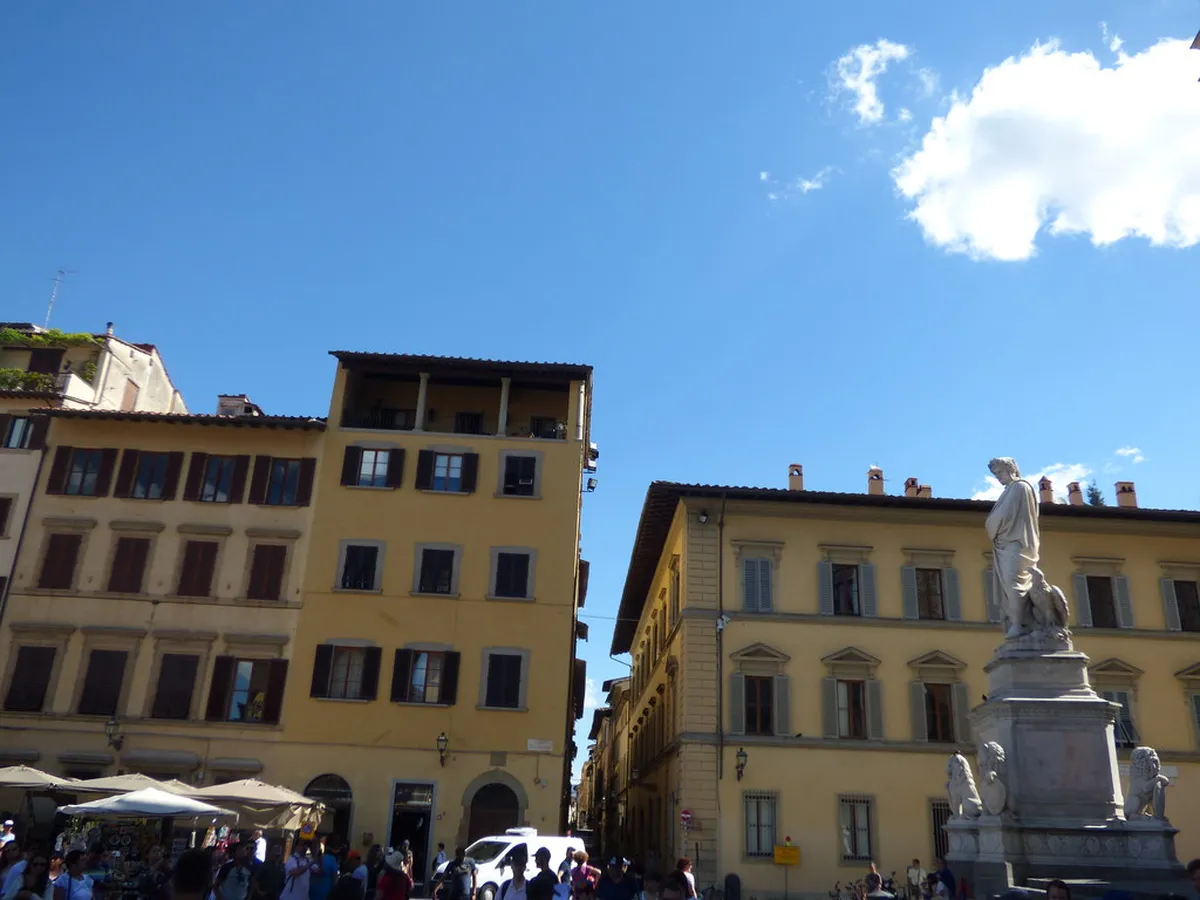
The piazza is transformed for the event. Sand is laid over the stone surface to create a pitch that stretches roughly 100 metres by 50 metres. Temporary stands surround three sides; the fourth is open to the basilica facade. The Dante statue at the square's centre provides the backdrop that makes every photograph of the match immediately recognizable. Kick-off for the semi-finals is typically 17:00; the final starts at 18:00 to accommodate the day's other celebrations, including a fireworks display over the Arno River later that evening.
The atmosphere around the piazza on 24 June extends well beyond the stadium itself. The feast of San Giovanni is a public holiday in Florence, and the city fills with residents who have no ticket but come to feel the occasion. Bars around Via dei Benci and Borgo dei Greci screen the match live; the procession spills through surrounding streets before entering the arena. Even without a seat inside, the energy in the centro storico on this date is unlike any other day in the Florentine year.
How to Experience Calcio Storico: Step by Step
Planning ahead is essential — tickets sell out fast and the seating area is small relative to demand. The process from checking the calendar to standing in Piazza Santa Croce on game day takes about three to four weeks of lead time. Follow these steps in order to avoid the most common mistakes first-time attendees make.
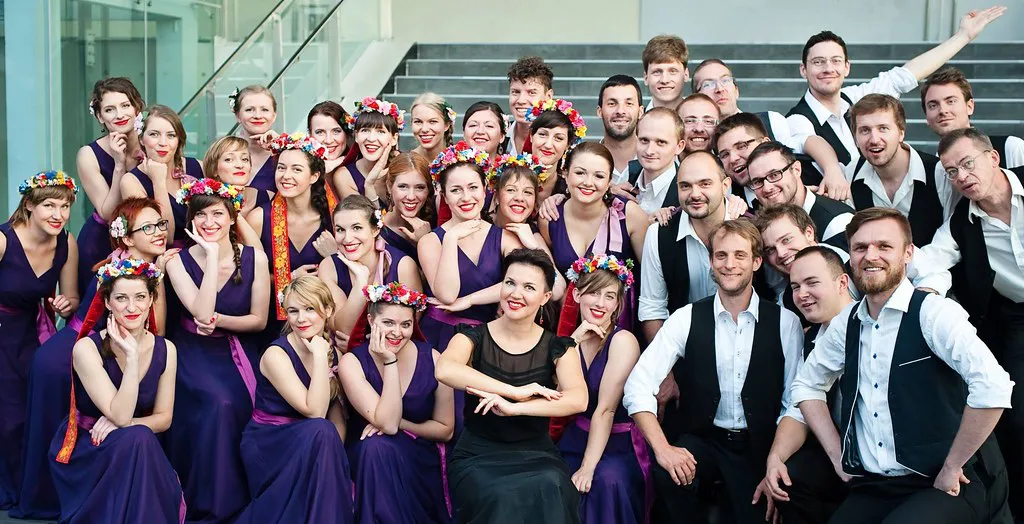
If you cannot secure a seat inside the arena, the streets surrounding Piazza Santa Croce fill with Florentines watching on screens and following the crowd energy. The full Calcio Storico guide covers the neighborhood bars where locals gather to watch live streams on match day. Even without a ticket, experiencing the city's atmosphere on 24 June — the feast of its patron saint San Giovanni — is something very few tourists plan for and almost none regret.
- Step 1: Check the 2026 match schedule
- Three matches are played in June: semi-finals on 13 June (Rossi vs Verdi) and 14 June (Bianchi vs Azzurri), with the final on 24 June at 18:00.
- The final is always on 24 June, the feast of San Giovanni — build your Florence trip around this date if you can attend only one match.
- Schedules are confirmed in spring each year; check TicketOne.it or the city's official notices from early May onward.
- Step 2: Buy tickets on TicketOne.it from late May
- Ticket sales for the 2026 season opened on 11 June at 12:00 local time — expect a similar window each year from late May onward.
- Prices range from €29 for Curve colori standing sections up to €82 for Tribuna Onore Laterale premium seats; Tribuna C at €53 is the best value mid-tier option.
- Purchase immediately when tickets go live — they disappear within hours, especially for the final match.
- Buy via TicketOne.it online or queue at the Florence box office from 9am when it opens to distribute numbered queue tickets.
- Step 3: Plan your arrival in Florence
- Book accommodation at least two months ahead if your dates fall in the third week of June — hotel rates rise sharply around the matches.
- Piazza Santa Croce is a 10-minute walk from Santa Maria Novella train station and well-connected by city bus lines.
- The neighborhood around Via della Colonna puts you within a 10-minute walk of the piazza — a practical base for the match week.
- Step 4: Arrive at Piazza Santa Croce by 3:30pm
- The medieval procession of players and historical figures begins around 4pm; arriving at 3:30pm lets you claim a good standing position.
- For the final (kick-off at 18:00), aim to arrive no later than 4:30pm to settle before the procession begins.
- Seating sections fill quickly even with a ticket — finding your numbered seat early avoids the crush at gates.
- Step 5: Watch the procession and pre-match ceremony
- The hour before kick-off features hundreds of participants in Renaissance costume, drummers, and flag-throwers — a free spectacle visible from the piazza edges.
- Photograph the procession from the north side of the piazza for the best angle against the basilica backdrop.
- Do not leave your position during the ceremony; the gate areas become impassable once the procession is in motion.
- Step 6: Follow the match rules to understand the action
- Each team's Corridori (strikers) try to send the ball into the full-width net; the Sconciatori (disruptors) are legally allowed to punch, wrestle, or block anyone on the opposing side.
- A successful caccia scores one point; a shot that flies over the net scores half a point for the other team, so missed attempts are never neutral.
- The referee and his assistants enforce the one-on-one fight rule — any player who joins a fight already in progress is removed.
Ticket Prices, Availability, and What to Expect
Tickets for Calcio Storico 2026 range from €29 to €82 depending on the seating zone. The Curve colori sections at €29 are standing-room-only at the ends of the pitch — acceptable but with a limited view of mid-field action. Tribuna C at €53 offers a fixed seat along the side of the pitch and is the most-recommended tier for first-time visitors. Payment at the box office requires a debit or credit card; Amex is not accepted.
Since 2018, Calcio Storico has deliberately kept ticket distribution local — the primary goal is to give Florence residents access before tourists. This means online availability is limited and disappears fast; Florentines often queue at the box office from early morning on the day of sale. If you are in Florence when tickets go on sale, joining the queue at 9am when the box office opens to distribute numbered queue tickets is the most reliable route. For the final match specifically, the box office opens from 9am in mid-June to hand out queue numbers — arrive before 8am to be safe.
If tickets are sold out, the match is broadcast on local television and often streamed on official channels. The piazza atmosphere on match day — even from outside — remains charged with noise and color from the procession and crowd. An alternative is to follow the best cultural festivals in Europe calendar and build a trip that treats Calcio Storico as one of several June events in Italy.
The Rules of Calcio Storico: A Codified Chaos
Henry III of France reportedly described Calcio Storico in 1574 as 'too small to be a real war and too cruel to be a game' — an assessment that still holds in 2026. Understanding the basic rules transforms the match from confusing brawl to tactical spectacle. The Guardian's deep dive into Calcio Storico by Chloe Beresford remains one of the best English-language explanations of how the game's controlled violence actually works.
Each team of 27 players is divided into goalkeepers, defensive backs (datori indietro), midfielders (sconciatori), and strikers (corridori). The sconciatori — often the most physically imposing players on the field — are assigned purely to disrupt the opposition; they do not attempt to score. Punches, kicks, elbow strikes, and tackles are all permitted, but blind-side attacks are now banned, and group fights must resolve into one-on-one confrontations. A player who enters an existing fight is ejected, but there is no substitution — his team plays the remainder of the match a man down.
Scoring requires driving the ball into the goal net, which stretches the full width of the short end of the pitch. A shot that sails over the net — not into it — immediately awards the opposing team half a point, turning every aggressive attempt into a calculated risk. After exactly 50 minutes, the team with the most cacce wins; ties are not extended, making the final minutes intensely contested. First-time spectators often find the game's tempo surprising: long lulls of wrestling give way to explosive sprints that last only seconds before collapsing into another melee.
What to Expect: Violence, Weather, and the Atmosphere
Calcio Storico's violence is real and sustained. Broken noses, cuts, and knock-outs happen in most matches, and the crowd reacts loudly to each incident. Spectators are not at risk — the action is entirely confined to the sand pitch — but the brutality can be shocking if you are not prepared for it. Many Florentine families treat the event as a rite of passage and attend with children; equally, some first-time visitors find the sustained physicality more distressing than they expected. Knowing this beforehand lets you make an informed decision rather than a surprised one.
The question of player safety has periodically threatened the event's future. The city suspended Calcio Storico in 2006 following a particularly violent match and again in 2007, with authorities debating whether the game's injuries had crossed from tradition into recklessness. The event returned each time with modest rule adjustments — the ban on blind-side tackles dates from this period — but it has never been sanitized. This tension between preservation and safety is part of what makes Calcio Storico genuinely controversial, not merely theatrical. No competitor page will tell you this, but it explains why the event sells out despite — or because of — its reputation.
June in Florence regularly hits 30°C (86°F) by mid-afternoon. The seating area offers limited shade, and the sand radiates heat during the procession. The matches proceed regardless of weather: if it rains, the sand turns to mud, the colors of the costumes blur into each other, and the game starts to resemble a re-enactment of a medieval siege rather than a sporting contest. Matches in wet conditions have their own charged atmosphere, but expect your clothing to show it. Umbrellas are barred from the seating area even in rain — bring a light waterproof layer in your bag instead.
A Very Florentine Tradition: The Spirit Behind the Game
No single moment defines Calcio Storico more than the match played in 1530, during Charles V's siege of Florence. With the city surrounded and exhausted, 54 men entered Piazza Santa Croce and played the game in full view of the imperial forces. When the besieging army fired a cannonball over the players' heads, the match continued without pause — a defiance that became part of Florence's civic identity. The city emerged from the siege within months, and the match became the founding myth of what Calcio Storico means to Florentines today.
Each team's color is not arbitrary — it ties directly to one of Florence's historic quarters and its dominant church. The Azzurri of Santa Croce are named for the basilica that towers over the piazza where the game is played; they are the most decorated team in the modern era. Neighborhood loyalty at Calcio Storico is closer in spirit to the Palio di Siena than to any modern sporting event — a deep civic pride that no outsider can fully adopt but every visitor can feel. Unlike tourism-friendly spectacles, Calcio Storico remains stubbornly local: players are unpaid, tickets are distributed locally first, and the prize is a calf — not a trophy.
The game has left Florence only a handful of times: Rome's Piazza di Siena in 1960, New York in 1976, and Lyon in 1998. Stranger still, in 1490 and again in 1605, matches were played on the frozen surface of the Arno River — the same river that bisects the city today. Each time the game returned to Piazza Santa Croce unchanged, because Calcio Storico is inseparable from the specific stones of that square and the specific passions of its four neighborhoods. Planning a longer Florence stay around the matches lets visitors explore the quarters themselves — Santo Spirito south of the Arno offers a very different pace than the tourist-heavy centro storico.
Where to Stay for Calcio Storico
Staying within walking distance of Piazza Santa Croce removes every logistical headache on match day. The Santa Croce neighborhood itself — roughly bounded by Lungarno delle Grazie to the south, Via dei Pepi to the east, and Via dell'Agnolo to the north — puts you five minutes from the arena entrance. Hotels and apartments in this zone fill quickly once the match dates are confirmed in spring; book by April at the latest for the 24 June final.
Via della Colonna, a quiet residential street just east of the piazza, is a particularly practical address. It sits far enough from the main tourist circuit to keep prices lower than the centro storico, while remaining a 10-minute walk from both the arena and the Uffizi. Self-catering apartments here suit visitors who want to spend several days in Florence, since June's heat makes a private kitchen and a quiet retreat from the afternoon sun genuinely useful.
If the Santa Croce zone is fully booked, the Oltrarno neighborhood across the Ponte alle Grazie is the next-best option — a 15-minute walk to the piazza, with a very different character. Oltrarno is the quarter of the Bianchi (the Whites of Santo Spirito), so staying there during match week means you are in one of the competing neighborhoods, which adds a layer of local texture to the experience. Avoid hotels near Santa Maria Novella station if your priority is the match: the walk is manageable, but the neighborhood has none of the match-day energy that surrounds Piazza Santa Croce.
Before You Go: Practical Checklist
June in Florence is hot, sunny, and crowded — the practical demands of attending Calcio Storico go beyond just buying a ticket. Comfort and preparation determine whether you enjoy the full experience or spend the afternoon struggling. Run through this checklist before leaving your accommodation on match day.
- Wear light, comfortable clothing and sturdy closed-toe shoes
- June temperatures in Florence regularly reach 30°C (86°F) — linen or breathable fabrics are essential.
- The standing sections are on sand; flat closed-toe shoes grip far better than sandals.
- Dark-colored clothing hides the sand and dust that settles on spectators near the pitch.
- Bring a full water bottle and sun protection
- The seating area offers limited shade — sunscreen and a hat are not optional in the afternoon heat.
- Water vendors operate near the piazza but charge elevated prices; a filled 1-litre bottle from a nearby tabacchi costs under €1.
- Arrive by 3:30pm (or 4:30pm for the 18:00 final)
- Good standing positions inside the piazza claim quickly; late arrivals end up with obstructed views.
- The procession alone justifies arriving early — it is one of the most visually striking elements of the entire event.
- Have your ticket and ID ready at the gate
- Gate staff check tickets against ID for the final match — a standard practice since demand outstripped supply.
- Photocopies of passports are not accepted; bring the original document.
- Prepare for sold-out conditions and have a backup plan
- If tickets are unavailable, find a bar near Piazza Santa Croce that screens the live broadcast — the atmosphere remains electric.
- The procession and post-match crowds spill into the surrounding streets and are free to witness.
- Do not bring large bags, umbrellas, or glass containers
- Security checks at the gates prohibit large backpacks and glass; a small cross-body bag holds everything you need.
- Umbrellas are barred even in light rain — matches continue regardless of weather, and sand turns to mud.
Frequently Asked Questions
Can tourists watch Calcio Storico?
Yes — tourists are welcome to buy tickets and attend all three matches. Since 2018, tickets are sold locally first to give Florence residents priority access, but any remaining seats go on sale via TicketOne.it. Prices run from €29 to €82 (~$31–$88) depending on seating zone.
When is Calcio Storico 2026?
Three matches are played in June 2026: semi-finals on 13 June (Rossi vs Verdi) and 14 June (Bianchi vs Azzurri), with the final on 24 June at 18:00 in Piazza Santa Croce. The 24 June date is fixed each year as the feast of San Giovanni, Florence's patron saint.
Where to buy Calcio Storico Florence 2026 tickets?
Tickets go on sale via TicketOne.it from late May or early June; the 2026 sale opened on 11 June at 12:00 local time. For the final, the Florence box office opens at 9am to distribute queue numbers — arrive by 8am for the best chance. Payment is by debit or credit card only; no Amex accepted.
Do Calcio Storico players get paid?
No — Calcio Storico players are unpaid volunteers. The winning team receives a painted banner commissioned from a contemporary Florentine artist and a white Chianina calf, the same prize awarded for centuries. Players must be native Florentines or city residents for at least ten years.
What are the rules for Calcio Storico?
Each team of 27 players tries to score cacce by driving the ball into a full-width goal net; missing the net gives the opposing team half a point. Punches, kicks, and tackles are legal, but blind-side attacks and group fights are banned. Matches last exactly 50 minutes with no stoppage time extensions.
Visiting Florence for more than one festival? See our complete guide to festivals and events in Florence.
Calcio Storico is not a tourist attraction — it is a living expression of Florentine identity that happens to be open to visitors. Securing a ticket early, arriving in time for the procession, and understanding the rules before kick-off transforms the match from spectacle into something genuinely moving. The final on 24 June, played under the gaze of Dante's statue with the whole city watching, is one of the most intense communal experiences Europe offers in any given year.
If Calcio Storico captures your interest in European living traditions, explore our coverage of how to experience the Palio di Siena and the Battle of the Oranges in Ivrea — two equally fierce Italian events that reward the same kind of early planning. Both belong to a handful of events in Europe where history has never become performance: the stakes are real, the participants are local, and the outcome is genuinely uncertain. Plan the trip with enough lead time to secure tickets, and Florence in June will offer far more than Renaissance art.
Free guide: Europe's Festival Calendar
A month-by-month map of Europe's unmissable festivals — with the best dates to visit each and a local tip you won't find in the guidebooks.
You might also like

Continue reading
More guides you'll find useful