How To Get To La Merce: 8 Essential Tips for Navigating the Festival
Master the logistics of Barcelona's La Mercè festival. Learn how to get to main venues, navigate transport closures, and see the best events like a local.
On this page
How To Get To La Merce: 8 Essential Tips for Navigating the Festival
La Mercè is the biggest street party in Barcelona and a highlight of the local calendar. Last updated May 2026, this guide helps you navigate the city during this massive four-day celebration. Planning your routes early is essential as millions of people fill the streets for traditional events.
The festival honors the Virgin of Mercy, the patron saint of the city since the 17th century. You will find everything from human towers to fire-breathing dragons across dozens of public venues. Navigating the crowds requires a solid understanding of the local metro system and event locations.
Free guide: Europe's Festival Calendar
A month-by-month map of Europe's unmissable festivals — with the best dates to visit each and a local tip you won't find in the guidebooks.
WHAT IS LA MERCÈ FESTIVAL?
La Mercè serves as the official Fiesta Mayor for the city of Barcelona each September. It is widely considered one of the best festivals in Spain due to its scale and variety. The event balances deep religious traditions with modern concerts and spectacular street performances.
Most activities are free and open to the public in plazas and parks throughout the center. Locals celebrate their identity through Catalan traditions like the Sardana dance and giant puppet parades. The atmosphere is electric as the entire city transforms into a massive open-air stage.
The Barcelona City Council typically programs over 500 individual events across the four-day period. These range from children's circus shows in Ciutadella Park to international pop acts at the Forum. Understanding the geographic spread of the program helps you plan which days to focus on which neighborhoods.
La Mercè, our Lady of Mercy: The Religious Origins
The festival celebrates a vision that reportedly occurred on the night of August 2, 1218. The Virgin of Mercy appeared to King James I of Aragon, Saint Peter Nolasco, and Saint Raymond of Penyafort simultaneously in their dreams. She gave them the mission to liberate Christian captives held by the Moors, which led to the founding of the Mercederian Order.
This event established the Virgin as a protector of the city and its people. The religious aspect remains visible today through the solemn masses held at the Basilica de la Mercè, located near Plaça de la Mercè in the lower Gothic Quarter (Metro: L3, Drassanes). Many locals still visit the church to pay their respects during the festival days.
A third episode adds to her legendary status: during the Spanish Wars of Succession in 1714, the city symbolically handed her command over its defence as Bourbon armies closed in. These layered stories explain why she holds such emotional weight for Barcelona residents, well beyond a standard patron-saint tradition.
History of the Festival and the 1687 Plague
Barcelona faced a devastating locust plague in 1687 that threatened the local food supply. The Council of the Hundred, the medieval city council, voted to pray to the Virgin of Mercy for relief. When the plague ended shortly after, she was named the patron saint of the city — a decision the Pope only ratified in 1868.
The first formally documented local festivities in her honor date to that same year of 1868. Then in 1902, the Barcelona City Council stepped in to officialize and expand the celebrations, programming traditional performances explicitly designed to rival the more solemn religious events. This secular-versus-religious rivalry continued to define the festival's character through the 20th century.
During the Franco dictatorship after the Civil War (1936–39), the religious elements were reasserted. After democracy returned, the festival shifted back toward folklore, music, and Catalan cultural identity. Today the secular program dominates, though both traditions continue side by side and the tension between them is still occasionally acknowledged in local media.
Main Festival Areas and How to Get There
The festival spreads across five main hubs: the Gothic Quarter, Parc de la Ciutadella, Montjuïc, the Forum, and Bogatell beach. Each area hosts a different flavor of programming, so knowing which metro line serves each one saves significant time. Walking is ideal for moving between the Gothic Quarter's Plaça de Sant Jaume and the Cathedral square — they are three minutes apart on foot.
The table below maps the five main venues to the fastest metro connection for 2026:
- Plaça de Sant Jaume (Gothic Quarter): L4 to Jaume I. Exit takes you directly to the square's edge. Expect this station to close temporarily when the square reaches capacity — use Liceu (L3) or Urquinaona (L4) as alternatives and walk five minutes.
- Parc de la Ciutadella: L1 to Arc de Triomf or L4 to Barceloneta. The Passeig de Lluís Companys boulevard connects both stations through the festival grounds.
- Montjuïc Castle: Take L2 or L3 to Paral·lel, then ride the Funicular de Montjuïc up the hill. From the top funicular station, walk to the Telefèric de Montjuïc cable car for the final ascent to the castle. Expect queues at the cable car — arriving 45 minutes early avoids the worst waits.
- Forum: L4 to El Maresme | Fòrum. This end-of-line station deposits you directly at the large outdoor stages.
- Bogatell Beach: L4 to Bogatell. The beach stage is a five-minute walk from the exit. Best for fireworks viewing on the penultimate night.
You should check La Mercè tickets and tours for any specialized guided experiences during the festival. The L4 yellow line is the single most useful metro route, connecting the Gothic Quarter, Barceloneta, Bogatell, and the Forum in one continuous run along the coast.
Navigating Barcelona Public Transport and Road Closures
Public transport is the only viable way to move around during the La Mercè dates. The city closes many major roads to cars and buses to accommodate the large parades. Metro services usually run extended hours on the busiest evenings, with all-night service on September 24 itself.
The Cursa de la Mercè is a popular 10k running race that shuts down major bus arteries across the city center on Sunday morning. This race typically starts at 09:00 near Plaça d'Espanya and affects the L3 Tarragona and Espanya stations, plus multiple bus routes, until approximately midday. If you need to reach the airport or travel across the city on Sunday morning, plan to leave before 08:30 or wait until 13:00 for services to resume.
Most late arrivals find only the night bus (Nitbus) running after midnight on weekdays. Check the official TMB app for real-time updates on station closures and service changes. The L4 line is the busiest, so use the L1 or L3 as alternatives when the Jaume I or Barceloneta stations become overcrowded.
A multi-trip T-casual card (€12.15 for 10 journeys in 2026) is strongly recommended over single tickets at €2.55 each. You can buy it at any metro station and it covers metro, bus, and suburban rail within Zone 1. Single rides cost €2.55 and take 15 to 20 minutes from outlying areas to the center.
Best La Mercè Events: Castellers and Correfoc
The Castellers are human towers that reach up to ten levels high. Watching these teams compete at Plaça de Sant Jaume is a breathtaking experience that draws enormous crowds. Arrive at least one hour early to secure a standing position with a clear sightline to the center of the square. The atmosphere goes completely silent the moment the smallest child begins climbing to the top.
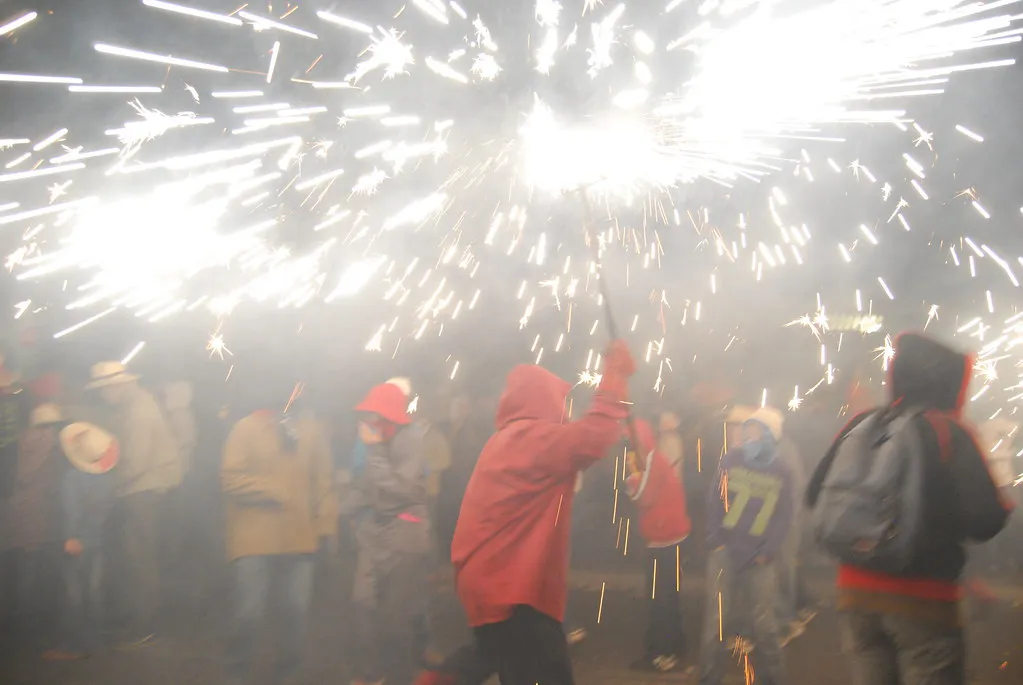
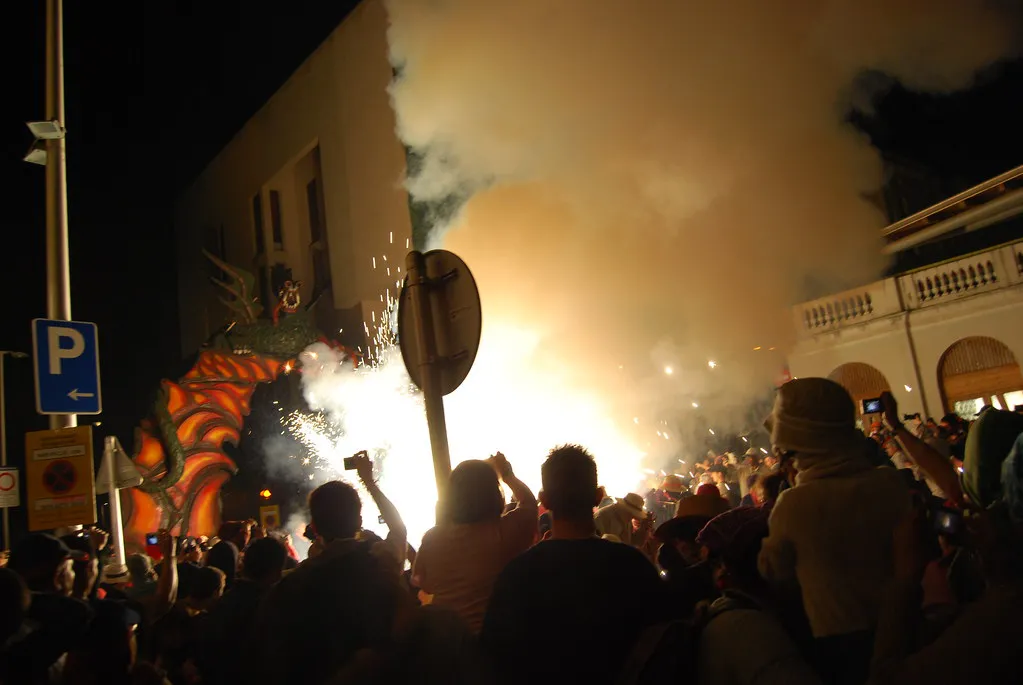
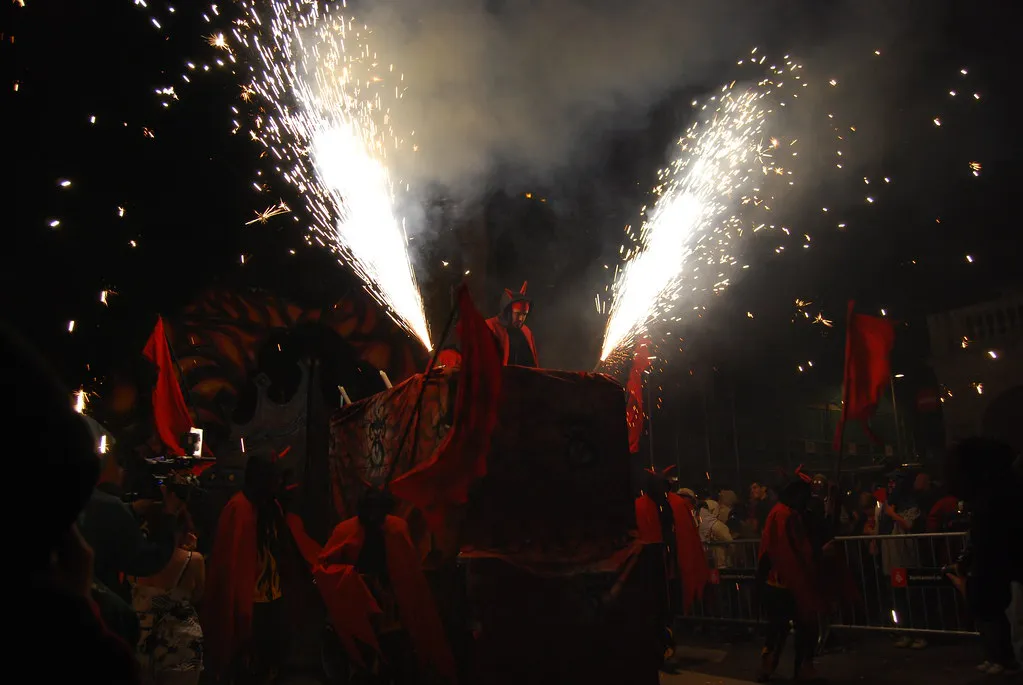
The Correfoc is a fire run where devil figures dance through the streets with handheld fireworks. This event is spectacular but requires specific safety precautions. There is also a children's Correfoc (Correfoc infantil) held earlier in the afternoon on the same day, using smaller fireworks — ideal for families with young children who want the experience without the full intensity.
Giant puppet parades (Gegants) and beast processions are perfect for those who prefer a less intense experience. These towering figures represent historical kings, queens, and mythical creatures. The music accompanying them — flutes and drums — is traditional and creates a festive, family-friendly mood across the Gothic Quarter streets.
- Essential gear for the Correfoc fire run:
- Wear a long-sleeved shirt of 100% natural cotton — synthetics melt.
- Bring a hat or bandana to cover your hair and neck from falling sparks.
- Use protective glasses or goggles to keep sparks out of your eyes.
- Wear sturdy closed-toe shoes; sandals are not suitable.
- Keep a small water bottle to stay hydrated during the heat.
La Mercè Concerts and the BAM Music Festival
The BAM (Barcelona Acció Musical) festival focuses on independent and emerging artists from Catalonia and across Europe. These concerts take place at outdoor stages like Plaça dels Àngels and the Forum. It is one of the best fiestas in Spain for discovering new music at no cost.
Plaça de Catalunya hosts more traditional and mainstream acts, while the Bogatell beach stage is famous for large pop concerts against the backdrop of the Mediterranean. All these musical performances are free, which makes them very popular with local students and young visitors. Arrive early at the smaller plazas, which have strict capacity limits for safety.
Check the official website of the Festes de la Merce for the full lineup once it is published — the Barcelona City Council usually announces the program in mid-July. The Piromusical on the final night is a synchronized fireworks and water show at Montjuïc's Magic Fountain (Plaça d'Espanya). Arrive at least two hours before the show starts; the viewing area around Font Màgica fills quickly and latecomers are left watching from two blocks away.
Free Museums and Open Doors on September 24
September 24 is a public holiday in Barcelona, and the Barcelona City Council uses it to open its own museums free of charge. This is one of the most overlooked perks of attending during the festival week, especially if you want to escape the street crowds mid-afternoon. Museums that typically participate include MUHBA (Museum of History of the City), MACBA (Museum of Contemporary Art), the Maritime Museum, and the Music Museum.
The Sagrada Família is not a city-run museum but tends to offer free or reduced-price afternoon entry on September 24 through a separate initiative from the Bishopric of Barcelona. Tickets for these free slots are distributed days in advance via their website, not at the door, and they sell out within hours of release. Monitor their social media from mid-September onward if you want to secure a spot.
The Picasso Museum and Palau Güell also typically offer free entry but require pre-booked online reservations. Check each museum's website from early September, as procedures and participating museums vary slightly each year. This free-entry window generally runs from 14:00 until closing, with mornings running as normal paid visits.
Practical Tips for Dates, Crowds, and Safety
The festival usually runs from September 20th to the 24th each year, with September 24th as the main public holiday. Most shops will be closed on the 24th, but bars and restaurants in the festival areas stay open late. You should research where to stay for La Mercè to avoid long commutes from outlying neighborhoods.
Pickpockets are very active in the dense crowds during major parades and concerts. Keep your valuables in a front pocket or a secure cross-body bag at all times. Agree on a physical meeting point with your group before entering any crowded square, as mobile signals often fail in dense crowds near the main plazas.
The 'puente' bridge-holiday logic means that if September 24 falls on a Tuesday, many locals take Monday off as well. This effectively creates a five-day weekend and brings significantly larger crowds across the entire festival period. Book accommodation months in advance if the 24th falls midweek — central neighborhoods like the Gothic Quarter and Eixample fill up entirely.
- Troubleshooting common problems during the festival:
- Jaume I station often closes when Plaça de Sant Jaume reaches capacity — use Liceu or Urquinaona instead.
- Mobile phone signals frequently fail in dense crowds near the main plazas.
- Public toilets are scarce; use facilities in cafes before entering the parades.
- Expect long queues at all central restaurants during dinner hours from 21:00 onwards.
- Sunday morning bus routes are heavily disrupted by the Cursa de la Mercè race until midday.
Frequently Asked Questions
Where is la Mercè Barcelona?
The festival takes place across the entire city of Barcelona. Key hubs include the Gothic Quarter, Parc de la Ciutadella, and the Forum area. Most traditional events happen near Plaça de Sant Jaume.
What to do during la Mercè?
You should watch the Castellers build human towers and join the Correfoc fire run. Don't miss the giant parades or the free BAM music concerts. End the week with the Piromusical fireworks.
What is the best way to get to Barcelona during the festival?
Flying into El Prat Airport is the most efficient method for international travelers. Use the Aerobús or the R2 North train to reach the city center. Book your transport early to avoid high prices.
Visiting Barcelona for more than one festival? See our complete guide to festivals and events in Barcelona.
La Mercè is an unforgettable experience that showcases the vibrant spirit of Barcelona. By following this guide, you can navigate the transport and crowds like a local expert. Be sure to check the Spain festival calendar for other amazing events throughout the year.
Prepare for the fire runs, respect the traditions, and enjoy the free music across the city. The Virgin of Mercy has watched over the city for centuries, and her festival remains its greatest joy.
Free guide: Europe's Festival Calendar
A month-by-month map of Europe's unmissable festivals — with the best dates to visit each and a local tip you won't find in the guidebooks.
You might also like


Continue reading
More guides you'll find useful