Where to Stay for Oktoberfest: 11 Essential Lodging Tips
Plan where to stay for Oktoberfest with our expert guide to Munich neighborhoods, U-Bahn transport tips, budget camping options, and booking secrets.
On this page
Where to Stay for Oktoberfest: 11 Essential Lodging Tips
Finding the right place to sleep during the world's largest beer festival can feel like a daunting task. Munich transforms into a crowded hub where millions of visitors compete for a limited number of hotel rooms. Prices often skyrocket to triple their normal rates as the festival dates approach each September. Knowing exactly where to stay for Oktoberfest will save you both money and precious travel time.
Our guide breaks down the best neighborhoods and transport routes to help you navigate this busy season. You might prefer a luxury hotel in the city center or a budget-friendly campsite on the outskirts. Each option comes with specific trade-offs regarding cost, noise, and your daily commute to the tents. Read on to discover how to secure the perfect base for your Bavarian adventure.
Free guide: Europe's Festival Calendar
A month-by-month map of Europe's unmissable festivals — with the best dates to visit each and a local tip you won't find in the guidebooks.
Why Finding Where to Stay for Oktoberfest is Complicated
The primary challenge for travelers is the massive price surge that occurs across all Munich lodging. Standard rooms that usually cost eighty euros can easily jump to four hundred euros per night during the festival. Some rooms that normally go for around eighty dollars end up listed at one thousand dollars or more. Many hotels require a minimum stay of three nights to even consider your booking request.
Demand is so high that the best properties often sell out a full year in advance. You must also consider the extreme density of crowds in the Ludwigsvorstadt-Isarvorstadt neighborhood, which hosts the Theresienwiese festival grounds. Walking through the streets near the tents can take twice as long as usual due to the foot traffic. Noise levels remain high late into the night as revelers return from the beer halls.
If you wait until the last minute, your options will likely be limited to expensive luxury suites or basic campgrounds. Reviewing an oktoberfest guide for first timers can help you understand these logistical hurdles early. Early planning is the only way to avoid paying an arm and a leg for a basic room. Understanding the local geography is your first step toward finding a fair deal in 2026.
Which U-Bahn Lines to Stay Near for Oktoberfest
Munich features a highly efficient public transport system that makes commuting to the festival very easy. The U4 and U5 lines are the most direct routes because they stop right at the Theresienwiese station, directly at the main entrance. A second stop on these same lines, Schwanthalerhöhe, sits at the west entrance. Staying near any U4 or U5 station means you can reach the main gate in minutes without a single transfer.
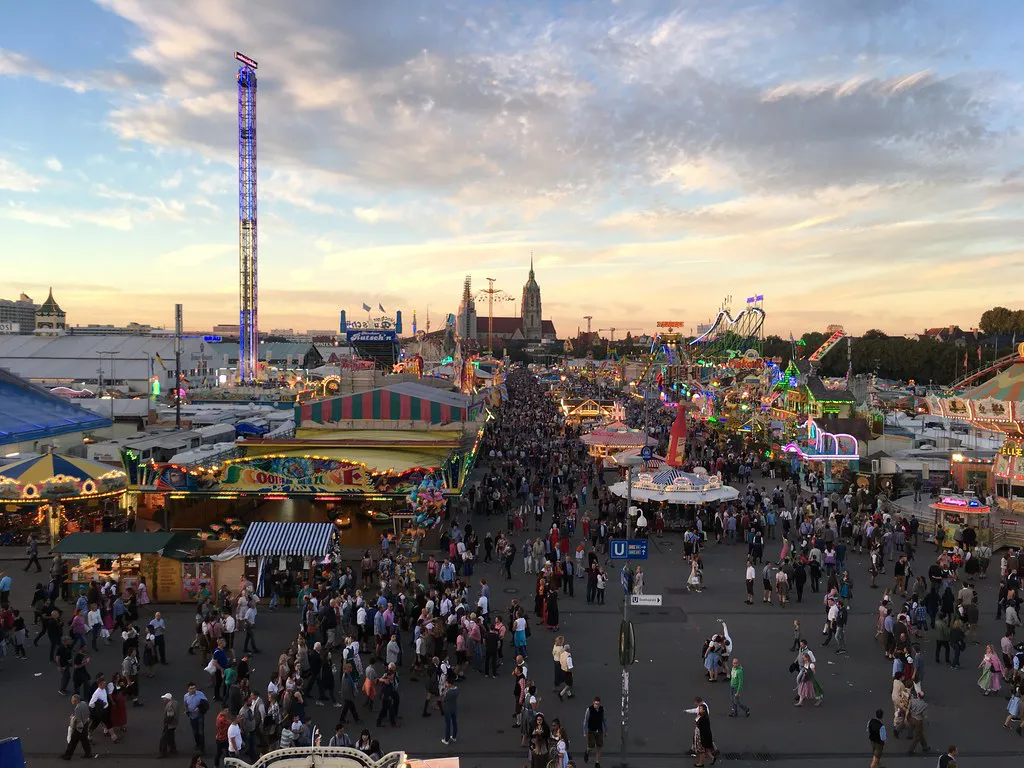
The U3 and U6 lines offer another excellent alternative for reaching the festival grounds. The Goetheplatz station on these lines serves the east entrance, while Poccistrasse serves the south entrance. These lines connect to popular areas like Schwabing and Marienplatz, giving you easier access to Munich sightseeing on your non-festival days. Walking from Goetheplatz takes about ten minutes and avoids the heaviest crowds at the Theresienwiese stop itself.
Most hotels within the Inner Zone (Innenraum) are within the 25-minute travel sweet spot. You can check the how to get to oktoberfest guide for detailed transit maps. An important note: U6 stops north of the city, particularly around Garching, fall outside the Innenraum and require a higher-priced ticket. Stick to stops within the central zone to keep transport costs predictable.
- U4 and U5 lines stop at Theresienwiese (main entrance) and Schwanthalerhöhe (west entrance) — the fastest direct route with no transfers needed.
- U3 and U6 lines stop at Goetheplatz (east entrance) and Poccistrasse (south entrance) — ideal if you prefer less congestion at the main gate.
- S-Bahn lines stop at Hackerbrücke, which is a short walk to the north entrance — useful for travelers arriving from the airport or commuter towns.
Best Oktoberfest Hotels Map and Proximity Guide
The area immediately surrounding the Theresienwiese is filled with hotels catering specifically to festival visitors. The Maritim Hotel Munich is a popular choice located just a few blocks away. It offers a comfortable retreat while keeping you close enough to walk to your tent reservation. Booking here means you can avoid the crowded subway stations entirely after a long day of festivities.
If you prefer to stay right at the transport hub, look for the Smart Stay Hotel Station near the Hauptbahnhof. This location is ideal for travelers arriving by train from other European cities. You will be surrounded by dozens of restaurants and shops for your non-festival needs. Prices in this central district remain high, but the convenience is often worth the extra cost.
When searching on Booking.com, use the map view and locate the Theresienwiese kidney-bean-shaped park southwest of the city center. Filter for properties with a rating of 8 or higher within the Innenraum — all of these will reach the festival in 25 minutes or less. Hotels rated 8-plus in this inner zone are your safest bet for balancing quality against the festival price surge. Luxury travelers can look toward the Altstadt or Old Town for premium accommodations, reachable in about fifteen minutes by taxi or U-Bahn.
What to Look for in an Oktoberfest Hotel
Proximity to the festival grounds or a direct U-Bahn line is the single most important factor. The further you are from a direct line, the more room there is for error after a long evening in the tents. Even if a hotel is technically close, having to make three train changes at midnight with a group is a recipe for getting separated. Prioritize a single direct line over sheer distance.
Breakfast availability matters more than you might expect during Oktoberfest. After a day of beer and pretzels, a proper hotel breakfast the next morning is a valuable reset. Check whether breakfast is included in the rate or costs extra before you book. Many Munich hotels include it, but this is less common at the budget end of the market.
Cancellation policy is the third critical factor. Hotels during Oktoberfest often enforce non-refundable terms because demand is guaranteed. If your group of friends is not fully committed, a free-cancellation booking through platforms like Booking.com gives you a safety net. Read the policy carefully for your specific festival dates, not just the hotel's general terms, because many properties apply stricter rules only during Oktoberfest week.
What's the Difference Between 3, 4, and 5-Star Hotels?
Three-star hotels near the Theresienwiese offer clean, functional rooms with reliable WiFi and basic breakfast options. Places like Hotel Munich City Center — located two blocks from the grounds and 500 metres from the Hauptbahnhof — fall in this bracket. You are paying primarily for location, not amenities. Expect compact rooms and no frills, but you will be back in bed in under ten minutes after the tents close.
Four-star options like Hotel Kraft represent the traditional Bavarian experience, with more spacious rooms, on-site dining, and better soundproofing. Soundproofing matters more than you might think: the area around the Wiesn is genuinely loud from 10:00 to well past midnight. A four-star property in this zone typically costs between €300 and €600 per night during the festival, compared to €100 to €150 in the same hotel off-season.
Five-star properties like the Sofitel Bayerpost sit near the Hauptbahnhof and offer a full luxury retreat — spa facilities, fine dining, and rooms designed to block out street noise. These are the hotels where a room that costs €150 in February runs €1,000 or more in September. The trade-off is that you get a genuine recovery space between festival sessions. For large groups or families, splitting the cost of a suite can sometimes make a five-star option more competitive than booking multiple standard rooms elsewhere.
Staying Next to the Grounds vs. Farther Away
Choosing between a nearby hotel and a distant one depends on your budget and stamina. Staying next to the grounds offers the sheer luxury of walking home in under ten minutes. You can easily return to your room for a quick rest between the afternoon and evening sessions. However, you will pay the highest possible rates for this level of convenience.
Staying farther away in residential districts can significantly lower your nightly expenses. Districts like Laim or Pasing offer a quieter atmosphere and more authentic local dining options. The commute might take thirty minutes, but the savings can pay for your oktoberfest food and beer guide expenses. Public transport runs late enough to accommodate most festival schedules without any issues.
The real risk with a distant hotel is not the commute on the way in — it is the commute back at the end of a long night. A missed stop, a wrong platform, or a group that splits up becomes a much bigger problem when you are three trains away from your bed. If you stay farther out, limit yourself to hotels on a single direct U-Bahn line with no transfers required. A cheap room is not a bargain if it requires an expensive late-night taxi every evening.
Where to Stay for Oktoberfest Farther Out (Commuter Towns)
Commuter towns like Dachau offer a strategic retreat from the chaos of central Munich. You can reach the city center in just over twenty minutes using the frequent S-Bahn trains. Hotel prices in these towns are often half of what you would find near the Theresienwiese. Dachau also provides historical sightseeing opportunities for your days away from the beer tents.
Aying is another option for those who enjoy a more rural Bavarian setting. This village is famous for its own local brewery and traditional guesthouses. The train ride is longer, but the peaceful environment is a welcome break from the festival noise. Staying here allows you to see the beautiful countryside while still attending the main event.
Augsburg is a larger city located about forty minutes away by high-speed train. It has its own extensive range of hotels and a vibrant city center to explore. Many visitors use this as a base to avoid the extreme Munich price hikes in 2026. Make sure to check the is oktoberfest worth it guide to plan your full itinerary before committing to a commuter-town strategy.
Other Cheap Oktoberfest Accommodation Options (Camping & Hostels)
Budget-conscious travelers often turn to the various campsites that spring up around the city limits. The Munich Oktoberfest Camping & Dorms provide a social and affordable alternative. Packages typically start around sixty-five euros per night and include basic breakfast and dinner. Expect a high-energy party atmosphere at dedicated festival camps — this is not a quiet retreat, but it is one of the only budget options that does not require booking a year in advance.
Hostels in the city center offer dorm beds for those who do not mind sharing space with fellow festival-goers. Dorm beds still command a significant premium during Oktoberfest compared to the rest of the year. The HI Munich Park Youth Hostel sits about 25 minutes from the grounds by public transport and is a reliable mid-range option. Hostels are particularly good for solo travelers who want a ready-made group to head to the tents with each day.
Camping requires preparation for the cold Bavarian nights in late September, which can drop to single digits in Celsius. Many dedicated festival campsites offer pre-pitched tents so you do not need to carry equipment across the border. Check the proximity to the nearest S-Bahn station before booking any campsite to make sure the commute is realistic. The Oktoberfest on a budget campsite and the Lost Souls Oktoberfest campsite are both well-reviewed options that offer this kind of package deal.
Airbnb vs. Hotels for Oktoberfest: The Real Trade-offs
Airbnb listings in Munich during Oktoberfest typically run between €50 and €150 per night — considerably less than equivalent hotels. The catch is that Airbnb cancellations by hosts spike sharply during the festival period. Some hosts accept a booking months in advance, then cancel closer to the date once they realize they can earn more by re-listing at a higher price. This risk is real enough that we recommend treating Airbnb as a secondary option, not your primary lodging plan.
Hotels offer guaranteed check-in, professional staff, and services that matter during a festival: luggage storage after check-out, early bag drop, and front-desk help navigating transport issues at 01:00. Cleaning fees and service charges on Airbnbs also erode the apparent price advantage, particularly for short stays of two to three nights. Many Munich locals do sublet their apartments during Oktoberfest via Munich-based Facebook groups, which offers Airbnb-like pricing with slightly less cancellation risk since you are dealing directly with the owner.
If you do book an Airbnb, filter for properties with Superhost status and flexible or moderate cancellation policies. Avoid any listing added in the past six months — these hosts have no Oktoberfest track record. Book the moment you find something viable, because Munich Airbnb inventory during the festival is genuinely thin and the good listings go almost as fast as hotel rooms.
Last Minute Oktoberfest Accommodation Strategies
If the festival is less than three months away and you have not booked yet, your conventional hotel options are almost certainly exhausted. The only realistic paths left are dedicated festival campsites, package tour operators with pre-reserved room blocks, and direct sublets from Munich locals. Campsites like those run by Stoke Travel still often have availability even after the festival begins, which makes them a genuine last-resort safety net at around sixty-five euros per night.
Package tour operators such as Bucket List Events buy room blocks far in advance and release them as part of guided packages. You pay a premium for this convenience, but you get a confirmed bed, on-site staff support, and often pre-booked beer tent reservations included. For solo travelers or couples who have left things too late, this is a more reliable fallback than trawling hotel sites for cancellations.
Cancellation monitoring is another late strategy worth pursuing. Set up alerts on Booking.com and Hotels.com for your specific Munich dates and check them daily. Hotels near the Theresienwiese do occasionally release rooms from cancellations in the final six to eight weeks. You will pay a high price, but if you catch one of these windows, you secure a central location without the camping trade-offs.
When to Book Your Hotel for Oktoberfest
The best time to start looking for accommodation is usually in March of the festival year. This is when many hotels release their room blocks and finalize their seasonal pricing. Some experienced attendees book their favorite spots a full year in advance — by the time December arrives, many properties near the Theresienwiese are already fully booked for the following September.
The price you pay depends heavily on when you book. Reserving in December gives you the widest selection and the lowest prices, typically 20–30% below what the same room costs if you wait until August. By March the mid-range category is competitive. By June the inner-zone options are mostly gone. By August you are choosing between whatever remains in the outer districts, expensive luxury suites, or the campsite fallback.
If you are planning for 2026, setting price alerts on travel websites can help you catch cancellations. Be prepared to pay the full amount upfront since many festival bookings are non-refundable. Check if your oktoberfest tent reservations explained plan aligns with your hotel dates, because locking in a tent reservation without confirmed lodging creates an expensive mismatch if accommodation later falls through.
Frequently Asked Questions
What is the best neighborhood to stay in for Oktoberfest?
Ludwigsvorstadt-Isarvorstadt is the best neighborhood for proximity as it hosts the festival grounds. Staying here allows you to walk to the tents. However, Maxvorstadt and Schwabing are excellent alternatives that offer great transport links and a more local vibe. Check the how to get to oktoberfest guide for more details.
How far in advance should I book my hotel?
You should ideally book your hotel 6 to 12 months in advance. Many regular attendees reserve their rooms for the following year as soon as the current festival ends. March is often the last month to find a wide selection of mid-range options before prices peak.
Is it better to stay in a hotel or an Airbnb?
Hotels are generally more reliable during Oktoberfest because they offer professional service and guaranteed check-ins. Airbnb listings can sometimes be cancelled by hosts looking for higher last-minute rates. Hotels also provide essential services like luggage storage and breakfast that make your festival experience much smoother.
Are there any budget options for staying in Munich?
Camping is the most affordable option, with prices starting around 65 euros per night at dedicated festival camps. Hostels are the next cheapest choice, though dorm beds still cost significantly more than usual. Staying in commuter towns like Dachau can also help you stay within a tighter budget.
Visiting Munich for more than one festival? See our complete guide to festivals and events in Munich.
Choosing where to stay for Oktoberfest is the most important logistical decision for your trip. Whether you pick a luxury hotel or a lively campsite, early booking remains the key to success. Focus on transport links and proximity to the U-Bahn to make your daily commute effortless. Munich is a welcoming city that offers a range of options for every type of traveler.
Remember to pack your traditional Bavarian outfits before you head out to the grounds. You can learn what to wear to oktoberfest to ensure you fit in with the locals. With your accommodation secured, you can focus on enjoying the world-class beer and festive atmosphere. Enjoy your time in Munich and make sure to drink responsibly during your visit.
Free guide: Europe's Festival Calendar
A month-by-month map of Europe's unmissable festivals — with the best dates to visit each and a local tip you won't find in the guidebooks.
You might also like


Continue reading
More guides you'll find useful