Il Cinema Ritrovato 2026: Bologna Film Festival Guide
Il Cinema Ritrovato 2026: restored classics and free Piazza Maggiore screenings in Bologna, late June–early July. Plan your visit here.
On this page
Il Cinema Ritrovato 2026: Bologna Film Festival Guide
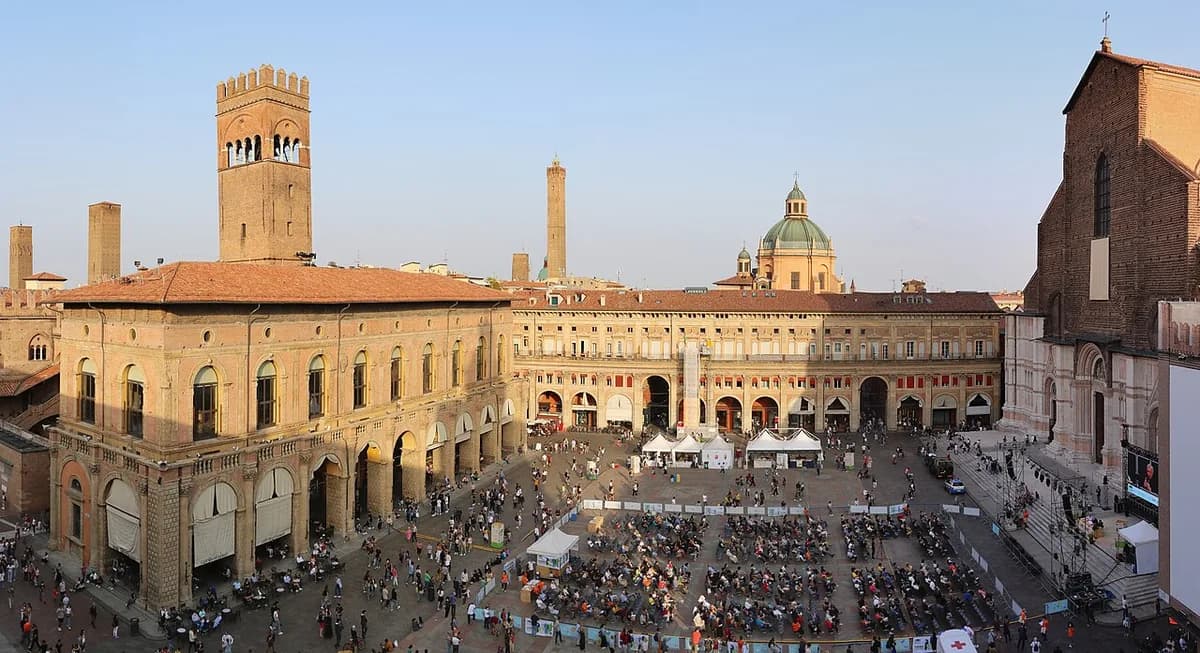
Bologna does not need an event to feel cinematic — the city's ochre porticoes and medieval towers have their own particular atmosphere — but when Il Cinema Ritrovato arrives each year in late June, something shifts. The Piazza Maggiore clears of its usual café tables and fills instead with deckchairs and crowds; a giant screen rises against the Basilica di San Petronio; and for several thousand people on a warm summer evening, a century-old film projected under the stars becomes the only place to be. Il Cinema Ritrovato ("Cinema Rediscovered") is an annual festival of restored, rediscovered, and silent classic films organised by the Cineteca di Bologna — one of the world's leading film archive and preservation institutions — and over nearly four decades it has grown into one of the most respected events on the international film calendar. For the full picture of what to see and do in the city across the year, the festivals and events in Bologna guide covers the complete city calendar.
What sets Il Cinema Ritrovato apart from every other film festival is its specific devotion to films that have been lost, damaged, or forgotten and painstakingly brought back to life. The Cineteca's restoration laboratory works year-round on its own projects and in partnership with archives, studios, and film institutions worldwide. The results arrive at the festival in late June: new restorations shown publicly for the first time, prints discovered in archive basements, silent films accompanied by newly commissioned live music. The audience is a genuine mix of archivists, programmers, critics, filmmakers, and passionate cinephiles who travel from across Europe, North America, and beyond specifically for the programme. It is a scholarly event that feels nothing like an academic conference — partly because the Piazza Maggiore screenings are entirely free and open to anyone who arrives early enough to claim a spot.
This guide covers what to expect from the 2026 edition, how the programme is structured, how to get a pass for the indoor venues, and what the Piazza Maggiore evenings are actually like to attend. I have also covered getting to Bologna, timing your visit around the crowds, and the restaurants and portico walks worth building into a longer stay. The official 2026 programme and exact dates are confirmed by the Cineteca in spring — check their site for final details before you book travel.
Free guide: Europe's Festival Calendar
A month-by-month map of Europe's unmissable festivals — with the best dates to visit each and a local tip you won't find in the guidebooks.
Il Cinema Ritrovato 2026: Quick Facts
Here is the essential information gathered in one place so you can plan your visit without flicking back and forth through the full guide.
| Detail | Information |
|---|---|
| When 2026 | Late June–early July 2026 (~8–9 days); recent editions have begun around 21–23 June and closed around 1–2 July — confirm exact dates on the Cineteca di Bologna website in spring |
| Organiser | Cineteca di Bologna |
| Free screenings | Piazza Maggiore open-air screenings are entirely free with no booking required; arrive at least an hour before the scheduled start to secure a good sightline; screen time drifts toward 21:30 or later |
| Indoor venues | Cinema Modernissimo, Cinema Jolly, Cinema Arlecchino, Sala Scorsese, and Sala Mastroianni |
| Passes / cost | Festival pass (accreditation) required for indoor daytime screenings; tiers include full professional, cinephile/enthusiast, and reduced rates for students and those under 26; early-bird pricing available; Piazza Maggiore evenings are free |
| Best time / tips | Arrive at Piazza Maggiore at least an hour early; daytime temperatures reach 30–34°C so plan a long midday break; temperatures cool to around 22–24°C after dark — bring something light to sit on for stone seating |
What Is Il Cinema Ritrovato?
Il Cinema Ritrovato was founded in the mid-1980s by the Cineteca di Bologna, and the festival's name — Cinema Rediscovered — is both a literal description of its programme and a statement of intent. Where other film festivals compete for premieres of new work, Il Cinema Ritrovato goes looking for what has been lost, damaged, or neglected, and brings it back into a cinema. The Cineteca's restoration laboratory returns film prints from across the silent era and the studio age to something close to their original form: correct colours, repaired frames, stabilised image. Those restorations arrive at the festival in late June, often screened publicly for the first time since the restoration was completed.
The 2026 edition marks a significant moment in the festival's history — founded in either 1986 or 1987 depending on how you date the earliest edition, it is approaching its fortieth year. The Cineteca tends to mark major editions with expanded retrospectives and special events, so the anniversary programme is worth looking out for when it is released in spring. What does not change between editions is the character of the event: a genuinely international gathering of people who care deeply about cinema history, working in a relaxed and collegial atmosphere that is uncommon for a festival of this standing. There are no red carpets, no velvet ropes separating the important people from everyone else, and no sense that access requires connections. If you want a point of comparison within Italy's summer film season, the festivals and events in Venice guide covers the Venice Film Festival — the world's oldest, running in September, and considerably more glamorous — which anchors the other end of the Italian calendar. Il Cinema Ritrovato is the quieter, more rigorous counterpart.
English subtitles and translation are standard across much of the programme for international guests. Presentations and introductions are often given in both Italian and English, particularly for major retrospective screenings, and the festival has long attracted significant audiences from the UK, the United States, and northern Europe. A cinephile who speaks no Italian at all will navigate the programme comfortably.
The 2026 Programme: Dates, Venues, and Strands
Il Cinema Ritrovato typically runs for around eight to nine days, spanning the last week of June and the first days of July. The 2026 edition is expected to follow the same calendar pattern — in recent years the festival has begun around 21–23 June and run through to 1 or 2 July — though the Cineteca confirms the exact dates in spring. The most reliable approach is to check the official Cineteca di Bologna website once the programme is released, and to be flexible by a day or two when booking travel.
The indoor screening programme runs across several Bologna venues simultaneously, each with its own character and scale:
- Cinema Modernissimo — a beautifully restored underground cinema in the city centre, opened in 1915 and only recently returned to operation after decades of closure; watching a restored silent film in its original, period-correct auditorium adds a specific layer to the experience
- Cinema Jolly and Cinema Arlecchino — two established neighbourhood cinemas that carry the heavier daytime screening load, with multiple strands running simultaneously across their screens
- Sala Scorsese and Sala Mastroianni — the Cineteca's own intimate screening rooms in the Ex-Manifattura Tabacchi / Lumière complex on Via Azzo Gardino, named for Martin Scorsese and Marcello Mastroianni; these rooms are used for specialised strand screenings, masterclasses, and presentations requiring a smaller, more focused setting
The programme is built around named thematic strands. The most distinctive recurring strand is "Cento anni fa" (A Hundred Years Ago), which focuses on films made exactly a century before the current edition — in 2026 that means 1926, the last full years of the silent era before synchronised sound changed everything. Other strands are assembled around director retrospectives, national cinema histories, star profiles, or a theme chosen by the curatorial team each year. The festival also presents the Il Cinema Ritrovato DVD/Blu-ray Awards, recognising the best home-cinema releases of restored classic films from the preceding year — a niche prize that carries genuine weight in the restoration and distribution community.
The Piazza Maggiore Screenings: Bologna Under the Stars
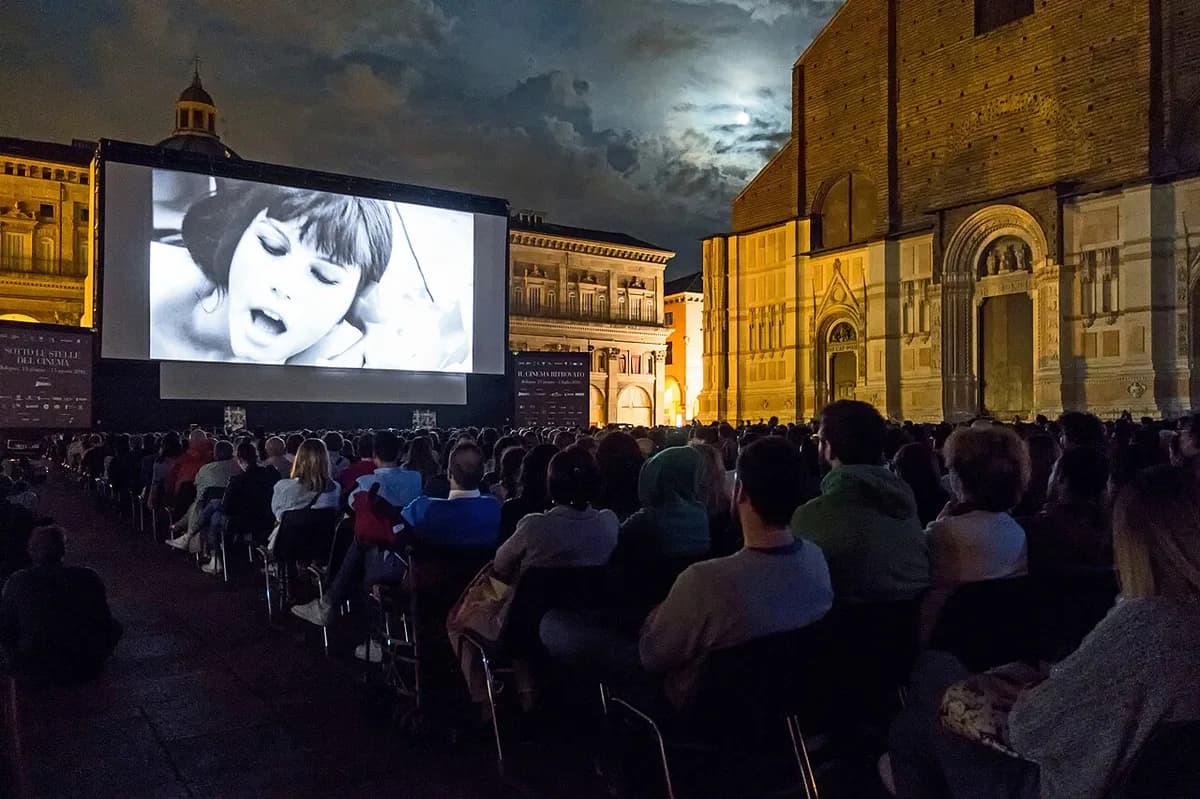
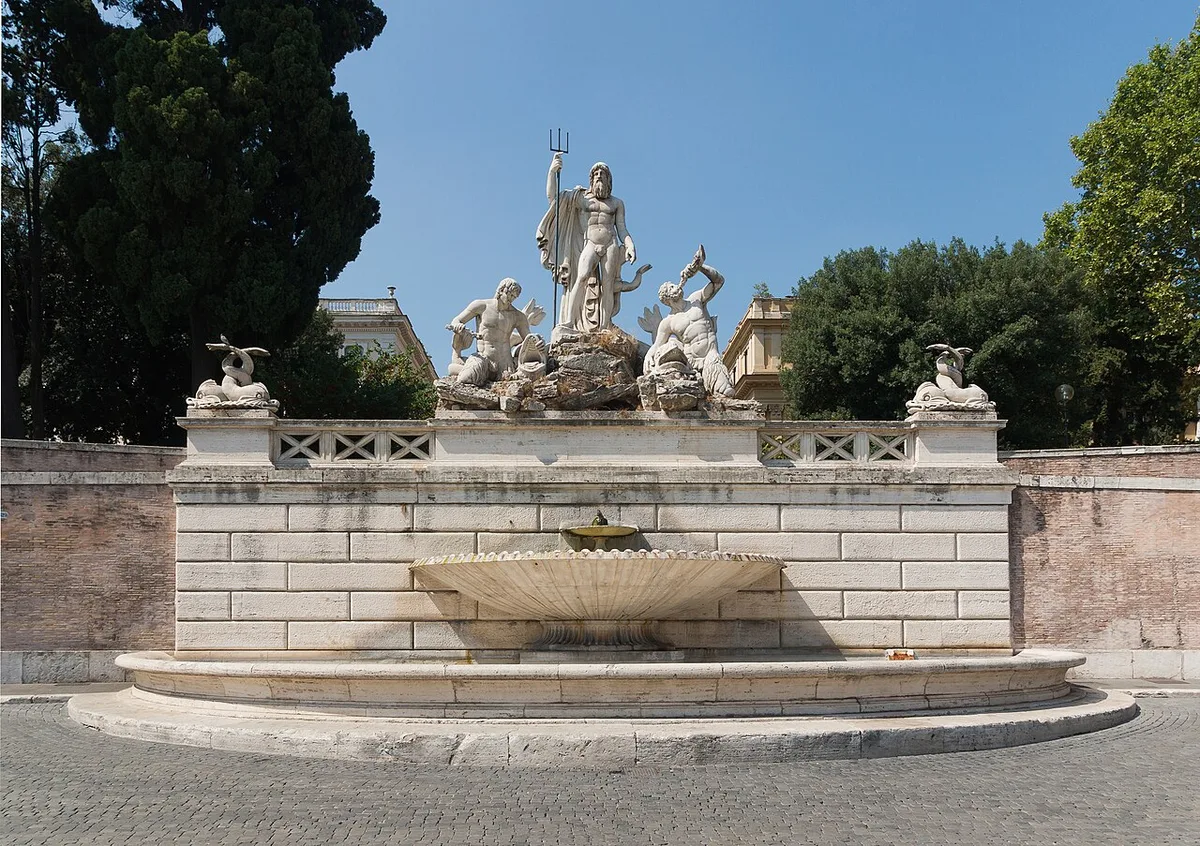
Everything else the festival does is excellent. The Piazza Maggiore evenings are extraordinary. Each night of the festival — weather permitting — a giant screen is erected against the northern flank of Bologna's great medieval square, and several thousand people settle in to watch a restored film in the open air. The Basilica di San Petronio rises to one side; the Fontana del Nettuno sits at the far end of the piazza; above the city, the sky is the particular deep blue of an Italian summer night at half past nine. I have been to many film screenings in many places, and the Piazza Maggiore during Il Cinema Ritrovato remains the one I think about most clearly.
The screenings are free for the unticketed seating area. A section of deckchairs towards the front is reserved for ticket holders and accredited guests; behind that, the rest of the square is open to anyone. Arrive an hour before the scheduled start and you will have a good sightline. Arrive ten minutes before and you will be watching from the edges or not at all. The square fills reliably for the major screenings, particularly on nights when the programme includes a film with significant Italian resonance or a live musical performance with a full ensemble.
Silent films are screened with live musical accompaniment — typically a pianist, sometimes a small chamber ensemble — commissioned or arranged specifically for the film. The Cineteca works with some of the leading practitioners of silent film accompaniment internationally, and the quality of the music is consistently high. Watching a restored 1920s comedy or a Russian avant-garde silent with a live score in a twelfth-century square is an experience that no home-cinema setup can replicate, however fine the Blu-ray edition. On warm, still nights — which is most nights in a Bologna June — the sound carries cleanly across the whole square. Bring something light to sit on; stone holds the day's heat longer than you might expect.
Passes, Accreditation, and Indoor Screening Tickets
The indoor screening programme runs on a pass and ticket system managed by the Cineteca. For serious attendees who want to follow the daytime programme across multiple venues over the full festival run, the most practical option is a festival pass (accreditation), which gives access to all or most indoor screenings. Several tiers are typically available: a full professional accreditation for industry visitors, a cinephile or enthusiast pass at a lower price point, and a reduced rate for students and those under 26. Early-bird pricing is available in the months before the festival; passes bought close to the start date cost more and may have restricted availability.
Individual tickets for specific screenings are also available — sensible if you are in Bologna for only a day or two and want to catch a particular restored film or a retrospective highlight without committing to the full programme. Tickets can be purchased through the Cineteca's website and at venue box offices during the festival, subject to availability. Opening night programmes and major restorations shown for the first time sell out quickly.
The Piazza Maggiore free seating area requires no booking and no ticket of any kind. Show up early, find a space, and stay. If you are planning to attend only the open-air evening screenings, no accreditation is needed at all — the festival is entirely accessible to anyone who makes the trip to Bologna. The premium deckchair section does require a ticket, obtained through the festival's standard ticketing system.
Getting to Bologna for the Festival
Bologna is one of Italy's great rail junctions. Bologna Centrale station sits on the high-speed network and receives direct Frecciarossa services from Rome (approximately two hours), Florence (35–45 minutes), Milan (just over an hour), and Venice (just under two hours). For festival attendees travelling from elsewhere in Europe, Bologna is usually reached most efficiently by flying into Milan, Venice, or Rome and continuing by high-speed rail. Direct Eurostar and TGV connections extend the practical catchment area to Paris and Brussels for those crossing from the UK or France. Check Trenitalia and Italo for domestic connections from your Italian arrival city.
Bologna Guglielmo Marconi Airport (BLQ) is a compact international airport about six kilometres from the city centre. The Marconi Express rail link runs directly from the airport to Bologna Centrale in around six minutes; taxis and ride shares are also available, taking around 15–20 minutes to the centre depending on traffic. From the UK, several carriers operate direct routes to Bologna from London and other British airports; connections from elsewhere in Europe are strong through most major hub cities.
Once in Bologna, the historic centre is compact and almost entirely walkable. The festival's indoor venues are spread across the city but none requires more than a 15-minute walk from the Piazza Maggiore. The UNESCO-listed porticoes — nearly 40 kilometres of covered walkways threading through the city — make walking in summer heat considerably more pleasant than in most Italian cities of comparable size. Late-night returns after the Piazza Maggiore screenings are straightforward: taxis queue near the square, and most central accommodation is within a 10-minute walk in any case.
Atmosphere, Crowds, and Practical Tips
Late June in Bologna is genuinely hot. Daytime temperatures regularly reach 30–34°C, and the stone-paved piazzas and narrow medieval streets retain the heat well into the evening. The indoor screening venues are air-conditioned — a real relief after a morning walking the city — but the walks between venues in the early afternoon can be uncomfortable. A long lunch, a cool osteria, and an hour back at the hotel before the evening programme is not giving up; it is sensible planning for a multi-day festival visit in a north-Italian summer.
The social atmosphere across the festival is its other defining quality. Unlike at commercial film festivals, there are no velvet ropes, no tiered hospitality structures, and no sense that the interesting conversations are happening somewhere you cannot reach. Programmers from major cinematheques, restoration archivists, film historians, and enthusiastic first-timers join the same queue for the same screening and talk easily before it starts. The festival community has the warmth of a group that shares an unusual passion; newcomers are absorbed into that atmosphere without any awkwardness. Many attendees return every year and know each other from previous editions — asking someone what they are most looking forward to is an entirely natural way to start a conversation in any queue at Il Cinema Ritrovato.
For the Piazza Maggiore evenings, bring a light blanket or a thin inflatable cushion if you plan to sit on the stone for two or three hours in the free seating area. Temperatures cool to around 22–24°C once the sun is fully down, which is pleasant enough for an open-air screening without a heavy jacket. Small bars along the edges of the square sell drinks; buying a local wine or a cold spritz and settling in for the film is the standard approach. The festival does not begin until it is dark enough for the screen to read clearly, so start times drift toward 21:30 or later as the season progresses — check the specific screening time on the programme rather than assuming a fixed hour.
Bologna Beyond Il Cinema Ritrovato: Food, Porticoes, and the Wider Calendar
A festival running across eight or nine days in one of Italy's great food cities offers no shortage of reasons to extend a stay. Bologna's culinary reputation is entirely earned. This is the city that gave the world tortellini, tagliatelle al ragù made with egg pasta and a meat sauce that predates and substantially outclasses anything served under that name's various international corruptions, and mortadella in its original form — a world away from the thin-sliced supermarket version. An evening meal here should involve pasta made that morning, accompanied by a carafe of Sangiovese from the Emilia hills. The city's osterie — many of them operating from the same premises for decades — are the right setting: unpretentious, ingredient-driven, and consistently good in a way that does not require tracking down the one "authentic" option on a list.
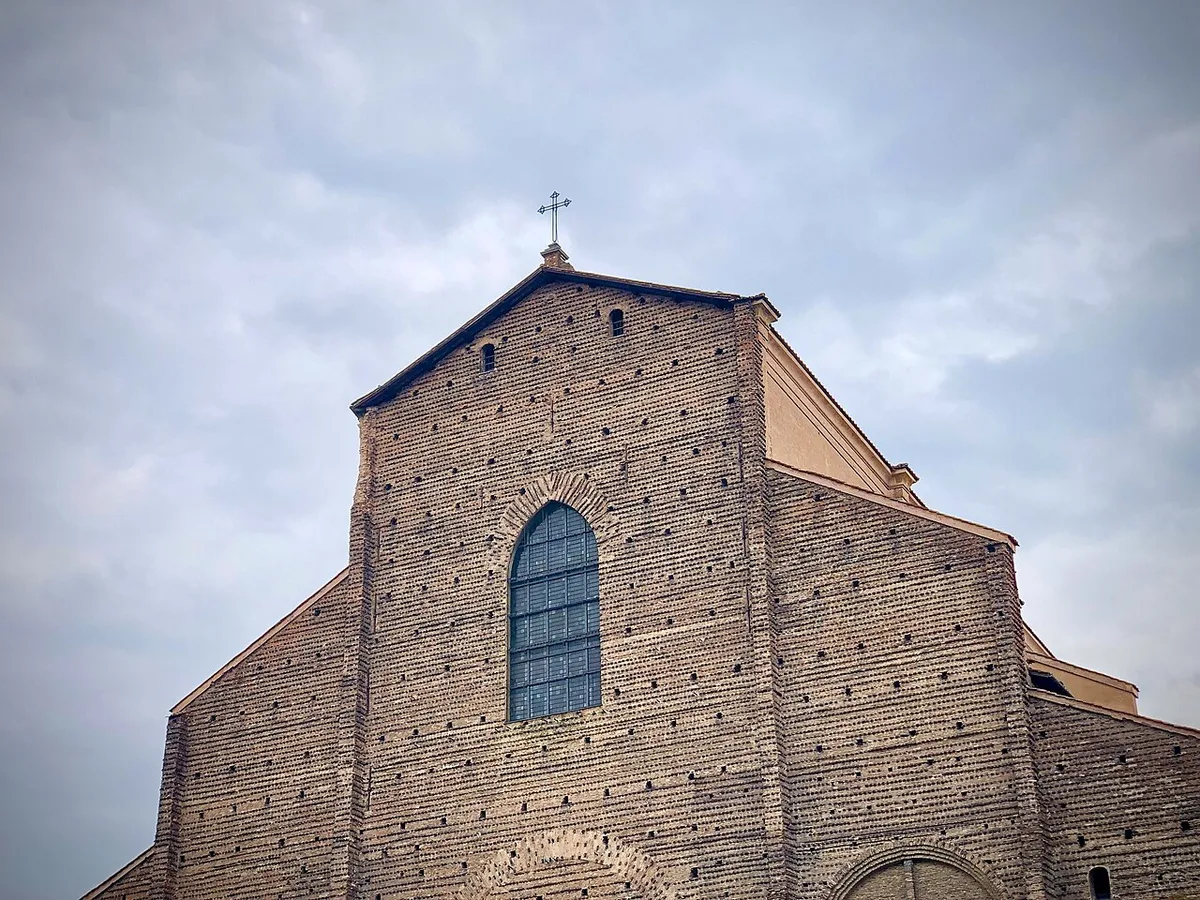
Outside the festival programme, Bologna rewards a half-day of unhurried walking. The Due Torri — the Asinelli and Garisenda, medieval brick towers that lean at disconcerting angles in the city centre — are a short walk from Piazza Maggiore and offer an orientation point in the tangle of medieval streets. The Basilica di San Petronio, against which the festival screen is erected each evening, is one of the largest gothic churches in the world and was never completed; its vast, austere interior deserves thirty unhurried minutes. The Archiginnasio, the original seat of Europe's oldest university, has an anatomical theatre on its upper floor that is genuinely strange and worth finding. The wider events calendar — music, outdoor theatre, food events, and the full programme of what else is on in the city across the summer — is covered in the festivals and events in Bologna guide.
Frequently Asked Questions
When does Il Cinema Ritrovato 2026 take place?
Il Cinema Ritrovato 2026 runs for approximately eight to nine days spanning late June and the first days of July. In recent editions the festival has begun around 21–23 June and closed around 1–2 July. The Cineteca di Bologna confirms exact dates in spring — check the official festival website before booking travel, as the precise start and end dates can vary by a day between editions.
Are the Piazza Maggiore screenings really free?
Yes. The open seating area on Piazza Maggiore is entirely free with no booking required. Arrive at least an hour before the scheduled start to secure a good sightline — the square fills quickly for the major screenings. A section of deckchairs towards the front is reserved for ticket holders and accredited guests; behind that, the square is open to everyone. No pass or accreditation is needed to attend the evening open-air screenings.
Do I need a pass or accreditation to attend Il Cinema Ritrovato?
Only for the indoor daytime programme. A festival pass or accreditation gives access to screenings across venues such as Cinema Modernissimo, Cinema Jolly, Cinema Arlecchino, and the Cineteca's own Sala Scorsese and Sala Mastroianni. Several pass tiers are available, including reduced rates for students and early-bird buyers. The Piazza Maggiore evening screenings require no ticket or accreditation of any kind.
What types of films are shown at Il Cinema Ritrovato?
The programme focuses on restored, rediscovered, and archival films from the silent era through the studio age. Recurring strands include "Cento anni fa" (A Hundred Years Ago), which presents films from exactly a century before the current edition — in 2026 that means 1926 — alongside director retrospectives, national cinema histories, and new restorations screened publicly for the first time. Silent films at the Piazza Maggiore screenings are typically accompanied by live musical performance, often with a commissioned score.
How do I get to Bologna for the festival?
Bologna Centrale station is well connected by high-speed rail from Rome (approximately two hours), Florence (35–45 minutes), Milan (just over an hour), and Venice (under two hours). Bologna Guglielmo Marconi Airport (BLQ) is served by the Marconi Express rail link, which reaches the city centre in around six minutes. From the UK, direct flights operate from London and several other British airports. Once in the city, all festival venues are within walking distance of the historic centre.
Related: Best Christmas Markets in Italy — another season of Italian celebration worth planning a trip around.
Il Cinema Ritrovato works for a surprisingly wide range of visitors. You can attend only the free Piazza Maggiore evenings, spending the rest of your time eating tagliatelle and walking the porticoes, and come away with a memorable few nights in one of Italy's most distinctive cities. Or you can build a full week around the indoor programme — following a strand from one restored discovery to the next, slipping between Cinema Modernissimo and Sala Scorsese across the long summer days — and find a festival that rewards exactly that level of engagement. The 2026 edition, arriving near the festival's fortieth year, is likely to mark the occasion in some form. Whatever the curatorial team chooses to do with the anniversary, the essential things — the free screenings on Piazza Maggiore, the rigour of the restoration programme, and the particular pleasure of watching rare films in a city that takes both food and cinema extremely seriously — will remain.
Book accommodation early: Bologna in late June fills as university events, business travel, and the festival converge on a compact historic centre. Check the official Cineteca di Bologna website in spring for the exact 2026 dates and to register for accreditation if you want access to the indoor programme — pass registration typically opens several months in advance and early-bird pricing is worth catching. Build at least a day or two on either side of whatever you can attend; the city itself earns the extension. The wider Bologna events programme, and everything else on the city's calendar beyond this single exceptional week, is in the festivals and events in Bologna guide.
Free guide: Europe's Festival Calendar
A month-by-month map of Europe's unmissable festivals — with the best dates to visit each and a local tip you won't find in the guidebooks.
You might also like
Continue reading
More guides you'll find useful