Is Berlin Festival Of Lights Worth It Travel Guide
Berlin's Festival of Lights runs free October 9-18, 2026 with Colours of Love 3D mapping on the Brandenburg Gate and Cathedral. Go Tuesday to dodge crowds.
On this page
Is Berlin Festival Of Lights Worth It
Yes, but the Berlin Festival of Lights is only worth it if you enjoy large-scale public spectacles. If you prefer a smaller and more intimate event, the Amsterdam Light Festival is a better alternative. This guide was last updated in June 2026 to provide current pricing and route details.
The city transforms into a massive open-air gallery every autumn for ten consecutive nights. Most visitors find the scale of the projections on historic landmarks like the Brandenburg Gate truly impressive. However, navigating the massive crowds requires a strategic plan to avoid frustration.
Free guide: Europe's Festival Calendar
A month-by-month map of Europe's unmissable festivals — with the best dates to visit each and a local tip you won't find in the guidebooks.
One of the most celebrated light festivals in the world
The Berlin Festival of Lights has run every October since 2005, making the 2026 edition the 22nd installment. That longevity is itself a quality signal: the organizers have had two decades to refine the production, negotiate the best building facades, and build relationships with world-class projection artists. No other European light festival of this scale has been running continuously for as long.
The event draws well over a million visitors across its ten nights and spans multiple city districts simultaneously. What sets it apart from smaller festivals is the sheer density of iconic architecture available as a canvas: the Brandenburg Gate, the Berlin Cathedral, Museum Island, the TV Tower, and Bebelplatz are all within a walkable corridor. Most comparable festivals in Europe are anchored to one or two landmark buildings; Berlin gives you a dozen.
The 2026 theme is "Colours of Love," exploring love as something multifaceted, dynamic, and all-encompassing rather than a single emotion. That thematic ambition tends to produce more layered visual storytelling than purely decorative festivals. Artists from across the globe submit site-specific designs that interpret the theme on each building's individual architecture.
Visit the Berlin Festival of Lights
The 2026 edition runs from October 9th through October 18th. Illuminations begin daily at 19:00 as the sun sets and continue until 23:00 across various city districts. Public access to all major outdoor installations is entirely free of charge for every visitor.
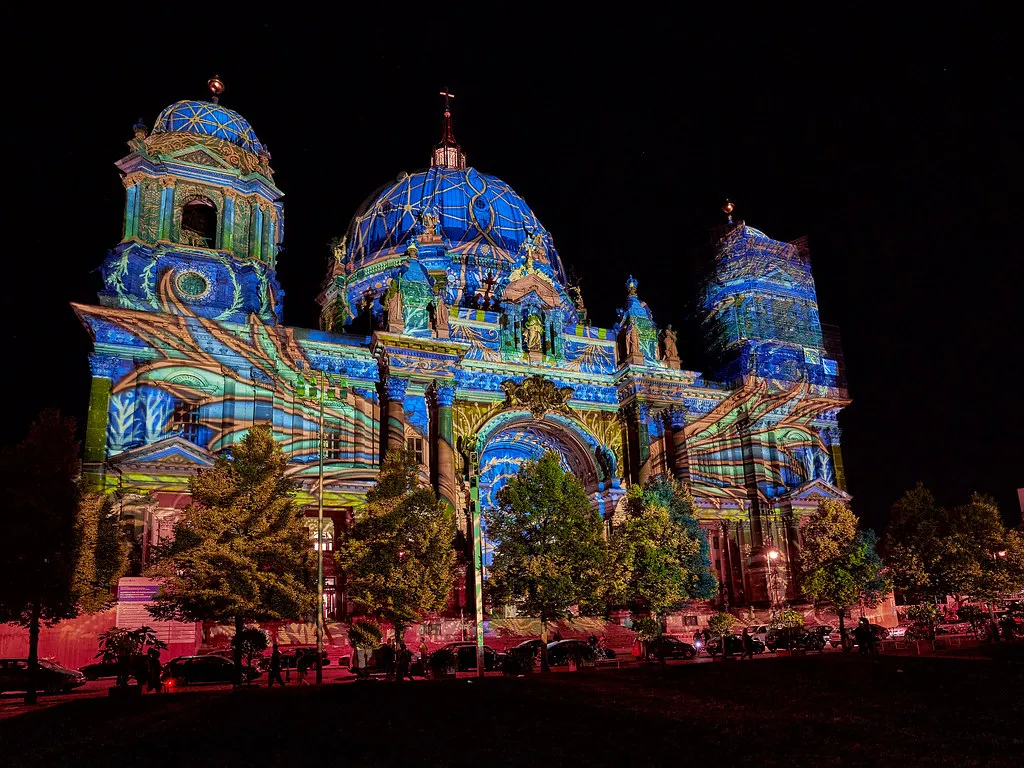
The event covers dozens of locations, ranging from the famous TV Tower to smaller neighborhood squares. This city-wide reach makes it one of the largest light art events in the world today. You can find a full map of the 2026 locations on the official Festival-Of-Lights.de website.
Walking is the most common way to experience the central displays near Unter den Linden. Most visitors find that the core route takes roughly two to three hours to complete on foot. Expect heavy foot traffic near the Berlin Cathedral and Bebelplatz during the peak 20:00 window.
Official licensed tours are available for those who prefer to see the lights from a bus or boat. These private lightseeing tours typically range from €15 to €40 depending on the duration and transport type. Check the latest Berlin Festival of Lights guide for specific transport provider recommendations.
What buildings are in the Festival of Lights Berlin?
The core lineup of illuminated landmarks stays consistent year to year, though the specific animations change with each theme. These are the buildings that anchor every visit:
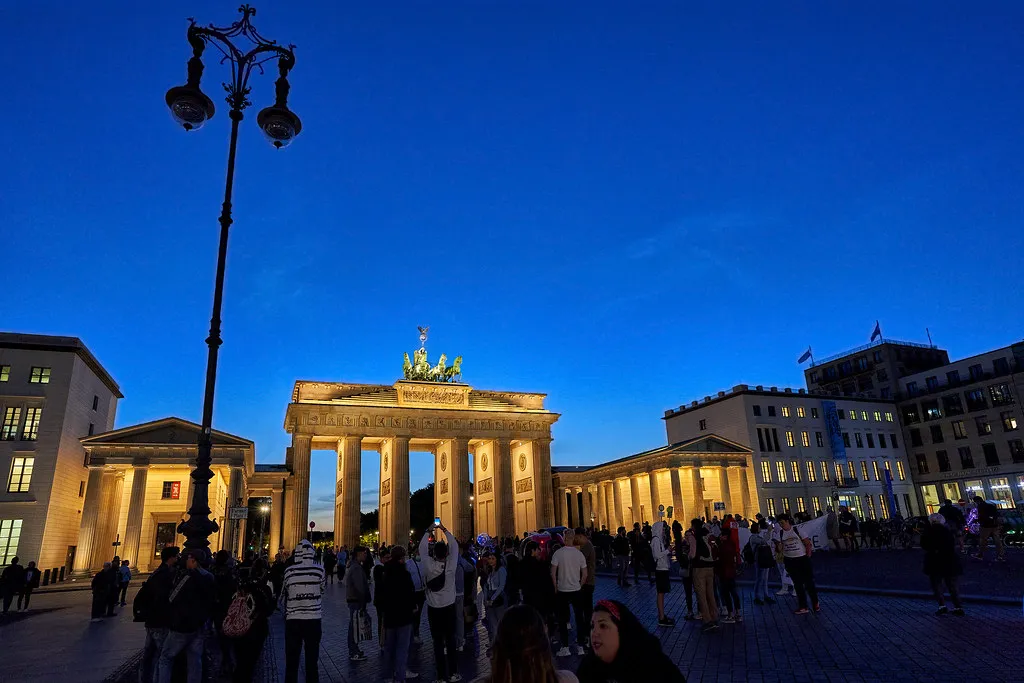
- Brandenburg Gate — the centerpiece of the festival and the most photographed installation. Plan to be here before 20:00 to get clear sightlines before the crowd peaks.
- Berlin Cathedral (Berliner Dom) — the largest single canvas in the festival. Its massive dome allows for the most elaborate 3D mapping sequences of any location.
- Berlin TV Tower (Fernsehturm) — sometimes illuminated directly, sometimes used as a projection surface or glowing beacon. Visible from almost everywhere in Mitte.
- Museum Island — five museums clustered along the Spree, offering reflections of the light installations on the river surface at night.
- Bebelplatz — the square flanked by the State Opera and St Hedwig's Cathedral, typically featuring some of the more experimental digital art pieces.
- Potsdamer Platz — farther west, but worth the detour for its modern architecture and the contrast it provides with Mitte's historic buildings.
- Holocaust Memorial — often illuminated with restrained, deeply moving light on the Full Glow-Up route. Respectful and worth a slow visit.
The exact locations for 2026 will be confirmed closer to October. The selection changes slightly each year, so check the official site before you go for the final list.
Does Berlin Cathedral light up?
Yes. The Berlin Cathedral (Berliner Dom) is one of the undisputed highlights of the festival and should not be missed. Its dome and twin towers are large enough to host multi-layer animated sequences that smaller buildings simply cannot carry. The cathedral consistently receives some of the most elaborate 3D mapping commissions of any location across the ten nights.
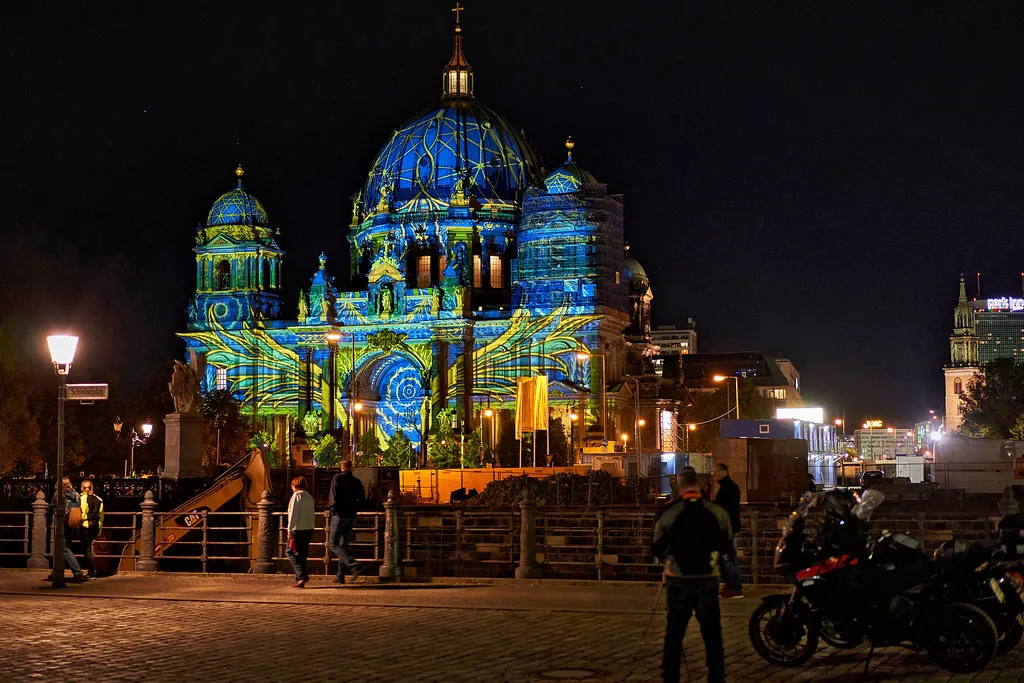
Beyond the visual display, the cathedral also hosts a multi-day concert series during the festival. Live DJs and classical musicians perform with sets synchronized to the light projections on the exterior. Whether you prefer techno-house or neo-classical music, check the official lineup ahead of your visit to decide whether to attend one of these performances — they are popular and capacity inside the cathedral is limited.
The best viewing angle for the cathedral projection is from the Lustgarten on the northwest side. Arriving by 19:15 gives you a position before the crowds pack in from Alexanderplatz. After 21:30, the square thins noticeably and photography becomes much easier.
Spectacular light art merges with Berlin
The festival uses advanced 3D mapping technology to tell stories on the facades of historic buildings. Artists from around the globe submit designs that reflect the annual "Colours of Love" theme through light and sound. Many of these installations are part of a best light festivals in Europe circuit of commissions.
While the main landmarks are spectacular, the smaller side-street installations offer a more creative, experimental vibe. The common regret is spending too much time at the Brandenburg Gate while missing the Potsdamer Platz shows. Plan to spend at least two nights if you want to see both central and outlying districts.
The atmosphere is festive, with street food vendors and pop-up bars appearing near the busiest light stations. Be prepared for chilly October winds that often whip through the open plazas near the Spree River.
- Pros: What visitors usually love
- Completely free public admission to all main sites
- World-class 3D mapping on iconic historic architecture
- Fantastic photography opportunities for social media
- Safe and festive atmosphere for families and solo travelers
- Easy access via Berlin's excellent public transport network
- Cons: What may disappoint
- Extremely dense crowds on Friday and Saturday nights
- Unpredictable October weather including rain and cold winds
- Significant traffic delays for buses and cars in Mitte
- Some projections can feel repetitive after several stops
- Limited seating and rest areas near the main installations
The best walking routes
Walking is the most reliable way to see the festival. Buses and taxis get caught in Mitte traffic after 20:00, and the U-Bahn stops are close enough to the main sites that public transport gets you to each cluster quickly. Wear comfortable waterproof shoes: you will cover several kilometres of city pavement across the evening.
Two routes work well depending on your energy level:
Short and Sweet — about 45 minutes: Start at Alexanderplatz and photograph the TV Tower from the square. Walk southwest to the Berlin Cathedral for the main projection. Continue to Museum Island to catch the light reflections on the Spree. Follow Unter den Linden to Bebelplatz. Finish at the Brandenburg Gate. This covers the five highest-impact stops with minimal backtracking.
The Full Glow-Up — about 2 hours with stops: Begin at Potsdamer Platz for the modern-architecture contrast. Walk northeast to the Holocaust Memorial and pause there. Continue to the Brandenburg Gate. Head east along Unter den Linden stopping at Bebelplatz and the Berlin Cathedral. End at Alexanderplatz and the TV Tower. Reward yourself with a late-night currywurst from one of the kiosks near Alexanderplatz before heading back.
Both routes are best done on a Tuesday or Wednesday evening. Weekends push crowd density to the point where you are shuffling rather than walking, especially between the Brandenburg Gate and Bebelplatz.
Tours and offers worth booking
Walking is free, but the official lightseeing tours add context and comfort for visitors who want a guided experience. VisitBerlin offers licensed tours by bus, boat, and a combination of both. The bus tours typically run €15–€40 per person and follow dedicated routes that avoid the worst of the pedestrian bottlenecks. Boat tours along the Spree give you a completely different perspective — viewing the Berlin Cathedral and Museum Island from the water is one of the most striking angles available during the festival.
Some packages include a visit to the TV Tower observation deck, which is useful if you want an aerial view of the illuminated city. These sell out earlier than the walking-format tours, so book through visitBerlin.de several weeks in advance if you want a specific date. Availability tightens sharply toward the end of the first week once domestic German visitors lock in their weekend plans.
The indoor "Light in Concert" events at the Berlin Cathedral are separate from the standard tour packages. These concerts are ticketed, capacity-limited, and often sell out weeks before the festival opens. Check the official program the moment tickets go on sale if this interests you.
Is it worth it? Our verdict
Yes. The event is free, visually world-class, and set against some of the most architecturally rich streets in Europe. The sheer scale of the 3D mapping on the Berlin Cathedral alone justifies the effort of visiting. Most visitors find the value is highest when combined with other Berlin cultural activities during the day.
Best for: Photography fans, families with children, and budget-conscious travelers seeking free entertainment. The festival provides a unique way to see the city's architecture after the sun goes down. It is also a great choice for those who enjoy a lively, communal street atmosphere.
Skip if: You have a strong dislike for shoulder-to-shoulder crowds or long walking distances. If you struggle with cold weather, standing outside for three hours may feel like a chore. The Lyon Festival of Lights offers a similarly grand but different cultural experience in a smaller city.
Alternative: The Amsterdam Light Festival offers a more tranquil experience via canal boat tours. The Berlin event is much more spread out and urban compared to the Dutch canal-based installations. Consider the Eindhoven GLOW festival if you prefer a more tech-focused and experimental light show.
Fear of missing out? Don't miss out. Ever!
Timing your visit is the most important factor in determining if the experience feels worth it. Weekends in October are notoriously saturated with both locals and international tourists from across Europe. The 20:00 rush at Brandenburg Gate makes moving through the square genuinely difficult on Friday and Saturday nights.
We recommend staying overnight in Berlin rather than attempting a quick evening day trip from elsewhere. Staying overnight allows you to visit the most popular sites after 22:00 when the crowds thin considerably. The light shows remain active until 23:00, providing a much quieter window for photography in the final hour.
According to Visitberlin.de, mid-week nights offer the best balance of atmosphere and space. Plan your visit for a Tuesday or Wednesday to avoid the heaviest foot traffic on the sidewalks near Mitte. Avoid opening night on October 9th if personal space matters — local media and early-bird crowds pack the main sites on that first evening.
Frequently Asked Questions
Is the Festival of Lights Berlin free?
Yes, all the main outdoor light installations are free to view. You do not need a ticket to walk through the city and see the projections. Only specific indoor concerts or guided bus tours require a paid ticket.
Where is the best place to see the Festival of Lights in Berlin?
Bebelplatz and the Berlin Cathedral offer the most spectacular 3D mapping displays. These locations feature large facades that allow for complex animations. The Brandenburg Gate is also a must-see, though it is often the most crowded spot.
What time does the Berlin light show start?
The illuminations begin daily at 7:00 PM as the sun sets. The lights remain active until 11:00 PM each night. Arriving after 9:30 PM is often the best way to avoid the largest crowds.
Visiting Berlin for more than one festival? See our complete guide to festivals and events in Berlin.
The Berlin Festival of Lights is a world-class event that offers incredible value for zero admission cost. While the crowds can be overwhelming on weekends, the quality of the 3D mapping is second to none. If you are planning a trip to Germany in October, this event should definitely be on your itinerary.
For more inspiration on illuminated cities, read our guide to the Durham Lumiere festival. Prepare for the weather, wear your walking shoes, and enjoy the glowing transformation of the German capital. Berlin truly shines brightest during these ten magical nights in autumn.
Free guide: Europe's Festival Calendar
A month-by-month map of Europe's unmissable festivals — with the best dates to visit each and a local tip you won't find in the guidebooks.
You might also like

Continue reading
More guides you'll find useful