Is Menton Lemon Festival Worth It? 8 Essential Tips for 2026
Is the Fête du Citron worth the crowds? Discover if the Menton Lemon Festival is worth it with 2026 prices, parade tips, and the secret post-festival fruit sale.
On this page
Is Menton Lemon Festival Worth It? 8 Essential Tips for 2026
Yes, the Menton Lemon Festival is absolutely worth it for the sheer visual spectacle of 140 tonnes of fruit. The best alternative for those seeking fewer crowds is exploring the best food festivals in Europe for quieter options. This guide breaks down why this 2026 event remains a French Riviera highlight.
Part of our Best Food and Wine Festivals in Europe series.
Visitors should expect a quirky celebration involving massive sculptures made entirely of oranges and lemons. The Biovès Gardens provide a unique sensory experience that smells as good as it looks. Last updated April 2026, this review uses current pricing and logistical data to help you plan. We focus on grounded observations to ensure your trip to Menton is successful.
While the event is world-famous, it requires careful timing to enjoy without frustration. Most visitors find the logistical challenges of reaching Menton can overshadow the beauty if unplanned. This guide provides the necessary context to decide if it fits your winter itinerary.
Free guide: Europe's Festival Calendar
A month-by-month map of Europe's unmissable festivals — with the best dates to visit each and a local tip you won't find in the guidebooks.
Is the Menton Lemon Festival Worth It? (The Verdict)
The Fête du Citron is a one-of-a-kind event that justifies its entry fees for most travelers. Seeing 140 tonnes of citrus transformed into giant monuments is a bucket-list experience in France. However, the value decreases significantly if you do not enjoy dense, slow-moving crowds. You must weigh the visual reward against the high effort of navigating the narrow Menton streets.
Verdict: Yes, it is worth it if you book grandstand seats and arrive early. Best for: Photography enthusiasts, families with children, and fans of quirky cultural traditions. Skip if: You have mobility issues or a low tolerance for packed public transportation. Alternative: The Alba White Truffle Festival offers a more relaxed, gourmet-focused experience.
The festival runs from February 14 to March 1 in 2026 for its 92nd edition. Most sculptures do not actually use the prized Menton Lemon because they are too expensive and too rare. Instead, common citrus from Spain is used for the displays while certified local lemons are sold in shops. This distinction is important for those expecting to see the IGP-labelled fruit on the floats.
- Pros: What visitors usually love
- Incredible photo opportunities with 10-meter tall sculptures
- Energetic atmosphere with live music and dancers
- Unique night parades ending in spectacular fireworks
- Opportunity to buy cheap fruit after the event
- Proximity to the concurrent Nice Carnival events
- The charming Orchid Festival add-on experience
- Cons: What may disappoint
- Severe train overcrowding from Nice and Monaco
- Standing tickets offer very poor visibility for shorter guests
- High cost of grandstand seating at €29 per person
- Extremely long queues for public restrooms and cafes
- The prized Menton lemons aren't used on sculptures
- Difficult navigation for strollers or wheelchairs
History of the Fête du Citron: Why Lemons?
The festival traces its roots to 1928, when Menton held its first public exhibition of flowers and citrus fruit in the gardens of the Riviera Palace. The modern carnival-style format was not established until 1935, and it was only in 1955 that each edition began receiving an annual theme. Today the Fête du Citron is the second-largest winter event on the French Riviera, drawing around 240,000 spectators annually and ranking behind only the Nice Carnival.

The choice of lemons is not arbitrary. Menton's location at the foot of the Alps, just 30 km from Nice, creates a microclimate that shields the town from cold northern winds. With more than 300 days of sunshine per year, it became Europe's premier lemon-growing region and held that title until the early 20th century. The area still earns the informal title of "European Lemon Capital," and local lemons have been prized since at least 1341.
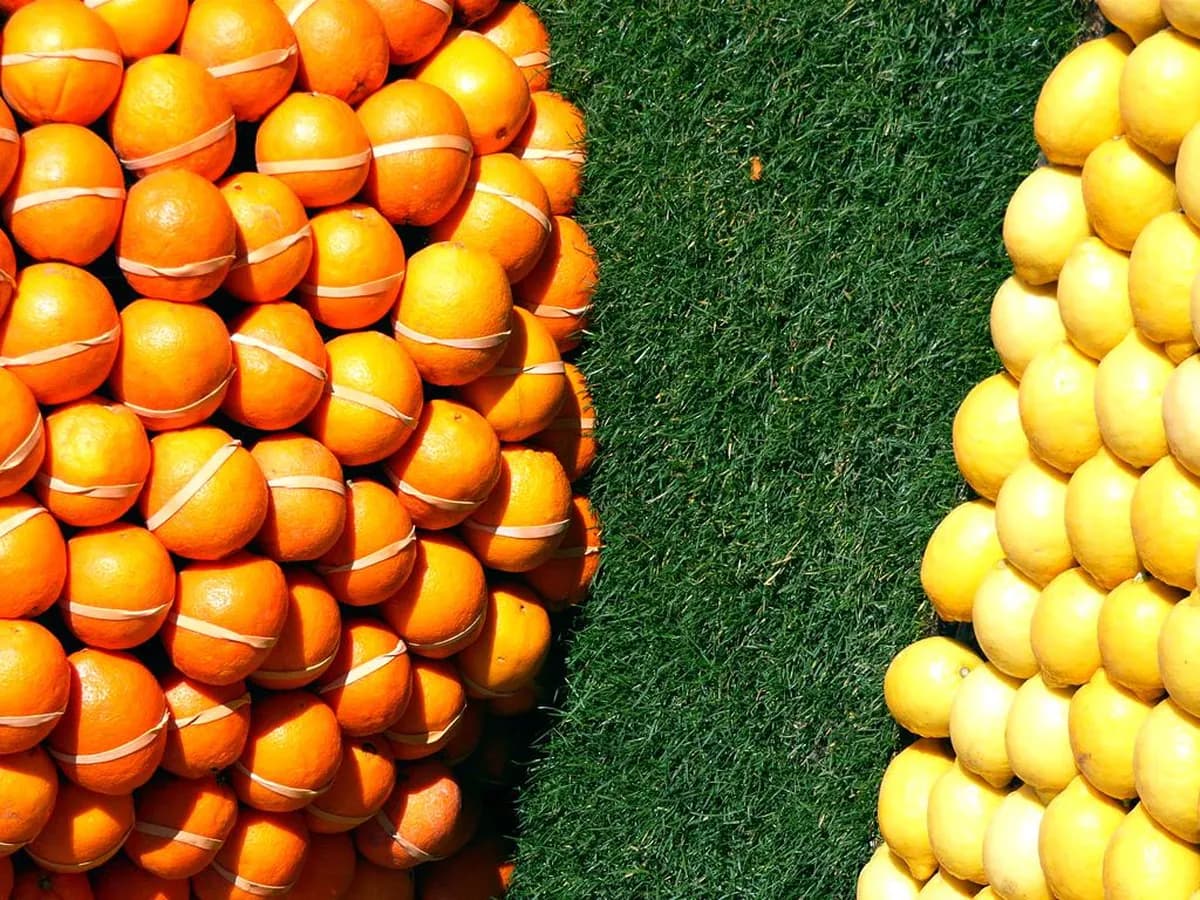
The 2026 edition is the 92nd and carries the theme "Merveilles du vivant" — Wonders of Life. The festival mascot for 2026 is John Lemon, a cartoonish figure with an Elvis Presley hairstyle, Rolling Stones lips, and a Kiss-band mask. This evolving theme format keeps the event fresh year after year; past themes have ranged from Bollywood to the Paris Olympic Games. Over 750,000 elastic bands, 8 km of synthetic garlands, and 13 decorated displays in Biovès Gardens go into each edition.
The Main Events: Parades, Gardens, and Lights
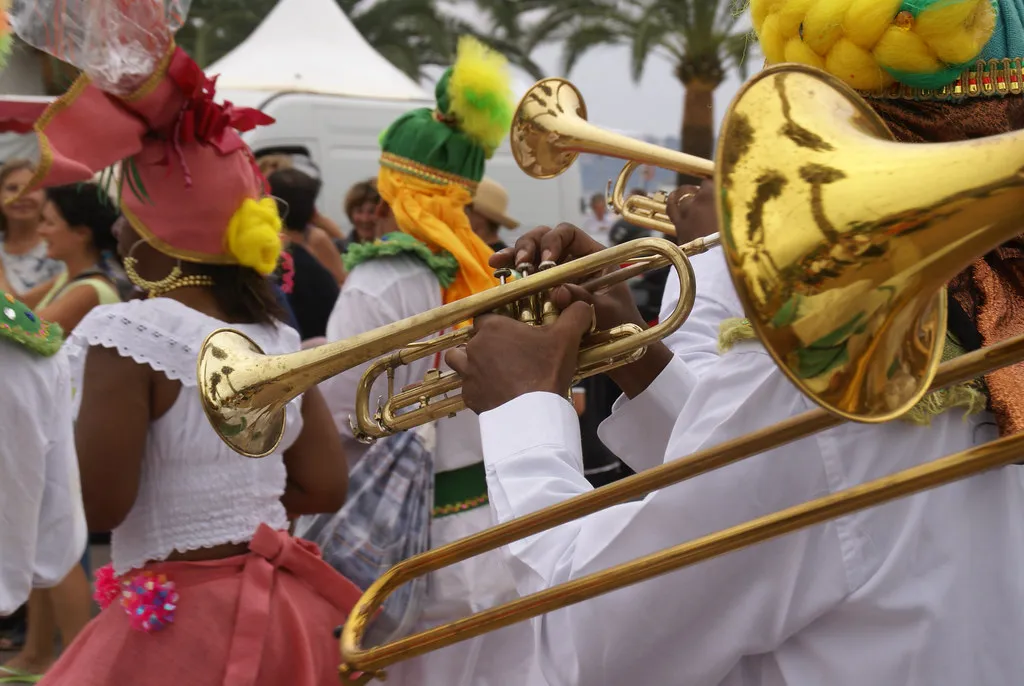
The Golden Fruit Parade is the heartbeat of the festival held every Sunday afternoon. Floats covered in citrus roll down the Promenade du Soleil accompanied by brass bands. In 2026, daytime parades take place on February 15, February 22, and March 1, starting at 14:30 and running until approximately 16:00. Most visitors find this afternoon start time means the sun is ideal for photography.

Biovès Gardens host the static citrus sculptures throughout the entire festival duration. These gardens are open daily from 10:00 to 18:00 for general viewing. The 2026 "Wonders of Life" theme features 13 large displays requiring nearly 15 tonnes of fruit to construct. A bridge in the middle of the garden lets visitors walk above the sculptures for an elevated view.
Night parades offer a different energy with illuminated floats and light shows. In 2026, night parades run on Thursday February 19 and Thursday February 26, starting at 21:00. The air is cooler, so wearing layers for these late-evening sessions is worthwhile. The night parade closes with fireworks at 22:30. The Gardens of Lights — when the Biovès sculptures are illuminated after dark — are free admission and often quieter than during daylight hours.
The Menton Lemon: What Makes the Fruit Unique
The Menton lemon is grown on approximately 5,000 trees across Menton and the neighbouring communes of Roquebrune, Sainte-Agnès, and Castellar. It produces more than 150 tonnes annually — enough for local trade but nowhere near the 140 tonnes consumed by a single festival. The most common varieties are Santa Theresa, Villafranca, and Eureka. According to the Menton Tourist Office, the fruit is "more elliptical than round, with a bright yellow colour" and grows in unusually large clusters of up to 15 fruits per branch.
What distinguishes it chemically is an exceptionally high essential oil content in the peel and elevated acidity. This combination gives the fruit a fragrance and intensity that top chefs including Alain Ducasse, Joël Robuchon, and Paul Bocuse have sought out for decades. Since the mid-2000s the Menton lemon has held IGP status — Indication Géographique Protégée — the same EU certification applied to Champagne and Parmigiano Reggiano.
The practical implication for festival visitors: you will not taste or see the genuine Menton lemon in the sculptures. The floats and garden displays use Spanish citrus sourced specifically because there is not enough local production to satisfy the event's scale, and because using IGP fruit in carnival structures would simply waste a premium ingredient. To taste the real thing, visit a specialty shop or delicatessen in Menton's old town, where lemon tarts, lemon vinegar, and IGP-certified fruit are sold throughout the festival period.
Ticket Guide: Prices and Choosing the Best View
Choosing the right ticket is the difference between a great day and a frustrating one. Standing tickets cost approximately €16 but offer no guaranteed view of the floats. We strongly recommend paying €29 for grandstand seats to see over the crowds. Consult the Official Fête du Citron Website for the latest availability.
The Orchid Festival is a hidden gem located in the Palais de l'Europe, directly adjacent to the Biovès Gardens sculpture area. Entry is only €2 and provides a fragrant escape from the citrus-heavy main areas. It is hosted by the Association des Orchidophiles et Epiphytophiles de France and features rare species and intricate floral displays that many tourists overlook. Visit it before the afternoon parade — queues at the Orchid Festival become very long after the Golden Fruit Parade ends, even though the venue stays open until 19:00.
You should book your Menton Lemon Festival tickets and tours several weeks in advance. Walk-up tickets are rarely available for the grandstands during the opening and closing weekends. The Biovès Gardens also require a separate entry fee of roughly €16 for adults. Combined tickets are sometimes available but usually only through the physical tourism office.
Logistics: Getting to Menton and Where to Stay
Menton sits 30 km east of Nice, reachable by train in about 30 minutes from Nice-Ville station. By car the route follows either the A8 motorway (exit 59) or the scenic Corniche roads through Monaco. Nice-Côte d'Azur Airport, 42 km from Menton, is France's second-busiest airport and connects directly to most European hubs. Trains from Genova, Italy arrive in roughly 2 hours 30 minutes, making Menton a viable destination from the Italian Riviera side. Check SNCF Connect for real-time train schedules and advance bookings.
The train station in Menton is only 200 metres from the Biovès Gardens entrance — genuinely walkable. However, trains fill to capacity on parade days. The station platform becomes dangerously crowded in the 30 minutes immediately after the Golden Fruit Parade ends. Returning travelers routinely wait 45 to 60 minutes before boarding. The best counter-strategy is to stay in the gardens until 17:30 or later, when the post-parade rush has dissipated.
Deciding where to stay for Menton Lemon Festival is a critical choice. Staying in Menton allows you to walk to all events and bypass train chaos entirely. However, hotels in the city center often double their rates during these two weeks. An overnight stay is the only practical way to attend the late-night fireworks without facing the post-parade train crush. Budget travelers often base themselves in Nice and treat Menton as a day trip on midweek dates when the town is less congested.
Pro Tips: Arrival Times and Crowd Management
Reaching Menton by 11:00 for any 14:30 parade is not optional — it is the single most important logistical rule. Festival organisers themselves recommend this arrival window. Those extra three hours let you explore the Biovès Gardens sculptures when crowds are minimal, queue for the Orchid Festival without a long wait, and find a good standing position before gates fill.
Visit the Biovès Gardens before the parade, not after. The natural instinct is to attend the 14:30 parade first, then head to the gardens at around 16:00. Doing so means joining a massive post-parade surge that makes it nearly impossible to move between the 13 sculptures. Going at 10:00 when gates open produces a measurably better experience. The garden bridge midpoint offers an above-crowd photo angle that is impossible to access when the area is packed.
For the standing ticket experience, position yourself near the grandstand entrance on the Promenade du Soleil rather than further along the route. Counterintuitively, this stretch tends to be less congested because spectators assume prime spots are taken. There are no barriers so you can move freely; arriving 60 to 90 minutes before the parade gives you enough time to find and settle into a preferred position. After the event, staying to watch the sculptures at dusk — when they are lit up and the Biovès crowd has thinned — is one of the most underrated ways to end the day.
- No pets, large bags, glass or metal containers, or sharp objects are permitted in the parade or garden areas.
- Lemon-themed clothing is well received by locals and creates easy conversation even across language barriers.
- Lemon farm tours and lemon tart-making workshops are available via the official festival website — they sell out weeks in advance and offer a hands-on contrast to the spectacle of the parade.
- Nice Carnival runs concurrently about 30 km west, making it feasible to spend a Saturday in Nice and a Sunday in Menton on the same trip.
Sustainability: What Happens to the Fruit After?
Many visitors wonder if the 140 tonnes of fruit simply go to waste. On the final Sunday morning, the city holds a massive public fruit sale. The citrus sculptures are dismantled and the fruit is sold to the public. You can often buy 3 kg of oranges or lemons for roughly €3 at this market — that is a steep discount on the shop prices you will find elsewhere on the Riviera in February.
The fruit that is too damaged for sale is sent to local composting facilities. This ensures that the environmental impact of the massive display is minimized. The 2026 festival continues to emphasize these local recycling efforts. It is a fascinating logistical feat: the same structures that take weeks to build are completely dismantled in a matter of hours on that final morning.
The 2026 theme "Merveilles du vivant" — Wonders of Life — carries a natural sustainability dimension that the festival's communications have leaned into. Check the Menton Tourism Board for specific theme-related concert schedules. These smaller events often provide the best local flavor without the massive parade crowds.
Frequently Asked Questions
How much are tickets for the Menton Lemon Festival?
Standing tickets for the parades cost €16, while grandstand seats are €29. Entry to the Biovès Gardens is roughly €16 for adults. Prices may vary slightly for the 2026 season, so check the official site.
What happens to the lemons after the festival?
The fruit is sold to the public at a discounted market on the final Sunday. You can buy 3kg of citrus for about €3. Fruit that is not fit for consumption is composted locally.
Is Menton worth visiting outside the festival?
Yes, Menton is a beautiful and quiet coastal town known for its microclimate. Outside of the festival dates, it offers colorful architecture and peaceful beaches. It is much more affordable during the shoulder season.
The Menton Lemon Festival remains one of the most distinctive winter events in Europe. If you can manage the crowds and the €29 grandstand fee, the visual reward is high. Be sure to check the Menton Lemon Festival dates before booking your flights. This 2026 edition promises to be one of the most colorful yet with its Wonders of Life theme.
Plan your transport carefully and arrive early to make the most of your visit. Knowing how to get to Menton Lemon Festival will save you hours of stress. We hope this guide helps you enjoy the citrus-filled streets of the French Riviera. For more inspiration, visit the Festivian blog for global event guides.
Free guide: Europe's Festival Calendar
A month-by-month map of Europe's unmissable festivals — with the best dates to visit each and a local tip you won't find in the guidebooks.
You might also like


Continue reading
More guides you'll find useful