Is Eindhoven GLOW Worth It? 2026 Honest Review & Guide
Is Eindhoven GLOW worth it? Plan your visit with our 2026 review on prices, routes, and crowds. Find out if this light festival is right for you.
On this page
Is Eindhoven GLOW Worth It? An Honest 2026 Review
Yes, Eindhoven GLOW is absolutely worth it for fans of art and technology. The Amsterdam Light Festival is the best alternative if you prefer a canal-based experience. This guide provides an honest look at the costs, crowds, and logistics for 2026. Last updated June 2026.
Eindhoven transforms into a massive open-air gallery every November. The city celebrates its deep history with light and innovation during this week. Our Eindhoven GLOW guide highlights the most impressive installations each year. Most visitors find the atmosphere electric despite the chilly Dutch weather.
This festival attracts over 700,000 people to the city center annually. You will see massive projections on historic buildings and delicate LED sculptures. Planning ahead is essential to avoid the heaviest crowds and long walks. We break down exactly what to expect so you can decide confidently.
Free guide: Europe's Festival Calendar
A month-by-month map of Europe's unmissable festivals — with the best dates to visit each and a local tip you won't find in the guidebooks.
Eindhoven's connection to light
Eindhoven is not just an accidental host for a light festival. The city is the birthplace of Philips, the company that industrialized the electric light bulb for mass production in the early 20th century. That heritage runs deep in the urban fabric — the Philips factories, the workers' housing estates, the research labs — and GLOW deliberately plays on that identity every year.
This makes Eindhoven a fundamentally different setting from Lyon or Amsterdam. Where other festivals impose light art on a historic backdrop, GLOW feels native. The installations regularly respond to the Philips Museum, the former industrial quarters of Strijp-S, and the Catharinakerk. Artists chosen for the programme often explore the boundary between technology and human emotion, which aligns directly with the city's engineering culture.
The connection also explains the calibre of student work at GLOW. Eindhoven University of Technology and the Design Academy Eindhoven both contribute installations each year. Student pieces like the aluminium hyperbolic paraboloid structure "Hypar" by Ignite — a team from TU/e — have become some of the most talked-about works in the festival's history. That pipeline of design and engineering talent keeps the content genuinely fresh.
Light art at GLOW: What to expect
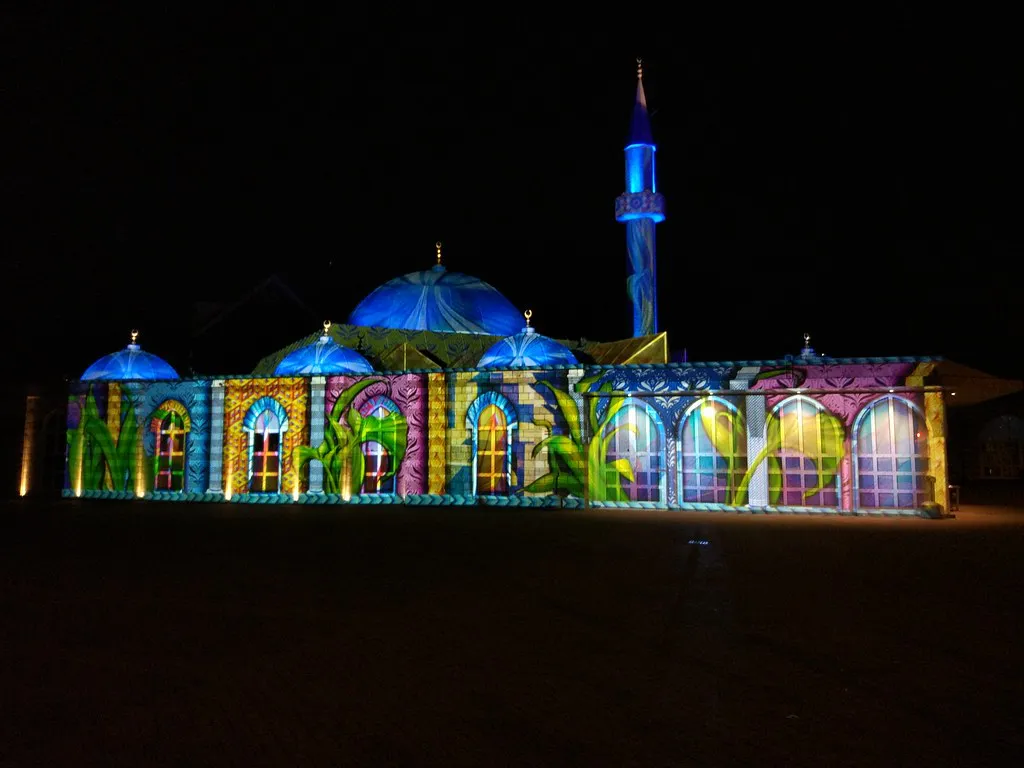
The installations range from small, intimate sculptures on side streets to city-scale architectural projections. Video mapping on the Augustijnenkerk and the Catharinakerk is consistently a highlight — Portugal-based studio Ocubo's three-part series "Triptych" (Heart, Light, Time) is one example of the cinematic quality that GLOW commissions. Expect to queue for the most popular shows; crowds form early around landmark buildings.
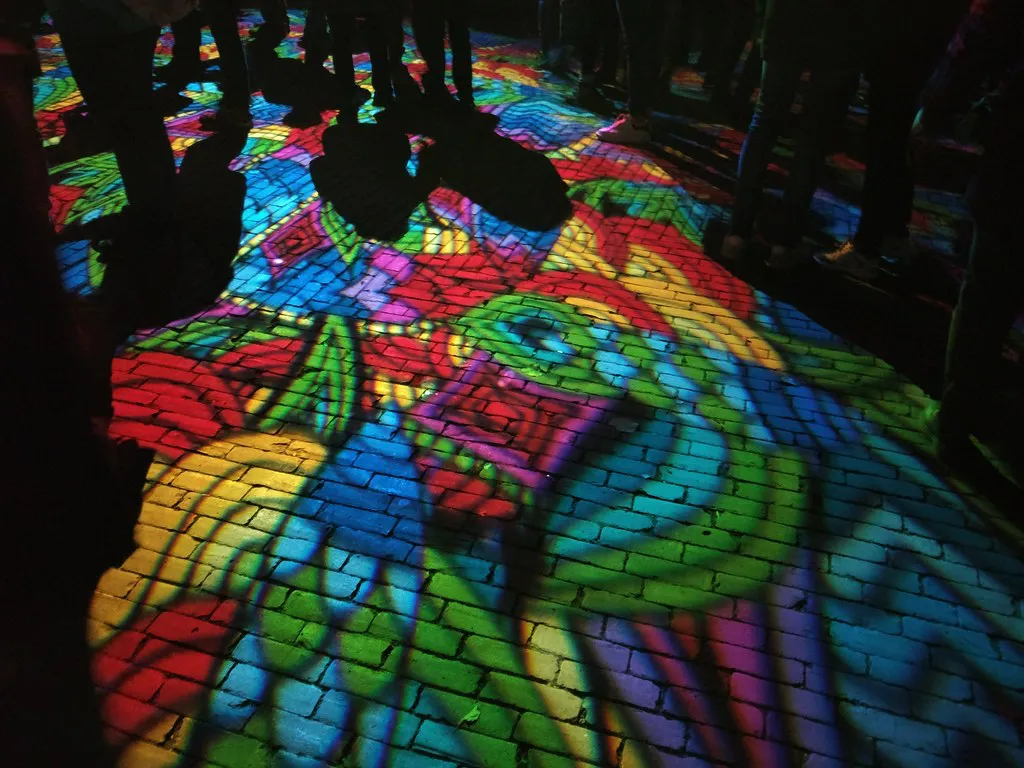
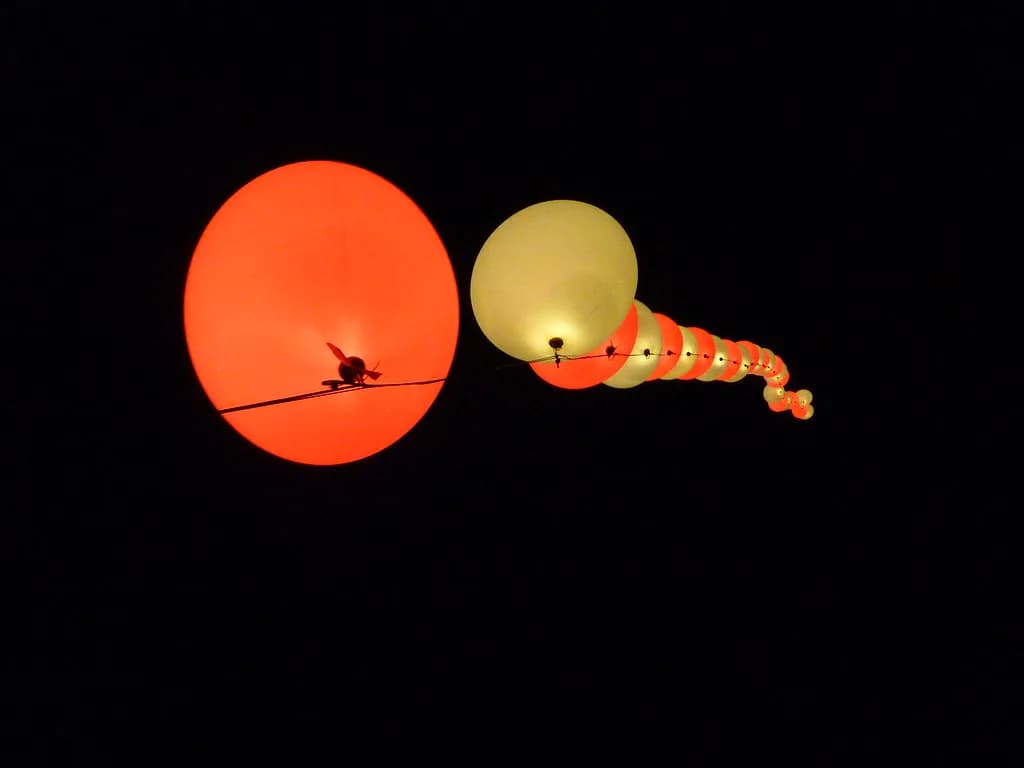
Interactive works are a feature, not a footnote. Past editions included LED floor grids that responded to footsteps, river-based flower sculptures fed by light streams, and a 150-metre beacon chain called "Ping" where light and sound pulse from one node to the next. Many works include synchronized music that creates a full sensory environment rather than a passive viewing experience.
The theme changes every year, which is why the festival retains a loyal local following despite being on in the same city annually. Each edition's theme shapes the colour palette, the selection of artists, and even the programming of the paid indoor shows. Compared to the best light festivals in Europe, GLOW feels more industrial and technology-forward — less decorative, more conceptual.
- Key installation types at GLOW:
- Architectural 3D mapping on churches and civic buildings
- Interactive LED floor and river installations
- Synchronized sound-and-light chain pieces
- Student innovation projects from TU/e and Design Academy
- Indoor paid shows at Philips Stadium (Noviter)
Do I need a ticket? Is Eindhoven GLOW worth the money?
GLOW is free. You do not need a ticket to walk the main route through the city center. This makes it one of the most accessible major cultural events in Western Europe — no booking, no queue at a box office, no wristband. You simply arrive after 18:30, pick up the route, and walk.
The one exception is the Noviter Show at Philips Stadium. This is a ticketed indoor light experience staged inside the football arena. Online tickets cost around €5 per person; buying at the desk on the night costs €7.50. Children under 12 pay approximately €1. Booking online well in advance is strongly recommended — this show sells out days before the festival opens.
Beyond the Noviter ticket, your costs are entirely optional. Food vendors set up along the route selling warm stroopwafels, hot chocolate, and Dutch comfort food. A Walking Dinner package is a popular way to combine a guided restaurant crawl with the light route. Budget roughly €4–€6 for hot drinks per person per evening. Overall, the value-for-money ratio is extremely high for an internationally acclaimed festival.
- 2026 cost summary:
- Main walking route: Free
- Noviter Show (online): approx. €5 per person
- Noviter Show (door): approx. €7.50 per person
- Children under 12 (Noviter): approx. €1
- Hot drinks from vendors: €4–€6
- Official paper map: €1–€2 (also free via the GLOW app)
Can I see everything on foot?
The main festival route runs approximately five kilometres through the heart of Eindhoven. Walking it continuously, including time to watch the bigger shows, takes around three hours. Add breaks for food or drink and budget four hours for a relaxed evening. You can start at De Markt or at the Central Station — both are convenient entry points with clear signage.
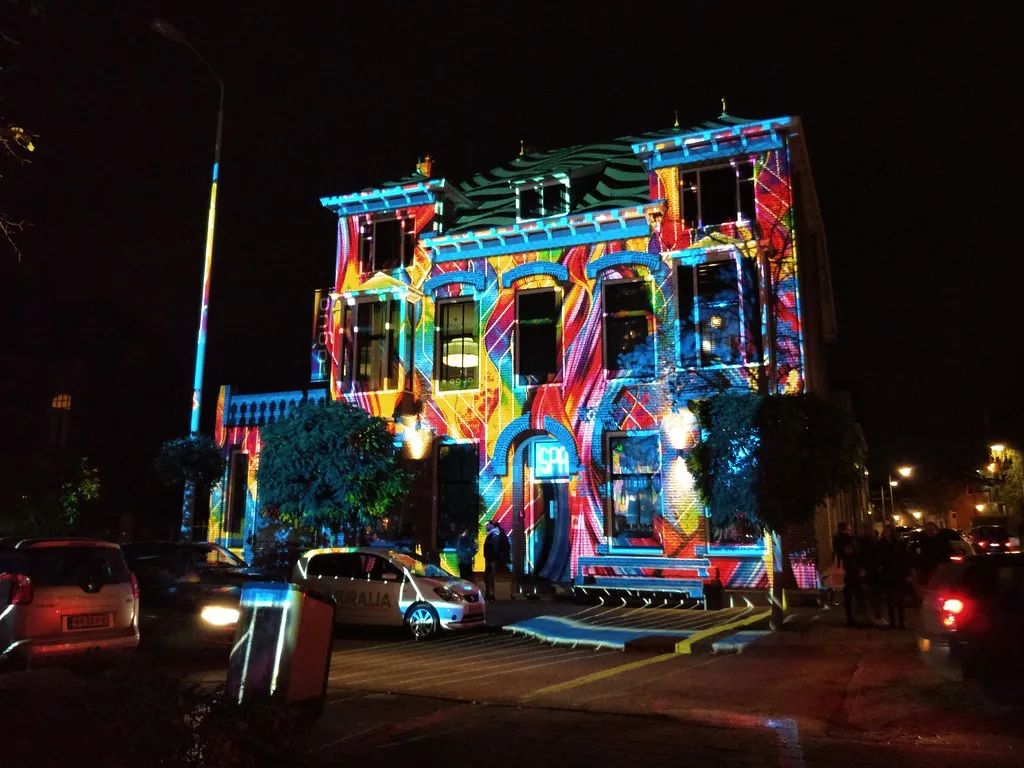
One underappreciated planning detail: the satellite villages. In Oirschot, Best, and Helmond, GLOW also stages installations from 18:30 to 22:00 — one hour earlier closing than the city centre (23:00 on weekdays, midnight on weekends). If you want to see village works, plan them first in the evening, then take a train back into the city for the later hours when the central route is marginally quieter.
Comfortable, waterproof shoes are essential. The streets can be slippery in wet November conditions and the route involves a lot of slow-moving standing rather than brisk walking. Bicycles are generally discouraged inside the pedestrian-controlled festival zone. The Ghent Light Festival is a smaller alternative if you find Eindhoven's crowd density overwhelming.
- Route logistics at a glance:
- Main city route: approx. 5 km
- Time to complete: 3–4 hours including shows
- City lights on: 18:30–23:00 (weekdays), until midnight (weekends)
- Village lights (Oirschot, Best, Helmond): 18:30–22:00
- Best start point: De Markt or Central Station
When to visit: Crowd calendar and timing
GLOW runs for a full week in mid-November each year — in recent editions, from the first Saturday through to the following Saturday. The sun sets around 17:00 in Eindhoven in November, but the installations only come into their own after full darkness, so there is little point arriving before 18:30 when the lights switch on.
Monday through Wednesday evenings offer noticeably thinner crowds. Saturday nights are saturated with day-trippers arriving from Amsterdam, Utrecht, and Brussels. We recommend arriving just as the lights turn on at 18:30 on a weeknight. Arriving at 21:30 on a weekday also works well — day-trippers have largely left to catch the last trains home, and the atmosphere is calmer.
Rainy nights thin the crowd significantly but do not diminish the installations. Wet pavements actually enhance reflection effects on the ground. The Lyon Festival of Lights has similar crowd-timing dynamics if you want a comparison. For GLOW, a Tuesday or Wednesday between 19:00 and 22:00 is the sweet spot for balancing quality viewing with comfortable crowd density.
- 2026 crowd guide:
- Best nights: Monday–Wednesday
- Avoid: Friday and Saturday evenings after 20:00
- Opening night: High energy, crowded from the start
- Rainy nights: Thinner crowds, enhanced reflections
- Final Sunday: Very crowded, family-heavy
Can I join a guided GLOW tour?
Yes, guided city tours operate during the festival week. A two-hour walking tour with a professional guide covers the route's highlights and explains the stories and concepts behind the most significant light artworks. This is particularly useful if you want context for the installations rather than a solo walk with only the app for reference.
Tours depart from central Eindhoven and must be booked in advance through the official GLOW or This is Eindhoven channels. Availability is limited — group sizes are capped to make the experience viable at crowd-level. If you are travelling with children or as a first-time visitor, a tour neatly solves the problem of not knowing which side streets or smaller installations are worth the detour.
An alternative self-guided option is the official GLOW app, which provides a digital map, artist statements, and turn-by-turn navigation along the route. A paper map is also available at the This is Eindhoven store in the Heuvel Galerie and at Town Hall Square. The paper version costs €1–€2; the app is free.
Getting to Eindhoven and practical logistics
Eindhoven has two train stations: Eindhoven Central and Station Strijp-S. Central is the primary arrival point and sits directly at the edge of the festival route. Train connections from Amsterdam Centraal take around 70–80 minutes; from Utrecht Centraal around 45 minutes. NS (Dutch Railways) runs frequent services, and extra capacity is typically added during GLOW week.
Driving into Eindhoven during GLOW is strongly discouraged. A number of central roads close for the pedestrian festival, detours are in effect, and city parking becomes expensive and scarce. If you must drive, use a park-and-ride facility on the city outskirts and take a shuttle or bus into the center. Cycling into the festival zone is generally not permitted once crowds reach peak density.
For overnight stays, booking accommodation well ahead of the festival week is essential. Hotels in the city center fill up months in advance, particularly for the first weekend. B&Bs and apartments in the surrounding North Brabant region are a viable fallback. Staying overnight also gives you the option to visit the route late in the evening when crowds drop — a significantly better experience than rushing for the last train.
Worth visiting while in Eindhoven
The Philips Museum is the single most relevant daytime stop before GLOW begins. It traces the history of the company that industrialized electric light, which gives direct context for the festival you are about to watch after dark. Allow 90 minutes. The Van Abbemuseum is the other standout — one of the Netherlands' foremost modern art collections, and a useful primer if the GLOW installations run abstract or conceptual.
Strijp-S is the former Philips industrial complex north of the station, now a creative quarter of studios, design shops, and food halls. It captures the industrial-creative identity of Eindhoven more directly than the tourist center does. Eat here before sunset — restaurants in the center fill completely after 17:00 during GLOW week. The Down Town Gourmet Market in Strijp-S handles the volume better.
Families with younger children will find the Ontdekfabriek (Discovery Factory) a solid morning option. It is interactive, educational, and explicitly focused on science and technology — thematically appropriate given the evening ahead. Eindhoven is considerably cheaper than Amsterdam for accommodation and food, which makes it a practical base for a two-night North Brabant trip even outside GLOW season.
- Recommended daytime stops:
- Philips Museum — direct context for the festival's heritage
- Van Abbemuseum — modern art collection
- Strijp-S — food, design, and the industrial creative quarter
- Ontdekfabriek — best option for families with children
The final verdict: Who should visit GLOW?
Eindhoven GLOW earns its reputation as one of the best free cultural events in Europe. The combination of free admission, world-class installation art, and a city that actively understands its own relationship with light and design makes it a genuinely compelling winter trip. It is not a decorative Christmas market with fairy lights — it is a serious international art festival that happens to be accessible to anyone who can walk five kilometres in November.
The festival is best suited to travellers who enjoy modern and conceptual art, tech-forward design, and urban exploration. It rewards those who plan a weeknight visit, book the Noviter Show in advance, and allow enough time to find the quieter installations on side streets rather than just queuing for the landmark projections. Photographers will find exceptional material; the long-exposure possibilities at street level are outstanding.
Skip it or manage expectations carefully if you have significant mobility limitations — the route is long, the standing time is extended, and the crowd density on weekends is extreme. The Amsterdam Light Festival offers a boat tour option that is far more accessible for anyone who cannot manage extended walking. Otherwise, GLOW is a must-see Dutch winter event that punches well above its city's size.
- Best for: Design enthusiasts, photographers, tech fans, families with older children, and budget travellers.
- Avoid on: Friday and Saturday nights if you dislike dense crowds.
- Alternative: Amsterdam Light Festival for a canal boat experience or other top European light festivals for a broader comparison.
Frequently Asked Questions
Is GLOW Eindhoven free to visit?
Yes, the main walking route through the city center is free for everyone. You only need tickets for specific indoor shows or stadium events. These usually cost between €5 and €7.50 per person.
What time does GLOW Eindhoven start?
The lights typically turn on at 18:30 every evening during the festival week. They stay on until 23:00 on weekdays. On weekends, the displays often remain active until midnight.
How many days do you need in Eindhoven?
One full night is enough to see the GLOW route and main shows. However, staying two days allows you to visit museums like the Philips Museum. This also helps you avoid rushing through the crowds.
Eindhoven GLOW remains a highlight of the European winter festival calendar. The combination of free access and high-tech art is hard to beat. Most visitors find the creative energy of the city truly inspiring. Plan your visit for a Tuesday or Wednesday for the best experience.
Remember to dress warmly and wear your best walking shoes. Whether you are a local or a tourist, the festival offers something special. Check the official route through the heart of Eindhoven before you arrive. Enjoy the magic of the City of Light in 2026.
Free guide: Europe's Festival Calendar
A month-by-month map of Europe's unmissable festivals — with the best dates to visit each and a local tip you won't find in the guidebooks.
You might also like


Continue reading
More guides you'll find useful