
Venice vs Nice Carnival: Which Should You Pick?
Venice vs Nice carnival compared — costs, crowds, atmosphere, and who each suits best. Pick the right European carnival for your 2026 trip.
On this page
Venice vs Nice Carnival: An Honest Comparison for 2026
Two of Europe's most celebrated carnivals happen within weeks of each other every February. Venice draws visitors with ornate masks and candlelit palaces, while Nice fills its seafront boulevards with giant floats and flower battles. Both carnivals run for roughly two weeks and fall broadly in the same window — making this one of the best rivalry questions in European festival travel.
Last updated March 2026. The average daily cost per person in Venice runs around €276, compared with around €169 in Nice — a gap that shapes the entire experience, from accommodation to mask rentals. Nice is also measurably warmer in February, with daytime highs typically reaching 9–10°C versus Venice's 5–6°C, and the temperature difference has real consequences for how comfortable a full day of outdoor parade-watching feels.
In our view, Venice wins for romance and cultural depth, while Nice wins for family fun and value. If you're short on time and can only pick one, choose Venice — the canal setting during Carnival is genuinely unlike anything else in Europe.
Free guide: Europe's Festival Calendar
A month-by-month map of Europe's unmissable festivals — with the best dates to visit each and a local tip you won't find in the guidebooks.
Venice vs Nice Carnival: Quick Decision
Use the table below to compare both carnivals at a glance. The right choice depends mainly on your travel style, budget, and what kind of celebration appeals most to you.
- Quick picks by traveler type
- Pick Venice for masked balls and intimate canal atmosphere
- Pick Nice for street parades, floats, and beach access
- Pick Venice for a romantic or couples trip
- Pick Nice if traveling with kids or on a tighter budget
- Combine both if your February schedule allows it
| Feature | Venice Carnival | Nice Carnival |
|---|---|---|
| Distinguishing trait | Masked elegance | Street spectacle |
| Typical dates | Late January – mid-February | Mid-February – early March |
| Duration | Around 2 weeks | Around 15 days |
| Time needed | 3–5 days | 2–4 days |
| Avg daily cost (per person) | ~€276 | ~€169 |
| Main venue | St. Mark's Square, Arsenale Basin | Masséna Square, Promenade des Anglais |
| Best for | Romance, culture, photography | Families, budget travelers, beach |
| Crowd level | Very high — book early | High — more manageable space |
| Pick if... | You want costumed balls and canal magic | You want floats, flowers, and sunshine |
The Venice Carnival in Italy
Venice Carnival traces its roots to the 13th-century Venetian Republic, when masks allowed citizens to mingle across social classes — and conduct business, affairs, and gambling — without being identified. The bauta was the most common mask of the Republic era: a white face covering worn with a black cloak, designed so the wearer could eat and drink without removing it. Alongside it, the moretta (a small oval black mask held in place by a button bitten between the teeth) and the colombina (a half-face mask worn with a domino costume) became fixtures of Venetian street culture.

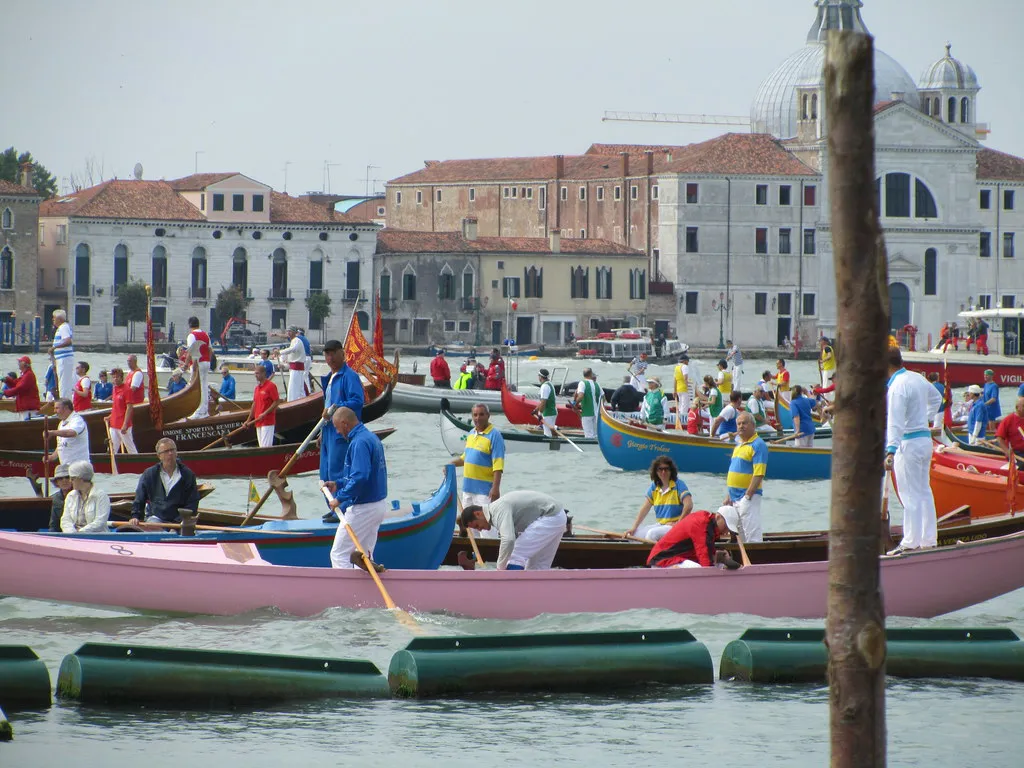
Each year the event runs for roughly two weeks, ending on Shrove Tuesday — Mardi Gras — before Lent begins. The 2026 edition follows the same late-January-to-mid-February window. The main action centers on St. Mark's Square, the Arsenale Basin, and the surrounding palaces, which host mask competitions, water parades, and elaborate costumed balls. The annual theme changes each edition, giving participants a creative direction for their costumes and performances. In recent years themes have celebrated Venetian explorers, commedia dell'arte, and the city's trading history.
Mask-making workshops in the Dorsoduro and San Polo districts offer a hands-on way to understand the craft. Most sessions run 90 minutes to two hours, cost around €40–€60 per person, and produce a wearable papier-mâché mask. They also reveal the difference between authentic artisan masks (hand-painted, €80–€400) and the mass-produced imports sold along the tourist corridors — a distinction that matters if you plan to keep yours as a souvenir.
Crowds are intense. Hotel prices double or triple during peak Carnival weekends, and San Marco becomes almost impassable on the busiest days. Our recommendation is to book accommodation at least three months in advance and base yourself away from San Marco — the Cannaregio and Dorsoduro neighborhoods offer more breathing room. Arriving mid-week rather than on the opening or closing weekend cuts through both the crowds and the premium pricing.
Nice Carnival History
The Nice Carnival is one of the largest street carnivals in the world, but its history is longer and stranger than most visitors realize. The earliest written record of a Niçois carnival dates to 1294, when Count Charles II of Anjou mentioned spending time in Nice during the "joyful days" of carnival season. For centuries it remained a local affair — a pre-Lenten celebration tied to the agricultural and religious calendar of Provence.
The modern carnival took shape in the 1870s, when the city — recently annexed by France from the Kingdom of Sardinia — began staging elaborate parade floats to attract wealthy winter tourists along the newly fashionable Côte d'Azur. The iconic King float, a giant satirical effigy that presides over the entire Carnival and is ceremonially burned on the final night, was introduced during this era. The "Bataille de Fleurs" (flower battle) was added in 1876, evolving from the informal habit of Riviera socialites throwing flowers from carriages. By the early 20th century, Nice Carnival had become an international spectacle drawing visitors from across Europe and the Americas.
The modern parade format runs for around 15 days, starting at Masséna Square and moving along the city's broad boulevards. Evenings bring the illuminated corsos — the same floats lit up — creating a completely different spectacle from the daytime parades. The Bataille de Fleurs remains the highlight unique to Nice: float riders throw 100,000+ mimosa and carnation blooms into the crowd along Promenade des Anglais, and audiences catch and throw them back. Grandstand tickets run from around €25–€30 per session, with many free viewing areas along the boulevard edges.
Weather and When to Attend
February weather is a genuine differentiator between the two carnivals. Nice averages around 9°C in February, with frequent sunny spells — the Côte d'Azur earns its name in winter. Venice in February sits around 5°C and is prone to fog, acqua alta (flooding), and a damp chill that makes standing in St. Mark's Square for hours genuinely cold. If outdoor endurance is part of your plan, Nice is the more comfortable setting.

Within each carnival's window, timing matters. For Venice, the two peak weekends (opening and final Saturday before Shrove Tuesday) draw the largest crowds and command the highest hotel rates. Mid-week days — particularly a Tuesday or Wednesday during the second week — offer the best balance of atmosphere and space. For Nice, the evening illuminated corsos on Fridays and Saturdays tend to be the most atmospheric events, while the Bataille de Fleurs on Saturday afternoons is the unmissable signature moment. Buying grandstand tickets for one flower battle session and watching the standard night parade from the free zones gives the best value.
One practical note: both carnivals sometimes experience rain in February, but Venice rain during Carnival can coincide with acqua alta. Check high-water alerts (the Città di Venezia issues 24-hour advance notices) and pack waterproof footwear — rubber-soled boots are the sensible choice for costumed parade-watching in San Marco.
What to Wear: Costumes, Masks, and Dress Codes
This is where Venice and Nice diverge most sharply — and where most first-timers are caught off-guard. Venice has a strong costuming culture. Arriving in plain clothes at St. Mark's Square during Carnival is perfectly legal, but you will be visibly in the minority among the parade participants. The free outdoor events require nothing, but all the ticketed masked balls — Ballo del Doge, Carnevale di Venezia gala events — enforce a strict historical costume dress code. Renting a period-appropriate costume in Venice costs around €80–€200 per day from the many rental boutiques near the Rialto; full handmade gowns for purchase run into the thousands.
Nice operates on a completely different register. Costumes are welcome and common in the parade grandstands, especially among families with children, but the event is fundamentally a spectator carnival. Thousands of people line the Promenade in ordinary winter clothes, watch the floats, catch flowers, and go for dinner afterward. There is no ticket category that requires a costume. If you want to dress up, colorful or themed outfits fit in easily — but it is never expected.
This difference matters for budgeting and planning. At Venice, costume rental can add €100–€400 to your trip cost if you plan to attend any of the balls or to participate properly in the main daytime parades. At Nice, your festival expenditure beyond tickets is essentially zero. If traveling with children, Nice is also far more practical — keeping kids in costume for a full day of parade-watching in February cold is a challenge Venice parents know well.
Pick Venice Carnival If
Venice Carnival suits travelers who want an immersive cultural experience built around costumes, history, and atmosphere. The canal setting amplifies every masked procession into something genuinely photogenic, and the event has a strong appeal for photographers and costume enthusiasts. Venice also has more to do beyond the Carnival itself — the Doge's Palace, Peggy Guggenheim Collection, and the Frari church are world-class on their own, so a 3–5 day trip balances festival-going with serious sightseeing.
- Venice Carnival is your match if you...
- Love elaborate masks and hand-sewn period costumes
- Want a romantic or couples-focused city break
- Enjoy cultural depth over large crowd energy
- Are comfortable with higher daily costs around €250–€300
- Want to explore world-class museums alongside the festivities
- Are interested in a ticketed masked ball experience
One underrated advantage of Venice: the photography. Masked and costumed participants actively seek out scenic spots — the Rialto Bridge, the Bridge of Sighs, the waterfront near the Arsenale — and welcome photographers. If you arrive in the early morning before the crowds build, you can capture images that look genuinely timeless.
Pick Nice Carnival If
Nice Carnival is the better pick for high-energy celebration, family outings, and travelers keeping an eye on their budget. The flower battles, giant floats, and beach access make it a much easier destination for mixed-age groups. Nice also offers better logistics: TGV rail from Paris takes around 5.5 hours, the city has good hotel supply across all price ranges, and the outdoor events are accessible even for visitors with mobility considerations — the grandstand seating is level and organized.
- Nice Carnival is your match if you...
- Prefer street parades and outdoor spectacle
- Are traveling with children or a mixed-age group
- Want warmer February weather and beach proximity
- Need a daily budget closer to €150–€200 per person
- Enjoy interactive events like the Bataille de Fleurs
- Don't want to invest in costume rental
Nice is also the practical base for extending the trip beyond the Carnival itself. Monaco is 20 minutes by train; Eze, Antibes, and Cannes are all within an hour. The French Riviera in February is uncrowded compared to summer, hotel prices are low outside Carnival peak days, and the light on the Promenade des Anglais in the afternoon is exceptional for anyone who enjoys photography on the side.
The Bottom Line
For the average first-time European carnival visitor, Venice is our top pick — the combination of canals, masks, and centuries-old tradition produces an atmosphere that no other carnival in Europe quite replicates. Nice is the smarter choice for families and budget travelers, and its longer window often extends a few days past Venice's end, making a one-trip double-header genuinely feasible for those flying into southern France. If you are choosing only one and cost is not the deciding factor, Venice delivers the more memorable single experience.
That said, both carnivals reward early planning: accommodation in Venice books out months in advance for Carnival weekends, and Nice's grandstand seats sell quickly once the official program drops. Check our guide to comparing European festivals if you want to weigh these against other major February events across the continent.
Frequently Asked Questions
Is it worth going to Venice for Carnival?
Yes, Venice Carnival is worth it for travelers who value atmosphere and costume culture. The canal setting and masked processions at St. Mark's Square are unlike anything else in Europe. Just book accommodation 3–4 months ahead and expect daily costs around €276 per person.
Is Venice too crowded during Carnival?
Venice is very busy during Carnival, especially on opening and closing weekends. San Marco can become difficult to navigate at peak times. Arriving mid-week, staying in Cannaregio or Dorsoduro, and visiting early morning keeps the experience manageable.
Which carnival is cheaper, Venice or Nice?
Nice is significantly cheaper. Average daily costs run around €169 per person in Nice versus €276 in Venice. Grandstand tickets for Nice parades start from roughly €25–€30, and free viewing areas are available along the boulevard route.
What is special about the Venice Carnival?
Venice Carnival is famous for its elaborate handmade masks and costumed balls, a tradition dating to the 13th-century Venetian Republic. Each edition has an official theme, and events span St. Mark's Square, the Arsenale Basin, and historic palaces across the city.
Can you attend both Venice and Nice Carnival in the same trip?
Yes — their dates often overlap or run back-to-back, with Venice typically ending in mid-February as Nice begins. A combined trip is feasible by train via Milan or a short flight from Venice Marco Polo to Nice Côte d'Azur airport, under 90 minutes.
Visiting Europe for more than one festival? See our complete guide to festivals and events in Europe.
Venice and Nice represent two distinct visions of European Carnival — one built on intimate masked elegance, the other on high-energy street spectacle. Venice costs more and demands advance booking, but delivers an atmosphere rooted in 700 years of tradition. Nice offers warmer weather, lower costs, and a more accessible experience for families and first-timers. Both are among the best European festivals to put on a February travel calendar.
Our honest take: if you can only commit to one, choose Venice for the memories. If you're bringing kids or watching your budget, Nice is the smarter call — and it's just as spectacular in its own right.
Free guide: Europe's Festival Calendar
A month-by-month map of Europe's unmissable festivals — with the best dates to visit each and a local tip you won't find in the guidebooks.
You might also like



Continue reading
More guides you'll find useful


