
Prague vs Vienna Christmas Markets: Which to Choose?
Deciding between Prague vs Vienna Christmas markets? Compare atmosphere, food, costs, and logistics to find your perfect Central Europe festive trip in 2026.
On this page
Prague vs Vienna Christmas Markets: An Honest Comparison
Every December, travelers face the same satisfying dilemma: Prague or Vienna for Christmas markets? Both cities transform into winter wonderlands, but they deliver that magic in very different ways. Last updated June 2026 — prices and logistics verified against current-year sources.
Prague's Old Town Square fits centuries of Gothic architecture into a compact, walkable footprint that most visitors can cover on foot in half a day. Vienna spreads its 20-plus markets across an entire imperial capital, rewarding those who buy a U-Bahn pass and explore beyond the Rathausplatz. The difference in scale alone shapes your entire trip.
In our view, Prague edges ahead for first-time visitors who want maximum festive atmosphere with minimum effort. If you're short on time and can only pick one, pick Prague — but read on before you book.
Free guide: Europe's Festival Calendar
A month-by-month map of Europe's unmissable festivals — with the best dates to visit each and a local tip you won't find in the guidebooks.
Prague vs Vienna: Quick Decision Guide
The table below captures the sharpest contrasts between the two cities. Use it alongside the 'Pick X if' lists further down to match your travel style.
Prague runs on Czech koruna (CZK), while Vienna uses euros, so budget math differs between them. A mug of mulled wine (svařák) in Prague typically costs around 50–80 CZK (roughly €2–3), while glühwein in Vienna usually runs €4–6 including the ceramic mug deposit (pfand).
- Quick picks
- Pick Prague for compact atmosphere on a budget
- Pick Vienna for scale, variety, and imperial grandeur
- Pick both for a classic Central Europe winter loop
| City | Best for | Mulled wine cost | Time needed | Market count | Mobility | Trait |
|---|---|---|---|---|---|---|
| Prague | Budget travelers, photographers, couples | ~€2–3 (svařák) | 2–3 days | 5 main markets | Fully walkable Old Town | Gothic gem |
| Vienna | Families, luxury seekers, music lovers | ~€4–6 (glühwein + pfand) | 3–4 days | 20+ markets | U-Bahn pass recommended | Imperial capital |
Atmosphere: Gothic Spires vs Imperial Baroque
Prague's Old Town Square is the undisputed centrepiece of the Czech Christmas market experience. Pastel buildings squeeze together around a towering tree, and the Astronomical Clock watches over every glühwein stop. The whole scene feels almost theatrical — Gothic spires frame every photo without effort.
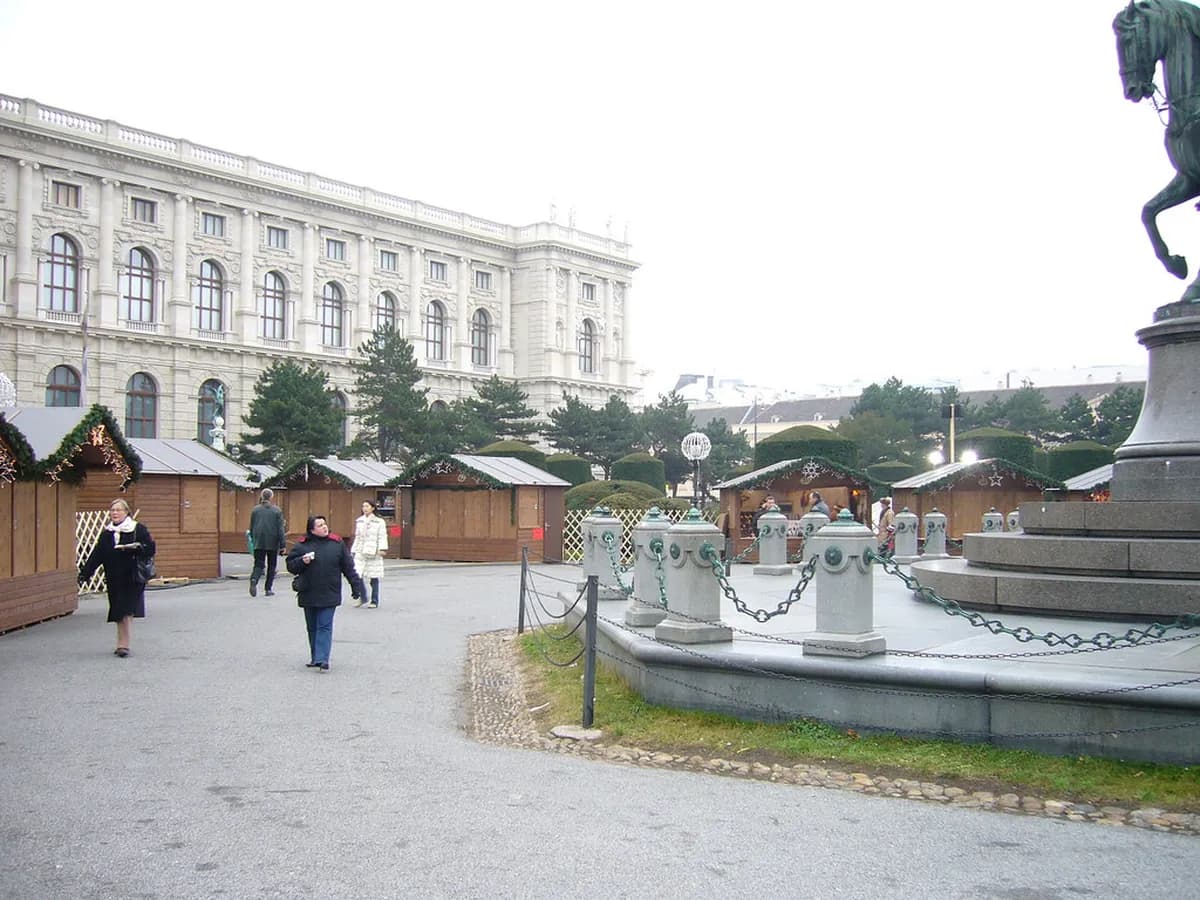
Vienna's Rathausplatz is a completely different scale: a wide boulevard flanked by the neo-Gothic City Hall, lit by massive overhead light installations that stretch several city blocks. Each of Vienna's 20-plus markets has its own character, from the grand Wiener Christkindlmarkt to the quieter Spittelberg neighbourhood market with its residential, lantern-lit feel. That variety is Vienna's strength — and its only logistical challenge.
One concrete difference worth noting: Prague's tree in Old Town Square is sourced from a different Czech village each year, making it a local tradition. Vienna counters with an ice-skating trail around the Rathausplatz, which families with children tend to prefer. Neither is objectively better — it comes down to whether you want intimacy or grandeur.
Most visitors find Prague easier to photograph at dusk, when the Gothic backdrop and warm market lights create scenes that look unreasonably good without a tripod. Vienna's Belvedere Palace market, set against the palace facade, rivals Prague on spectacle but requires a tram or U-Bahn journey to reach.
Festive Food: Svařák vs Glühwein
Czech svařák and Austrian glühwein are both spiced hot wines, but the recipes differ noticeably. Svařák typically uses cinnamon, cloves, and star anise, while Austrian glühwein often leans heavier on citrus peel and vanilla, giving it a slightly sweeter profile. Trying both on a Prague-to-Vienna trip is one of the more pleasant experiments in Central European travel.

Prague's signature market snack is trdelník — a cylindrical pastry rolled in cinnamon sugar, cooked over an open flame. It is, admittedly, a tourist staple sold at almost every stall on Old Town Square, but freshly made it is genuinely good. Vienna's equivalent is the heiße Bauernkrapfen, a warm fried pastry dusted with powdered sugar that you'll find at the Schönbrunn Palace market.
Vienna also wins on the restaurant backup plan: schnitzel, Kaiserschmarrn (shredded caramelised pancake), and Sachertorte are all available within walking distance of the main markets. Prague's Vinohrady district, a short tram ride from Old Town, offers a quieter neighbourhood dining scene for those who want to escape the market crowds. For deeper food planning, our guide on whether European Christmas markets are worth it breaks down real-world spending across cities.
Logistics: Walkable vs U-Bahn Required
Prague's major markets — Old Town Square, Wenceslas Square, and the Prague Castle market — are all reachable on foot from the same neighbourhood. Most visitors complete the core market circuit in under two hours of walking. That compactness is Prague's biggest practical advantage over Vienna.

Vienna's markets are spread across the city's districts, and many key sites are 10–20 minutes on public transport from St. Stephen's Cathedral. A 48-hour Vienna City Card (covering unlimited U-Bahn, tram, and bus travel) is genuinely worth buying on arrival. The subway from Naschmarkt to Schönbrunn Palace, for example, takes under 10 minutes — an easy add-on to the Rathausplatz visit.
Crowd management matters in both cities, but especially in Prague. The Old Town Square peaks between 5:00 PM and 7:00 PM daily, when tour groups descend in force. Arriving before 3:00 PM or after 8:00 PM gives a noticeably calmer experience. Vienna's Rathausplatz also fills quickly after work hours, but its size absorbs crowds better than Prague's compact square.
Getting between cities is straightforward: direct trains from Prague to Vienna run roughly every two hours and take about four hours. Booking in advance via Czech Railways or ÖBB avoids the risk of a standing-room-only Saturday service — a lesson worth heeding.
Pick Prague If
Prague is the right call when your priority is concentrated festive atmosphere with room in the budget for another city. Its compact footprint and lower cost base (CZK vs euro) mean you can do the full market circuit, eat well, and still have funds left for Vienna. For a first Christmas market trip to Europe, Prague sets an almost unfairly cinematic standard.
Photographers and couples consistently rate Old Town Square at dusk as one of the most photogenic market settings in Europe, thanks to the Gothic spires and the Astronomical Clock as a backdrop. If that kind of concentrated visual drama matters to you, Prague delivers it without requiring a U-Bahn app. See how Prague compares to other compact market cities like Colmar if you're weighing Alsace alternatives.
- Prague is the better pick if
- Budget is a priority — CZK gives better daily value than euros
- You want everything walkable from one square
- Gothic architecture and dramatic lighting matter to you
- You're visiting Christmas markets for the first time
- You plan to add Vienna or Budapest as a second stop
Pick Vienna If
Vienna rewards visitors who want variety and are happy to move between neighbourhoods. With over 20 distinct markets, from the grand Rathausplatz to the quieter Spittelberg village market, Vienna offers the widest range of market experiences in Central Europe. Families with children tend to find Vienna's ice-skating rink at Rathausplatz and the Schönbrunn Palace market particularly well-suited to a mixed-age group.
Luxury accommodation, imperial museums, and world-class classical music (Vienna Philharmonic concerts run through December) give Vienna a cultural depth that extends well beyond the market stalls. If Christmas markets are one item on a longer cultural agenda rather than the sole purpose of the trip, Vienna justifies a longer stay. Budget an extra day compared to Prague to cover its wider spread comfortably.
- Vienna is the better pick if
- You want 20+ markets across multiple city districts
- Families with young children join the trip
- Imperial palaces and classical music are on your list
- You prefer luxury hotels and fine dining alongside markets
- One city is your only stop and you want maximum variety
Cultural Traditions: Czech Folklore vs Austrian Advent
Czech Christmas market culture is rooted in Advent folk crafts that predate the tourist economy by centuries. Look for hand-painted wooden toys, blown-glass ornaments from Bohemia, and intricate paper cuttings alongside the more familiar garlands and mulled wine. The Astronomical Clock performance — running every hour on the hour — draws crowds on its own, but locals treat it as background texture rather than the main event.
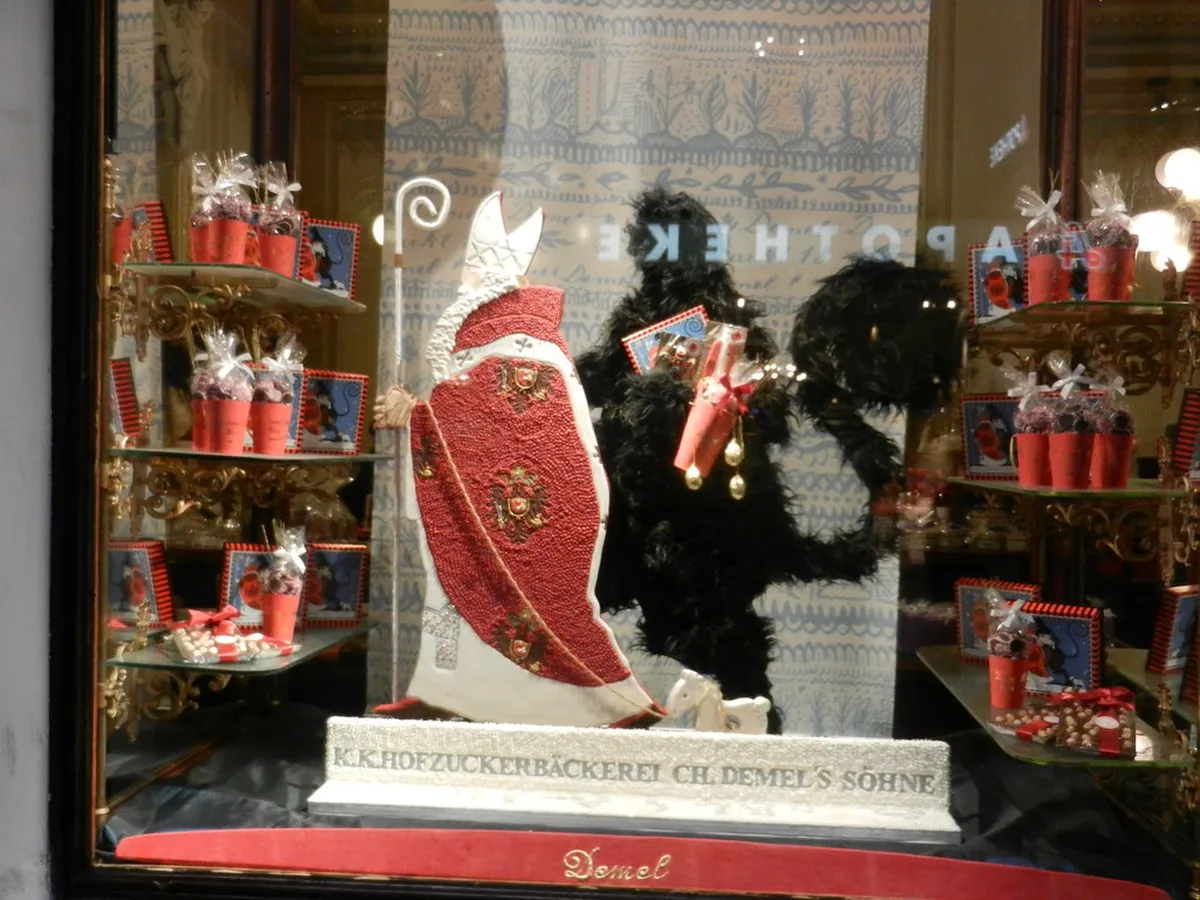
Vienna's Advent tradition is built around music and imperial ritual. The Wiener Christkindlmarkt at Rathausplatz, running since 1298, organises live choral performances on its central stage most evenings through December. Vienna's markets also observe St. Nicholas Day on December 6th as a distinct celebration — you'll see Krampus figures alongside St. Nicholas in early December, a tradition that Prague observes more quietly. If timing your trip around these traditions matters, early December in Vienna is particularly rich.
One practical detail that catches first-timers off guard in Vienna: the glühwein mug deposit (Pfand) is typically €2–3 on top of the drink price. You get it back when you return the mug, or you keep the mug — each market stall uses its own ceramic design, making them legitimate souvenirs. In Prague, svařák mugs are usually included in the price with no deposit, and the mugs are simpler in design. Vienna's Pfand system is a feature, not a hidden charge, once you know how it works.
Munich Christmas Markets: A Worthy Side Trip
Many visitors to Prague and Vienna combine the trip with a stop in Munich, which sits roughly four hours west of Vienna by train. The Marienplatz market is the anchor — stepping out of the U-Bahn at night to find the lit Christmas tree against the city hall is one of the most cinematic moments in European Christmas market travel. Munich's markets typically open in late November and close by Christmas Eve, so timing matters more than in Prague or Vienna, where some stalls run into early January.
Munich is notably more expensive than Prague and roughly on par with Vienna for daily costs. A Bayern ticket (covering regional rail) costs around €33 for a group of three, making day trips to Salzburg or Nuremberg from Munich straightforward. Salzburg is just over an hour by train and adds the Domplatz and Residenzplatz markets — considered among the most atmospheric in the German-speaking world — to the itinerary without requiring an overnight stay.
If you are already combining Prague and Vienna, adding Munich as a first stop (fly in, train to Vienna, train to Prague, fly home) creates a logical open-jaw route without any backtracking. The Nuremberg Christkindlesmarkt — possibly the most famous traditional German market — is under two hours from Munich by rail and works as a half-day extension for those who want the definitive German market experience alongside the Czech and Austrian versions.
Beyond the Duo: Budapest in Winter
Budapest slots naturally onto the Prague-Vienna route and deserves more than a footnote. The St. Stephen's Basilica Christmas market has won recognition as one of Europe's best several years running, and the light show projected onto the basilica facade runs every 30 minutes after dark — a timed spectacle that neither Prague nor Vienna offers at their main market venues. City Park's ice rink near Heroes Square is Europe's largest outdoor rink and runs alongside a separate market behind it, giving families an activity that extends well beyond mulled wine and stalls.
Budapest runs on Hungarian forint (HUF), making it even cheaper than Prague in CZK terms — a significant consideration if budget is a driver. The thermal baths (Széchenyi is the most accessible) are genuinely wonderful in December, when the contrast between cold air and warm mineral water makes for an experience that the other two cities cannot replicate. This is the one practical detail that every Prague-Vienna comparison article omits: Budapest's thermal bath culture in winter is a category difference, not just an incremental add-on.
The practical route question is whether to go Prague-Vienna-Budapest or Prague-Budapest-Vienna. The train from Budapest to Vienna takes roughly 2.5 hours; Budapest to Prague takes around 7 hours. Most itineraries run Prague first (fly in), then Vienna (4-hour train), then Budapest (2.5-hour train, fly home from Budapest). That order minimises the longest leg and ends the trip in the city with the most cultural novelty for most visitors.
The Bottom Line
For the average first-time visitor to European Christmas markets, Prague wins on pure festive impact per hour. The Gothic Old Town, compact walkability, and lower cost base create a market experience that exceeds what most visitors expect — often within a single afternoon. Vienna is objectively larger and more varied, but that scale means more planning, more transit, and a higher daily spend.
Our honest take: do both if your schedule allows, since the Prague-to-Vienna train is easy and the contrast between the two cities makes each feel more distinctive. If you can only choose one, Prague is the more emotionally memorable Christmas market city. For more comparison help, see our full guide to choosing between European festivals or check how many days you need for Christmas markets to plan your itinerary length.
Frequently Asked Questions
Is Prague or Vienna better for Christmas markets?
Prague wins for first-timers who want concentrated festive atmosphere in a walkable setting. Vienna offers more variety with 20-plus markets, but requires a transit pass and more time. If you can only pick one, Prague delivers higher impact per hour visited.
How many days do you need for Prague and Vienna Christmas markets?
Budget 2–3 days for Prague and 3–4 days for Vienna, giving you a 5–7 day Central Europe trip overall. Prague's core market circuit is walkable in a day, while Vienna's spread across 20-plus markets rewards an extra day of exploration.
Is it easy to get from Prague to Vienna by train?
Direct trains run roughly every two hours and take about four hours. Book in advance via Czech Railways or ÖBB to secure a seat, especially on weekend departures when services fill quickly.
Which city is cheaper — Prague or Vienna?
Prague is significantly cheaper: mulled wine typically costs €2–3 versus €4–6 in Vienna, and accommodation runs 30–50% lower in CZK. Vienna's daily cost is comparable to other major Western European capital cities.
Visiting Europe for more than one festival? See our complete guide to festivals and events in Europe.
Both Prague and Vienna earn their reputation as two of Europe's finest Christmas market destinations. The real difference comes down to what you value: Prague's intimacy and walkability, or Vienna's scale and imperial backdrop. Either way, Central Europe in December is worth the cold.
For most travellers, the ideal answer is both — a four-hour train ride links them, and the contrast between Gothic Prague and Baroque Vienna makes the combination richer than either city alone. Start your planning with our guide to the best European Christmas markets for first-timers and let the season decide the rest.
Free guide: Europe's Festival Calendar
A month-by-month map of Europe's unmissable festivals — with the best dates to visit each and a local tip you won't find in the guidebooks.
You might also like

Continue reading
More guides you'll find useful


