Is Santos Populares Worth It? Honest Lisbon Review
Is Santos Populares worth it? Our honest Lisbon review covers costs, crowds, timing, and the best neighborhoods — plan your June 2026 trip now.
On this page
Is Santos Populares Worth It? Full 2026 Verdict
Yes, Santos Populares is worth it, but only if serious crowds and late nights do not bother you. Readers who want a calmer pace should try the Santo António neighborhood walking guide instead. This review breaks down real costs, crowd patterns, and timing so you can plan with confidence.
Santos Populares is Lisbon's biggest street festival, held every June for the Popular Saints. The three honorees are Santo António, São João, and São Pedro. Santo António's night on June 12 draws the biggest citywide crowds, according to Visitportugal.com. Each neighborhood decorates streets with lanterns, basil pots, and paper garlands for weeks.
Last updated in July 2026, this review reflects current seasonal patterns. Expect straight talk on crowds, costs, and which neighborhoods deserve priority. The goal is an honest verdict rather than a promotional pitch.
Free guide: Europe's Festival Calendar
A month-by-month map of Europe's unmissable festivals — with the best dates to visit each and a local tip you won't find in the guidebooks.
What Is Santos Populares? A Quick Primer
Santos Populares translates to Popular Saints, Lisbon's month-long tribute to three patron saints. The tradition began with organized neighborhood parades in 1932, according to Lisbonheritagehotels.com. Political events paused the parades after the 1974 Carnation Revolution, then revived them in 1980.
Grilled sardines, globe basil pots, and folk marches define the season's core symbols. The globe basil, or manjerico, is nicknamed the lovers' herb and symbolizes short-lived romance. Santo António also carries a reputation as Lisbon's unofficial matchmaker saint. City Hall even organizes group weddings called Casamentos de Santo António every June 12.
Sixteen couples typically marry in this yearly civic tradition, a custom dating to 1958. The first edition united twenty-six couples at the Church of St Anthony. That custom paused in 1974 as well, then returned in 1997.
What to Expect at Santos Populares in Lisbon
Expect narrow Alfama alleys packed with grilled-sardine smoke, string lights, and blasting speakers. Street stalls fill the neighborhood from early evening through well past midnight. Most visitors find the sardine smoke alone signals which alley has the best party.
Food centers on grilled sardines with corn bread and a green cabbage soup called caldo verde. Bifana pork sandwiches and roasted chouriço work as solid non-fish options. Vegetarian stalls have become common in recent years, though selection still varies by street.
The Marchas Populares parade lights up Avenida da Liberdade on the evening of June 12. Each neighborhood spends months rehearsing costumes, choreography, and an original song for the parade. The event airs live on national television each year, a genuine local spectacle. For a broader event calendar, see the Lisbon festivals and events guide.
Crowds and Timing: When to Visit Santos Populares
June 12, the eve of Santo António, is by far the single busiest night. Alfama and Mouraria reach shoulder-to-shoulder density by around 9pm that evening. The first two weeks of June offer a noticeably calmer version of the same atmosphere. Decorations, small street parties, and live music start early without the peak-night squeeze.
June 12 brings shoulder-to-shoulder crowds in Alfama by 9pm. For a calmer atmosphere, visit the first two weeks of June or during daytime hours before 6pm. Metro service stops around midnight.
| When to Visit | Crowd Level | Key Details |
|---|---|---|
| June 12 evening | Busiest | Shoulder-to-shoulder by 9pm in Alfama; Marchas Populares parade that evening |
| Early June (weeks 1–2) | Calmer | Decorations, street parties, live music; no peak-night squeeze |
| Daytime before 6pm | Quieter | Lanterns, basil pots, neighborhood color visible across neighborhoods |
| Around 8am | Very quiet | After street crews clear overnight festivities; decorations still in place |

Recent traveler threads describe Alfama on June 12 as impressively fun but genuinely overwhelming. One Reddit.com discussion warns newcomers to arrive well before 7pm to find any standing room. Public transport also gets packed fast, with buses and the metro slowing near key stops.
Day-tripping in just for the evening rarely works well for Santos Populares. Trains and rideshares back out of central Lisbon crawl to a stop after 11pm. Staying overnight, ideally in or near Alfama or Bairro Alto, solves that bottleneck completely. An overnight stay also means catching the quieter early morning streets before the next crowd arrives.
Santos Populares Pros and Cons: An Honest Look
Santos Populares earns its reputation, but it is not flawless for every traveler. The list below separates genuine highlights from the parts that catch first-timers off guard.
Cost is the biggest advantage: every neighborhood party is free to enter. Food and drink end up being the only real expense for most visitors. A grilled sardine plate with bread typically runs about 5 to 8 euros from street stalls.
The main downside is sheer density: Alfama's alleys were not built for festival-sized crowds. Noise continues past midnight in residential streets, which some visitors find exhausting by night three. Pickpocketing risk rises in the tightest crowds, a common warning from local guides.
- Pros: What most visitors genuinely enjoy
- Free citywide access, no ticket needed
- Grilled sardines and street food everywhere
- Marchas populares parade on Avenida da Liberdade
- Authentic local tradition dating to 1932
- Unmatched energy in Alfama at night
- Cons: What catches first-timers off guard
- Alfama crowds turn shoulder-to-shoulder by 9pm
- Constant charcoal smoke and loud noise
- Late-night metro service stops around midnight
- Pickpocket risk rises in dense crowds
- Few quiet corners near the historic center
Is Santos Populares Worth It? Our Verdict
Santos Populares is worth it for travelers who enjoy loud, crowded, food-driven street festivals. Best for: culture-focused visitors who want an authentic, unscripted local celebration. It also suits social travelers happy to dance with strangers until 2am.
Skip if crowds, noise, or smoke genuinely ruin your evening rather than add to it. Travelers seeking a quiet dinner or an early night should plan around June 12 entirely. Families with very young children may also prefer a daytime visit instead of the late-night peak.
Alternative: the calmer Santo António neighborhood walking route mentioned earlier covers the same tradition at an easier pace. Early risers can also stroll Alfama around 8am, after crews clear the worst of the overnight mess. That daytime version still delivers lanterns, basil pots, and neighborhood color without the crush.
How to Plan a Smooth Santos Populares Visit
Street parties typically run from about 7pm to well past midnight across late June. Daytime hours before 6pm stay far quieter across most neighborhoods. There is no ticket or reservation system since every event is a free public street party.
Street events are free. Book accommodation weeks ahead in Alfama, Mouraria, or Bairro Alto for peak dates. Carry cash—many stalls don't accept cards. Wear comfortable shoes on uneven cobblestones.
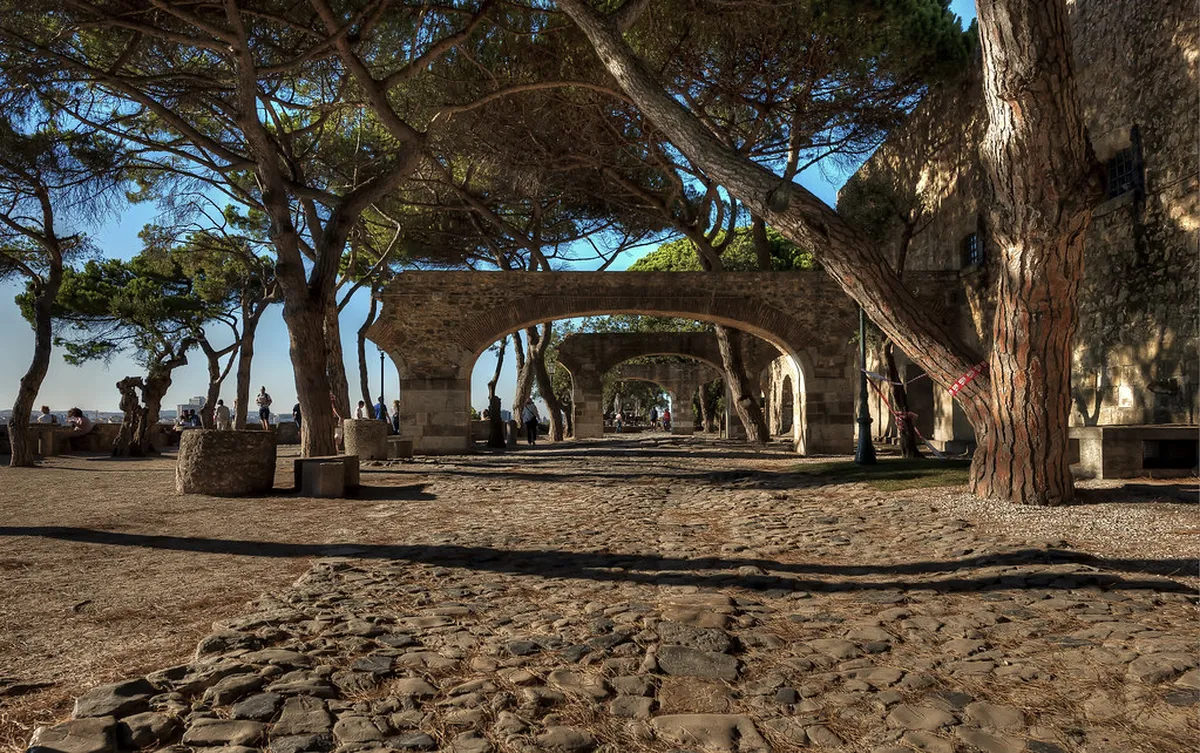
Book accommodation in Alfama, Mouraria, or Bairro Alto weeks ahead if you want to walk to the action. Rooms near Avenida da Liberdade also work well for parade night specifically. Prices in these neighborhoods climb noticeably during peak festival dates in June.
The most common pitfall is underestimating how early streets fill on June 12. Another frequent mistake is wearing new shoes on uneven, crowded cobblestones. Carry cash, since many small street stalls do not accept cards. Keep bags zipped and in front in the densest crowds near the Castle.
For more seasonal event planning beyond Lisbon, browse the Festivian travel events blog. It covers festival timing and crowd strategy for destinations across Europe.
Santos Populares Symbols and What They Mean
Beyond the sardines and street parties, Santos Populares carries symbolism worth knowing before you go. The manjerico, a small pot of globe basil, is the festival's signature gift: tradition holds that on the night of June 12, men give a basil pot to the woman they're courting, often with a paper quadra (a short rhyming love poem) tucked into the leaves. Because manjerico wilts quickly, it doubles as a wink at fleeting romance. Paper streamers and colored lanterns strung across Alfama's alleys mark the boundaries of each neighborhood's arraial, or street party, and are usually put up weeks in advance by local resident associations. The grilled sardine itself is treated as a communal dish rather than a takeaway snack — neighbors share tables and stools set up directly in the street. Balloons and painted saints' banners round out the decor, especially near the Igreja de Santo António. Knowing these symbols turns a loud street party into a recognizable local ritual rather than background noise.
Frequently Asked Questions
What is Santos Populares?
Santos Populares is Lisbon's month-long June festival honoring three Popular Saints. Santo António, São João, and São Pedro each get a dedicated feast night. Every neighborhood decorates its streets, grills sardines, and holds parades, with June 12 as the biggest night.
Is Santos Populares worth it if you dislike crowds?
Santos Populares is still worth a visit, but timing matters if you dislike crowds. Aim for the first two weeks of June, or explore during quiet daytime hours before 6pm. Avoiding Alfama specifically on the night of June 12 makes the biggest difference.
How much does Santos Populares cost?
Street events are entirely free to attend across every Lisbon neighborhood in June. Food and drink end up being the main expense, since stalls sell grilled sardines. A typical sardine plate with bread and a drink runs roughly 5 to 10 euros.
What is the best time to visit Santos Populares?
The night of June 12 delivers the single biggest celebration across the whole city. For a calmer atmosphere, plan a visit during the first two weeks of June instead. Daytime hours before 6pm also stay noticeably quieter than the nightly street parties.
Is Santos Populares similar to São João in Porto?
Santos Populares and Porto's São João share the same June timing but differ in feel. Lisbon centers on Santo António, with sardines, basil pots, and neighborhood parades everywhere. Porto's São João version adds quirky local traditions like plastic hammers and leek-whacking street games.
Santos Populares earns its worth-it verdict for anyone who enjoys loud, food-filled street culture. The festival rewards travelers willing to trade quiet evenings for grilled sardines and dancing crowds. Planning around June 12, booking central accommodation early, and carrying cash solve most common problems.
Readers seeking a gentler pace still have solid options within the same tradition. Early mornings, the first weeks of June, and neighborhoods outside Alfama all deliver a calmer version. Either way, the festival remains one of Lisbon's most genuine cultural experiences each year.
Free guide: Europe's Festival Calendar
A month-by-month map of Europe's unmissable festivals — with the best dates to visit each and a local tip you won't find in the guidebooks.
You might also like


Continue reading
More guides you'll find useful