Strasbourg Christmas Market: The Ultimate 2026/2027 Guide
Plan your trip to the Strasbourg Christmas Market with our expert guide. Includes 2026 dates, a map of the best squares, what to eat, and tips for avoiding.
On this page
Strasbourg Christmas Market: The Ultimate 2026/2027 Guide
Strasbourg transforms into a glowing winter wonderland every year when the holiday season begins.
The city earns its title as the Capital of Christmas through centuries of tradition and stunning decorations.
Visitors from around the world flock to the Official Website of Strasbourg, Christmas Capital to plan their festive winter escape.
You will find a unique blend of French and German culture reflected in every market stall.
Free guide: Europe's Festival Calendar
A month-by-month map of Europe's unmissable festivals — with the best dates to visit each and a local tip you won't find in the guidebooks.
Strasbourg at Christmas: Why It's the Capital of Christmas
The history of the Strasbourg Christmas market dates back to 1570, making it the oldest in France and one of the oldest in all of Europe. Known as Christkindelsmärik, this event originally focused on the market of the Child Jesus and has grown into a city-wide celebration spanning more than 300 stalls across a dozen squares.
The entire city center is recognized as a Strasbourg's Old Town (Wikipedia) UNESCO World Heritage site, which means the backdrop for every market is genuinely medieval. Walking through these ancient cobblestone streets during December feels like stepping into a living storybook, with every shopfront competing to outdo its neighbor with festive decoration.
What sets Strasbourg apart from other European Christmas markets is the sheer scale of the city-wide transformation. It is not one market in one square — it is an entire city dressed for the season, from the cathedral to the Petite France canal district.
Strasbourg Christmas Market 2026 Dates and Times
The Strasbourg Christmas market opens on the Friday before the first Sunday of Advent and closes on Christmas Eve. For 2026 that means it is expected to run from Friday, 27 November to Thursday, 24 December 2026 (for reference, the 2025 edition ran 26 November to 24 December 2025); always confirm the exact dates on the official site before booking. Entry to all market squares is free. The stalls open at 11:00 on Monday through Thursday and close at 20:00. On Friday, Saturday, and Sunday hours extend until 21:00. On Christmas Eve (24 December) the markets close early at 18:00.
Check the Strasbourg Christmas market dates page for any last-minute schedule changes as the season approaches. The official lighting ceremony for the Grand Sapin at Place Kléber typically takes place on the opening weekend and draws the largest single-day crowds of the entire season — plan to arrive by 15:00 if you want a good vantage point.
Most visitors find that two full days is the right amount of time. Day one covers the main squares and the cathedral district. Day two works well for Petite France, the smaller specialist markets, and a half-day excursion to Obernai or a full day in Colmar. Three days allows a comfortable pace without rushing.
Map of the Best Christmas Market Locations in Strasbourg
The markets are spread across the Grande Île and can all be reached on foot. The official Christmas guide and map from the city is the most useful resource for planning your route between squares. Below are the key locations every visitor should include.
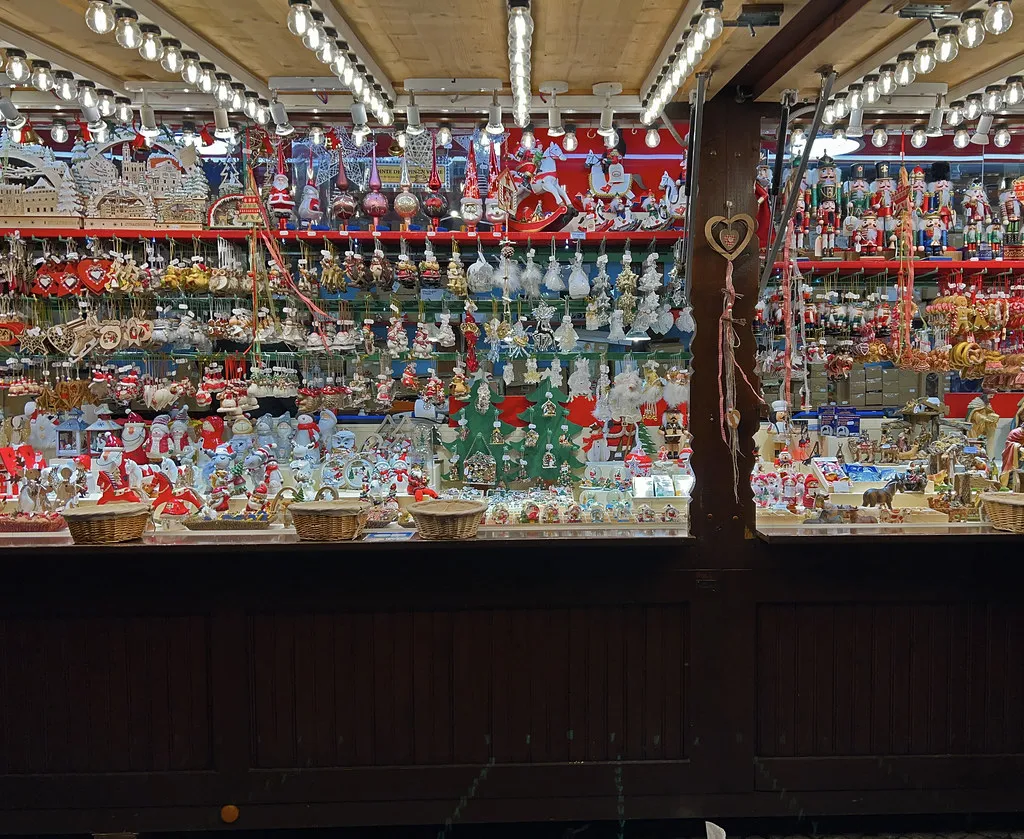
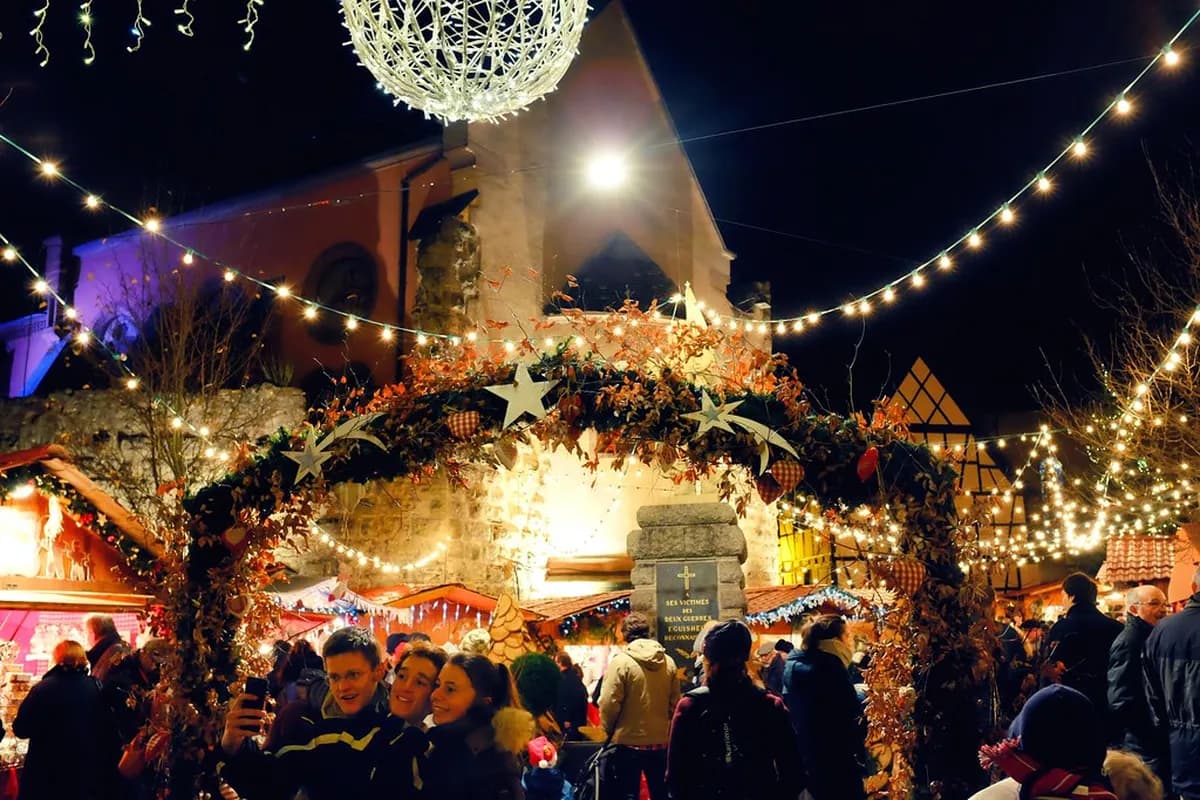
- Place de la Cathédrale and Place du Château — The most visited and atmospheric square, with stalls running in front of the Gothic cathedral. At night the cathedral facade is illuminated and the effect is genuinely spectacular. A carousel for children operates at Place du Château on the cathedral's south side.
- Place Kléber — Home of the Grand Sapin, the famous Christmas tree that reaches at least 30 metres. Hourly light and music shows run between 16:00 and 21:00. The Village du Partage here brings together local charities selling meaningful gifts.
- Place Broglie (Christkindelsmärik) — The historic heart of the market, in continuous use since 1570. Over 100 stalls sell traditional crafts, sausages, pretzels, and handmade ornaments. This is the square most rooted in Alsatian folklore.
- Place du Temple-Neuf (Carré d'Or market) — A smaller, more curated market in front of the 19th-century Temple Neuf church, focused on high-quality handcrafted gifts like light-up decorative houses.
- Square Louise Weiss (Advent Village) — Family-oriented zone with interactive workshops, concerts, and activities for children. The same square also hosts the Small Producers market (Irréductibles Petits Producteurs d'Alsace) with regional food, truffles, and local wine.
- Place Benjamin Zix and Place Saint Thomas (Petite France) — Around a dozen stalls in the canal district selling handcrafted wooden décor and regional food products. The setting among half-timbered houses and frozen canals is unmatched for atmosphere.
- Palais des Rohan (Alsatian Delicacies Market) — Foodie-focused market on the Palais Rohan terrace along the river, featuring vin chaud, mannele, local wines, and craft beer.
- Place Grimmeissen (OFF Market) — A younger, alternative market with fair-trade gifts, vintage shopping, and live art performances. Good for visitors who find the main squares too commercial.
The walking distance between Place Kléber and Place de la Cathédrale is under five minutes. From Place Broglie to Petite France is about 15 minutes on foot. None of the main squares require a tram — the historic center is entirely walkable, though cobblestones can be tiring after a few hours.
Must-See Decorated Streets and the Teddy Bear House
The most photographed façade in Strasbourg at Christmas is the house entirely covered in teddy bears. You will find it at Le Tire-Bouchon, 5 Rue des Tailleurs de Pierre, right next to Le Gruber restaurant. Go before 09:00 on a weekday morning if you want a clear shot — by mid-morning the pavement in front is crowded with people doing the same thing. It is also worth returning after dark when the bears are backlit.
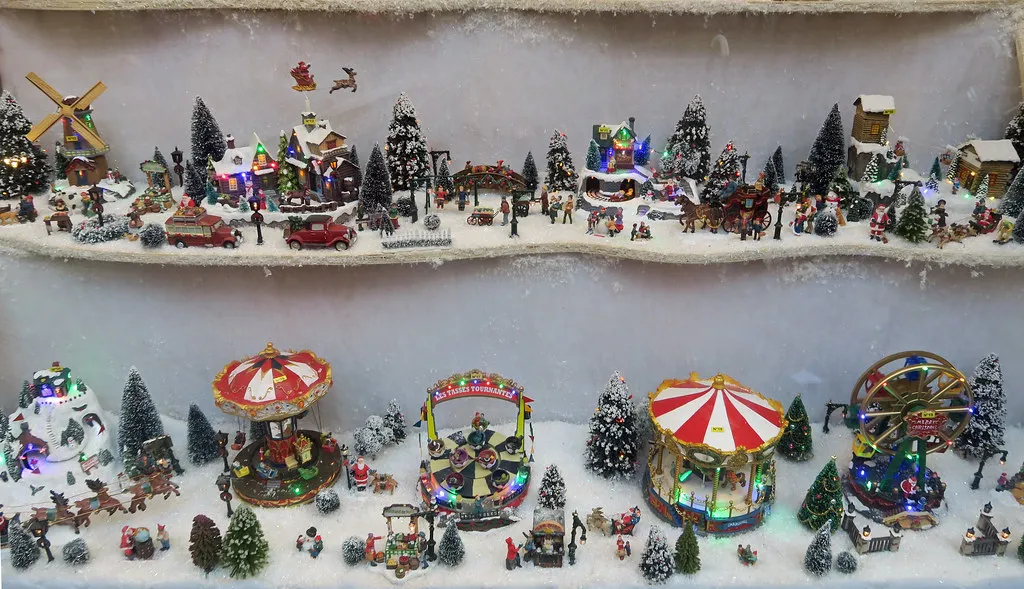
Rue du Maroquin is the most festive street in the city overall. The storefronts along this street pile on decoration at a level that feels competitive, and it connects naturally to the cathedral square. Rue Mercière is lined with trumpet-playing angels and is arguably the single best approach to the cathedral. On Rue des Orfèvres, ornaments and lights hang over the entire width of the street. On Rue du Chaudron look for the House of Hanssen & Gretel, which blows soap bubbles out onto the street — a detail that surprises most visitors who weren't expecting it.
Rue des Grandes Arcades features oversized gingerbread figurines suspended between buildings, and Rue du Bain-aux-Plantes in the Petite France quarter has the most charming small-scale shopfront decorations. If you are trying to photograph streets rather than markets, early weekday mornings between 08:00 and 10:00 give the best light and the thinnest crowds.
What to Eat: Must-Try Alsatian Christmas Food
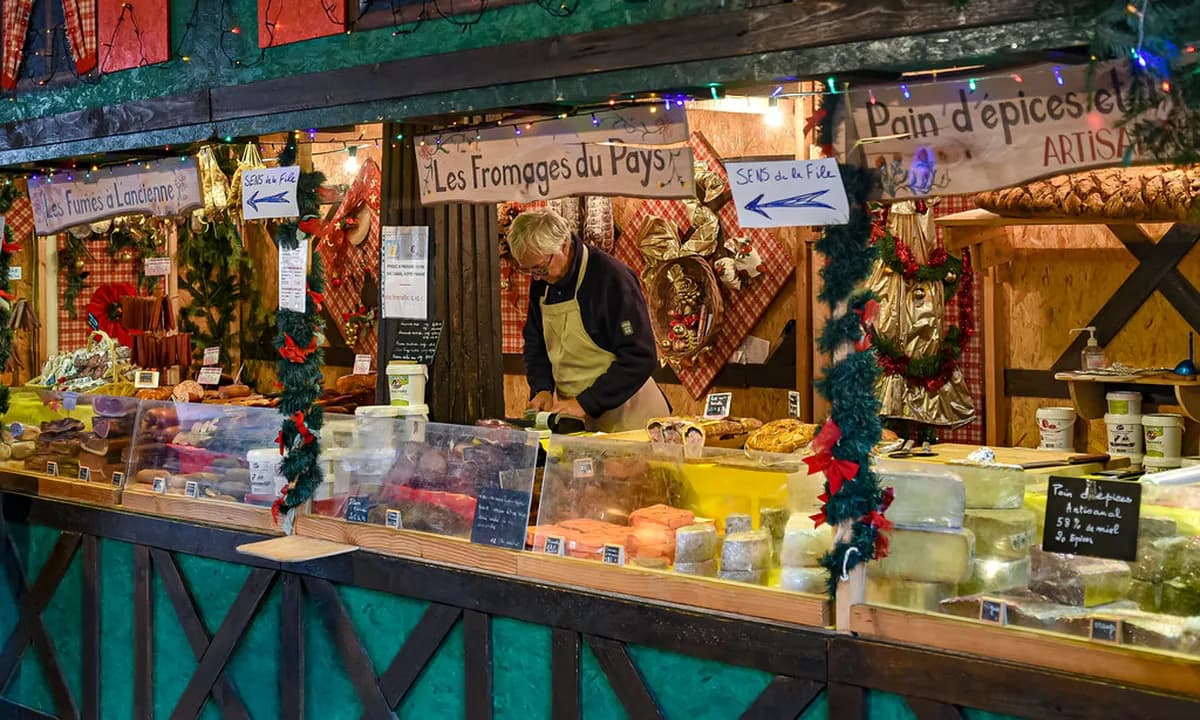
The aroma of grilled sausages and warm spices fills the air the moment you step into any market square. The essential savory dish is Tarte Flambée (also called Flammekueche), a thin-crust base topped with crème fraîche, caramelized onion, and bacon — closer to a flatbread than a pizza and available at stalls across every square. Knack d'Alsace (a smoked pork sausage) served alongside choucroute (warm pickled cabbage) is the heartiest option, typically priced around €8–12 at sit-down stalls.
For sweet food, Bredele cookies are the defining Alsatian Christmas treat — small spiced biscuits in shapes like stars and crescents, available in bags of around €5 at most stalls. Gaufres (freshly made waffles, best topped with crème de marron or chestnut cream rather than Nutella) and warm Beignets (fried pastry) are sold widely near Place Kléber. Pain d'épices (spiced gingerbread) is both a snack and the most compact souvenir to take home.
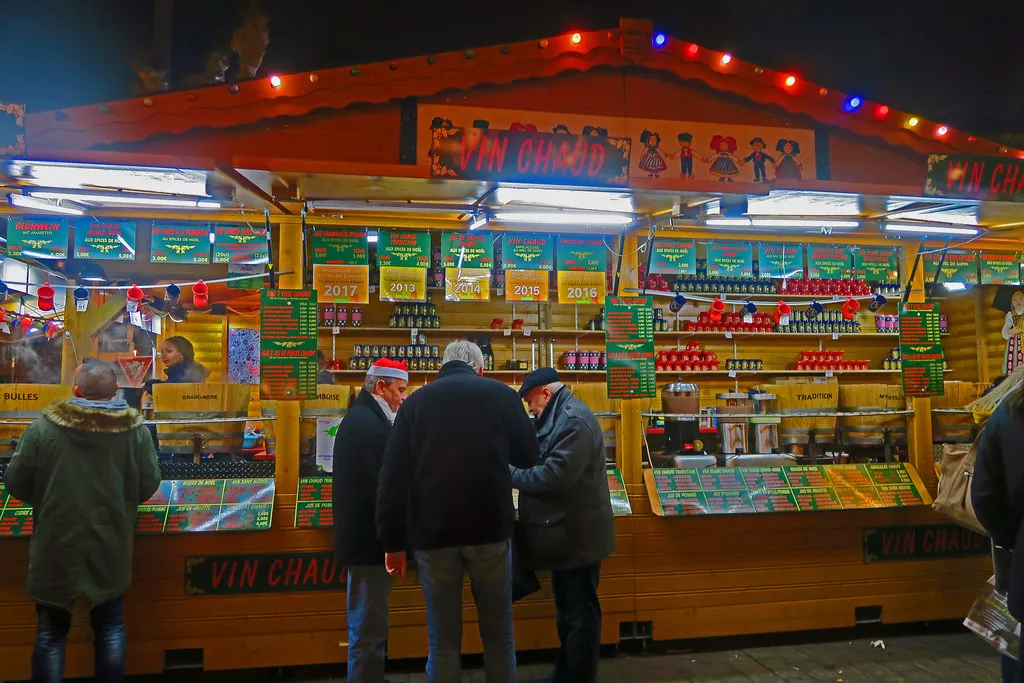
For drinks, Vin Chaud (mulled wine) comes in red or white versions and costs around €4 at most stalls, plus a €1 cup deposit that you can reclaim at any vendor. Crémant d'Alsace — the region's sparkling wine — is an underrated alternative to mulled wine if you want something cold but still festive. Hot chocolate is widely available; look for stalls that make it on the spot rather than from a machine.
Souvenir prices worth knowing: hand-painted glass baubles typically run €3–8 each depending on size and complexity. Alsatian pottery like ceramic mugs and serving dishes ranges from €12–40. Regional food products (foie gras, wine, jams) are best sourced at the Small Producers market at Square Louise Weiss, where prices tend to be lower than at the tourist-facing cathedral stalls. Check the best Christmas markets in France and Alsace if you want to compare regional food offerings across towns.
Where to Stay: Best Hotels for the Christmas Markets
Booking accommodation immediately once you have your dates is the single most important logistical step for this trip. Hotels in the historic center sell out months in advance for the December market season. Hotel prices can quadruple compared to the off-season — a room that costs €127 in autumn can reach €435 per night in early December. The Maison Rouge Strasbourg Hotel & Spa near Place Kléber is the most centrally placed luxury option and books out particularly fast.
For a balance of location and budget, the Hotel Kaijoo by HappyCulture is four minutes' walk from Place Kléber and close to the tram if you need it. The Hannong Hotel sits five minutes from both the TGV station and the cathedral. Budget apartment rentals through platforms like Booking tend to offer better value than midrange hotels during this period, especially for families who need more than one room. The Carpe Diem Home apartment on the doorstep of the cathedral is one well-reviewed option.
Read our guide on where to stay for Strasbourg Christmas market for a detailed breakdown of which neighborhood suits different types of travelers. Staying inside the Grande Île means you can walk back to your hotel between market sessions, which matters when you want to drop bags, change layers, or avoid the late-afternoon crowd peaks.
Logistics: How to Get to and Around Strasbourg
Reaching the city is straightforward by high-speed rail. TGV trains from Paris Gare de l'Est to Strasbourg take under two hours. The key detail most guides omit is the booking window: tickets on the premium INOUÏ TGV service sell out and become expensive within weeks of December dates. OUIGO, the low-cost rail service, offers the same journey for as little as €10–19 if booked four or more months in advance — but seats on OUIGO services during the market peak (late November and early December weekends) disappear early. You can find train times and tickets on SNCF Connect. Book the moment your December dates are fixed rather than waiting until autumn.
From Germany, regional trains connect Stuttgart, Karlsruhe, and Offenburg directly to Strasbourg. Basel and Zurich in Switzerland are also within easy reach by direct rail. If you fly in, Strasbourg Airport (SXB) is 10 kilometres from the city center. Many international visitors find it simpler to fly into Paris and take the TGV onward. Consider booking a Christmas markets day trip from Paris if you only have one day rather than an overnight stay.
Once in Strasbourg, the entire Grande Île is walkable. The tram network is efficient for reaching accommodation outside the center, but most visitors never need it during their market time. The Grande Île is closed to private traffic during the market season, so if you are driving, use the Place des Halles parking (around €21 per 24 hours) a short walk from the main squares. Comfortable walking shoes matter on the cobblestones.
Is Strasbourg Worth It? Pros, Cons, and Crowd Management
The honest answer for most travelers is yes, with caveats around timing and expectations. The scale of the decoration — not just the markets but the entire city — is genuinely unmatched by any other Christmas market destination in France. The combination of a UNESCO-listed medieval center, 300+ stalls, and a city that fully commits to the festive season creates an atmosphere no single-square market can replicate.
The main downsides are cost and crowds. Hotel prices are among the highest of any Christmas market city in Europe. Saturday afternoons and evenings in the first two weekends of December are the single busiest periods — Place de la Cathédrale can feel genuinely uncomfortable to move through. Sunday mornings are quieter than Saturdays. Weekday mornings between 10:00 and 12:00 offer the most comfortable market experience with the thinnest crowds and the best chance of actually stopping at stalls without being pushed past them.
Solo travelers will find the city very safe and easy to navigate during both day and evening. The market layout means there is always a quieter square within a five-minute walk of whichever one feels overcrowded. The smaller specialist markets (Temple-Neuf, Palais Rohan, OFF Market) are almost always less packed than the cathedral and Kléber squares, and tend to have higher-quality goods for the same or lower prices.
If Strasbourg Feels Like Too Much: Nearby Alternatives
If the main city feels too busy or expensive, several nearby Alsatian towns offer a more intimate holiday atmosphere. The train from Strasbourg to Colmar Christmas market takes approximately 30 minutes and runs frequently. Colmar is smaller, less crowded, and its Little Venice canal district is arguably more photogenic than Strasbourg's. The tradeoff is that Colmar has fewer stalls and no single iconic centerpiece like the Grand Sapin.
Obernai, 30 kilometres south of Strasbourg, is reachable by regional train in around 25 minutes. Its market is compact and focused on local crafts rather than mass-market souvenirs — a good choice for visitors who want the Alsatian Christmas atmosphere without the city-scale crowds. You can find Obernai Christmas market information directly from the local tourism office.
Following a Strasbourg and Colmar Christmas market itinerary helps you see the best of the region without wasting travel time. Many visitors base themselves in Strasbourg and take day trips to smaller villages rather than the reverse, since Strasbourg has the best transport connections and the widest hotel choice. Visit the Metz Christmas market if you are approaching from the north — Metz is 50 minutes by TGV and offers a very different Gothic-cathedral-plaza setting.
Frequently Asked Questions
Is the Christmas market in Strasbourg worth it?
Yes, it is widely considered the most beautiful market in France. While crowds are dense and hotel prices are high, the historic atmosphere and scale of the decorations are unmatched. For the best experience, visit on a weekday to avoid the peak weekend tourist rush.
What are the dates of the Strasbourg Christmas market 2026?
The market typically opens on the Friday before the first Sunday of Advent and runs through Christmas Eve. For 2026, that points to a start around Friday, 27 November and a finish on 24 December 2026. Confirm the final dates on the official site as the season approaches, and see the Strasbourg market dates page for any updates.
Where is the most Christmassy place in France?
Strasbourg holds the title of the Capital of Christmas due to its 450-year-old traditions. The city features over 300 stalls across various squares in the historic center. Nearby Colmar also offers a very strong fairytale atmosphere that rivals the main city.
Is 2 days in Strasbourg enough for the markets?
Two days provide enough time to see the major markets and enjoy the nightly light shows. You can explore the Cathedral, Place Kléber, and Petite France at a comfortable pace. This duration also allows for a half-day trip to a nearby village like Obernai.
Visiting Strasbourg for more than one festival? See our complete guide to festivals and events in Strasbourg.
The Strasbourg Christmas market remains a bucket-list destination for anyone who loves the holiday season.
Planning ahead for your transport and accommodation will ensure a much smoother and more enjoyable trip.
You will leave the city with lasting memories of glowing lights and the taste of traditional Alsatian treats.
Visit the Metz Christmas market if you have extra time to explore the broader region.
Free guide: Europe's Festival Calendar
A month-by-month map of Europe's unmissable festivals — with the best dates to visit each and a local tip you won't find in the guidebooks.
You might also like


Continue reading
More guides you'll find useful