
Strasbourg and Colmar Christmas Market Itinerary: 3-Day Guide
Plan the ultimate Strasbourg and Colmar Christmas market itinerary. Includes a 3-day route, transport tips for the Alsace shuttle, and the best food to try.
On this page
A 3-Day Strasbourg and Colmar Christmas Market Itinerary
Planning a trip to the Alsace region during December requires careful timing and a solid route. We recommend this three-day plan for first-time visitors who want to see the best of the region. Last updated May 2026 with the latest pricing and transport schedules for your winter holiday.
Strasbourg and Colmar offer two distinct versions of the French holiday spirit. While one provides grand city displays, the other feels like a cozy storybook village come to life. Our guide helps you navigate the crowds and find the most authentic seasonal experiences.
Free guide: Europe's Festival Calendar
A month-by-month map of Europe's unmissable festivals — with the best dates to visit each and a local tip you won't find in the guidebooks.
Alsace Christmas Market Trip Planning Essentials
The Alsace markets run from late November through December 24 each year. In 2026, expect the opening weekend to fall around November 28, with all major markets closing on December 24 at 18:00. Strasbourg's markets are free to enter across all locations — no tickets, no passes required.
Markets in both cities open at 11:30 and stay open until 21:00 on weekdays, extending to 22:00 on Fridays, Saturdays, and Sundays. The Christmas Eve closing is at 18:00 and December 25 sees no markets at all. Plan your arrival for mid-week if possible — weekends in early December draw the largest crowds, particularly around Place Kléber and the Colmar Old Town squares.
Carry cash. Many of the smaller artisan stalls and food vendors across both cities operate cash-only, especially for snacks under 10 EUR. ATMs are easy to find in both city centres. Booking hotels for any date in December should happen at least four to six months in advance — this is one of Europe's most visited winter destinations and availability disappears fast.
Souvenirs worth seeking out include Bredele spiced cookies in decorative tins, handmade glass ornaments, and jars of Alsatian foie gras or chutney. These make excellent gifts and are typically sold at the artisan chalets rather than the food stalls. The Small Producers market at Square Louise Weiss in Strasbourg is one of the best spots for regional food and wine to take home.
Strasbourg Itinerary: The Capital of Christmas
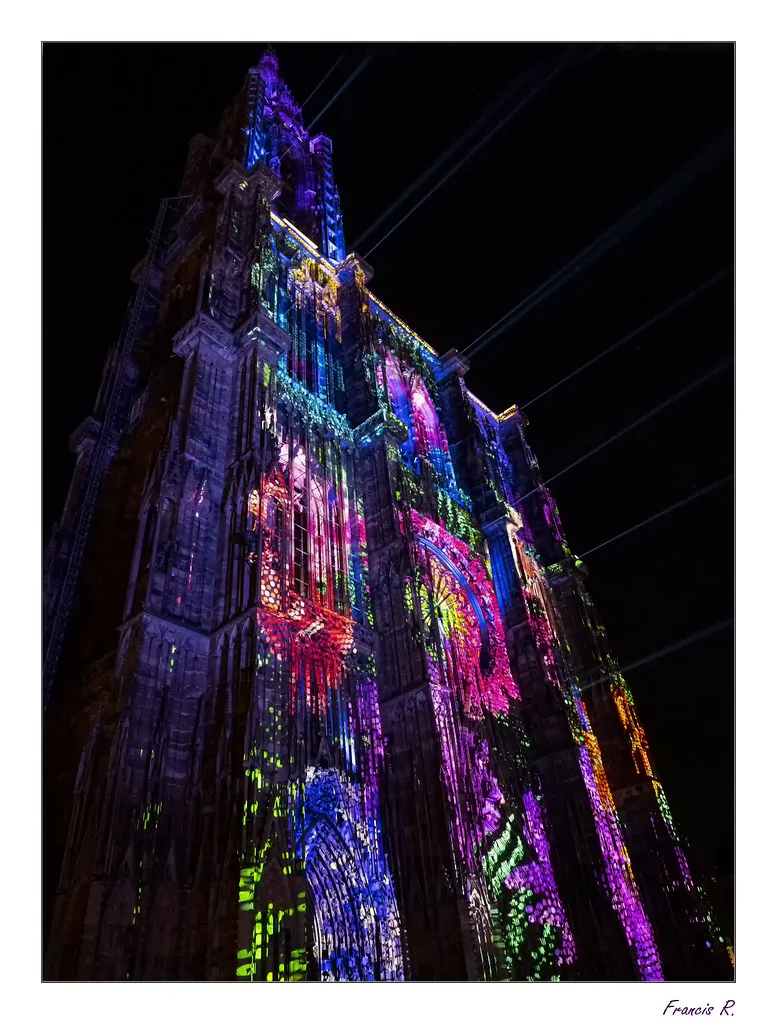
Strasbourg earns its nickname honestly. The city spreads its markets across more than a dozen squares on the Grande Île, with each location offering a different character. Start at Place de la Cathédrale — the gothic facade of Strasbourg Cathedral lights up from dusk and forms the most dramatic backdrop in the region. The nativity scene in front of the cathedral is a centrepiece; entry to the cathedral itself is free.

Walk north to Place Kléber for the Grand Sapin, the centrepiece Christmas tree. Sourced annually by the National Forestry Office of France, it measures at least 30 metres tall. The stalls surrounding the tree at Village du Partage are consistently rated the best in the city for hot chocolate, fresh gaufre (waffles made on-site), and tarte flambée. This is where we recommend spending the most time if you only have one afternoon in Strasbourg.
Place Broglie holds the historic Christkindelsmärik, dating back to 1871. This is the oldest and most traditional section — wooden carvings, fresh pretzels, and sausages dominate the stalls. For something smaller and more refined, the Carré d'Or market at Place du Temple-Neuf sells high-quality hand-crafted items in a quieter setting. The Palais Rohan terrace hosts the Alsatian Delicacies Market, which is the best single stop for regional wines, mannele, and craft beer.
The most photogenic streets to walk between markets are Rue Mercière (lined with angel decorations), Rue des Orfèvres (covered in lights and ornaments), and Rue du Maroquin (home to the famous House of Bears facade at number 5). Allow at least one full day in Strasbourg to cover the major squares and still have time for a sit-down meal.
Colmar Itinerary: A Storybook Setting
Colmar operates on a smaller, more intimate scale than Strasbourg. The main markets cluster around four squares: Place des Dominicains, Place de la Cathédrale, Place Jeanne d'Arc, and Place de l'Ancienne Douane (also called the Koïfhus market). You can walk between all four in under 20 minutes. Buildings throughout the Old Town are decorated with teddy bears, stars, and garlands that have become the city's visual signature.

The most-photographed spot is the gingerbread house with the white Christmas tree — arrive before 10:00 if you want it without crowds. For broader views, La Petite Venise is the canal district south of the Old Town where the colourful half-timbered facades reflect in the water. This is Colmar's most atmospheric area and the one that most closely resembles a film set. The Boulangerie Pâtisserie Claude Kraetz on Grand Rue is worth seeking out for its decorated exterior and genuinely excellent Bredele.
The best photography window in Petite Venise is between 16:00 and 17:00 in December, when the blue hour light sits behind the buildings and the canal reflections are at their sharpest before the nighttime crowds arrive. No competitor guide mentions this timing specifically, but it makes a significant difference in the quality of photos and the absence of tour groups. Bring a wide lens or step back to Quai de la Poissonnerie for the full canal shot with the pink house at the far end.
Plan to spend a full day in Colmar. An optional addition is the Unterlinden Museum, which holds one of the most important altarpieces in northern Europe (the Isenheim Altarpiece). Tickets cost around 13 EUR and it is much quieter than the markets. Book a dinner reservation before you arrive — restaurants in the Old Town fill by 19:30 and good Alsatian winstubs have no spare tables after 20:00 without a booking.
Beyond the Big Two: Eguisheim and Riquewihr
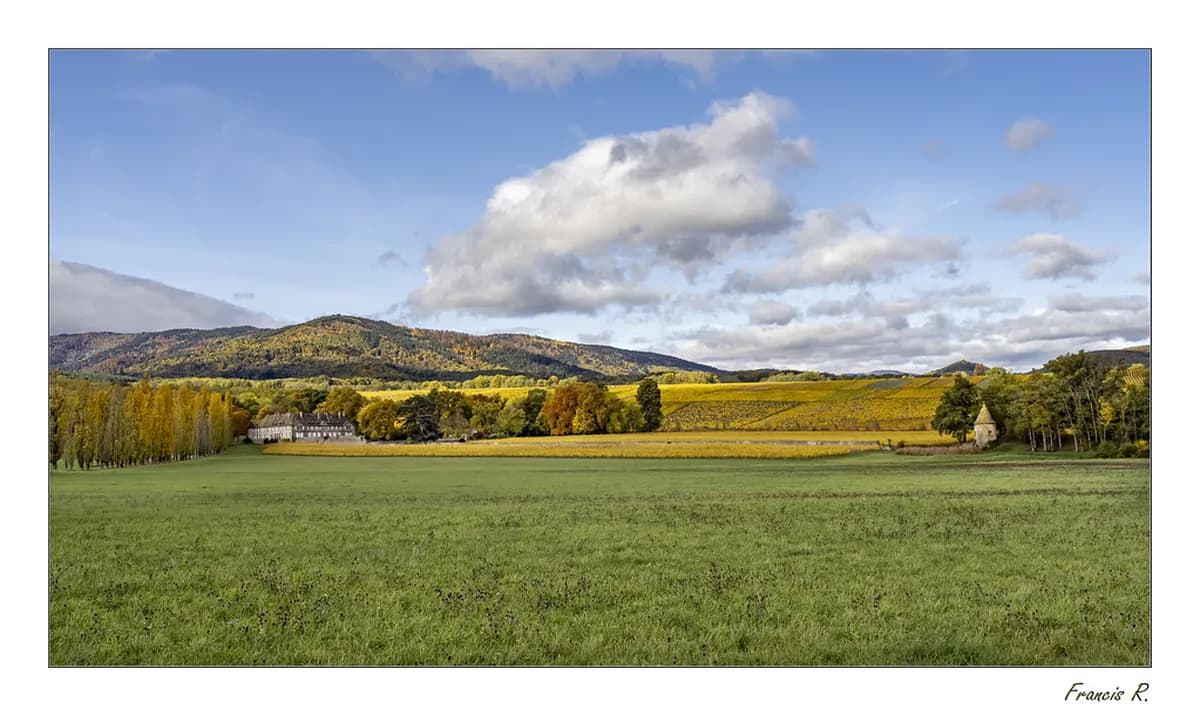
Day three belongs to the wine route villages. Eguisheim is often cited as the most beautiful village in France and at Christmas it earns that reputation without argument. The circular medieval streets are lined with flower boxes replaced by holly and lights, and the market itself fits inside the village square — small but perfectly arranged. Beauty and the Beast was reportedly modelled on villages like this, and the scale makes it easy to believe.
Riquewihr is slightly larger and has a more commercial feel, but its medieval walls and main street (Rue du Général de Gaulle) are still worth an afternoon. The Riquewihr Christmas market opens from around 10:00 and has a strong artisan stalls section alongside the usual food vendors. Consider stopping in Kaysersberg between the two villages — it was Albert Schweitzer's birthplace and its bridge chapel decorated for Christmas is one of the most photographed landmarks on the wine route.
Avoid rushing this day. The villages are each small enough to walk thoroughly in 90 minutes, so three villages in a day is very comfortable if you use the shuttle efficiently. Allow time between villages for a vin chaud stop and a proper look at the architecture rather than simply ticking each location off a list.
Logistics: How to Get Around Alsace
The regional TER train system is the backbone of any Alsace Christmas market itinerary. Trains between Strasbourg and Colmar run approximately every 30 minutes during daytime hours and the journey takes around 30 minutes. A single one-way ticket costs roughly 15 EUR. Download the TER Fluo Grand Est app for real-time departure information and platform changes — this is especially useful on weekend evenings when trains can be delayed by high passenger volumes.
To reach the villages, use the Navette de Noël (Christmas Shuttle). This dedicated holiday bus service departs from Colmar train station and connects to Eguisheim, Riquewihr, Kaysersberg, and several other wine route villages. A day pass costs approximately 10 EUR on weekends. On weekdays, frequency drops and some villages may only have two or three departures per direction — check the current timetable before planning village day. The shuttle does not run after around 19:30, so factor this into your return time.
Walking remains the best mode of transport once you are inside each town. Most major stalls in Strasbourg are within a 15-minute walk of each other across the Grande Île. Wear waterproof boots with grip — cobblestone streets become slippery in December rain, and you will spend most of the day on foot. Strasbourg's trams (lines A and D) are useful for reaching the Petite France area from the main station.
If you have a rental car, parking in Strasbourg costs around 21 EUR for a 24-hour period at the Place des Halles car park, which is a one-minute walk from the main market area. Note that the Grande Île is closed to through traffic. A car becomes genuinely useful only on day three for the villages — and even then, the shuttle is the easier option if you plan to drink vin chaud.
Where to Stay: Choosing Your Alsace Base
The practical choice between Strasbourg and Colmar comes down to what you prioritise. Strasbourg has better transport connections — direct TGV trains from Paris take 2.5 hours, and the city's tram network makes getting around without a car easy. It is the right base if you are arriving by train or want the grand, city-scale Christmas experience as your nightly backdrop.
Colmar is the choice for atmosphere. The Old Town is compact and walkable, the crowds thin out after the day-tripper coaches leave, and the streets after dark feel genuinely magical rather than overwhelming. The trade-off is that Colmar relies on regional TER connections and has fewer hotel options across all price points. Read our full guide on where to stay for Colmar Christmas market for specific neighbourhood recommendations.
If you base yourself in Strasbourg, the Grande Île area commands a significant premium in December. The most central neighbourhoods (near Place Kléber and Petite France) offer the best walking access but book up first. For better value, look at hotels near the main station — you gain easy tram access and slightly lower prices. See our guide on where to stay for Strasbourg Christmas market for budget and luxury options by area.
Staying in a wine route village like Riquewihr or Eguisheim is only practical with a car and requires returning before the last shuttle. For most visitors on a three-day itinerary, the larger cities are the right choice. Book at least four months ahead for any December dates — this is one of the most visited Christmas destinations in Europe and rooms disappear at every price point.
What to Eat and Drink at the Markets
Vin chaud is the unavoidable constant across every Alsace market. When you order at most stalls, you receive your mulled wine in a plastic cup with a 1 EUR deposit — return the cup to any vendor to get your coin back. Some stalls offer ceramic souvenir mugs instead; these cost around 5 EUR and are not returnable, making them a keepsake purchase rather than a practical one. Both white and red vin chaud versions are available, with the white being the more regional option.
For food, tarte flambée (also called flammekueche) is the defining dish: a thin flatbread covered in crème fraîche, bacon, and onions, baked in a wood-fired oven. Stalls typically charge 8 to 12 EUR per portion. Galette de Pomme de Terre (potato pancake), Spätzle egg noodles, and Knack sausage with choucroute are all genuinely Alsatian dishes you will find throughout the markets. Gaufres (waffles) topped with sweet chestnut paste or Nutella are the most popular sweet option.
At Strasbourg's Place Kléber, specifically watch for the stall making gaufres to order on the spot — the queue indicates which vendor is producing the freshest batch. For sit-down meals, Winstubs (traditional Alsatian taverns) are the right choice but require advance reservations. Chez Yvonne near Place Kléber and La Corde à Ligne in the Old Town are consistently well-regarded. In Colmar, L'Arpege and Le Comptoir de Georges near La Petite Venise are reliable options. Book any restaurant for dinner before 19:00 — walk-ins after that point are rarely successful in December.
Check the Official Strasbourg Christmas Guide for the full map of market stalls and specific food clusters by square. The guide is updated each season and is the most reliable source for opening dates and chalet locations.
Is 3 Days in Alsace Enough?
Three days gives you time for Strasbourg, Colmar, and two villages without feeling rushed. This is the itinerary we recommend for first visits. One full day per major city plus a village day covers the essential character of the region and the key markets.
If you have a fourth day, consider adding Mulhouse to the south. The Mulhouse Christmas market is smaller than the two major hubs but known for its textile-themed decorations and slightly less crowded atmosphere. Alternatively, a second day in Colmar is worthwhile if photography or the Unterlinden Museum is on your list — one day in Colmar passes very quickly.
Three days is also the minimum. Two days is possible if you combine Strasbourg and a half-day in Colmar, but you will miss the villages entirely and leave with an incomplete picture of what makes Alsace different from other European Christmas destinations. The villages are what separate this region from Vienna or Prague — they are the differentiator, not the cities.
Frequently Asked Questions
How many days do you need for Strasbourg and Colmar Christmas markets?
We recommend at least three days to see both cities and the villages. This allows one day for Strasbourg, one for Colmar, and one for the wine route.
Is it better to stay in Strasbourg or Colmar for Christmas markets?
Strasbourg is better for transport links and grand displays. Colmar offers a more intimate, village-like atmosphere for travelers seeking charm over scale.
How do you get between Strasbourg and Colmar Christmas markets?
The TER regional train is the fastest method. It takes 30 minutes and runs frequently between the two main city stations.
A trip through the Alsace Christmas markets is a bucket-list experience for any traveler. By following this three-day route, you will see the best of France's holiday traditions. We hope this itinerary helps you plan a magical and stress-free winter getaway.
Free guide: Europe's Festival Calendar
A month-by-month map of Europe's unmissable festivals — with the best dates to visit each and a local tip you won't find in the guidebooks.
You might also like


Continue reading
More guides you'll find useful


