7 Things to Know About the Mulhouse Christmas Market
Plan your visit with our guide to the 7 things to know about the Mulhouse Christmas market, including 2026 dates, the famous Christmas fabric, and local food tips.
On this page
7 Things to Know About the Mulhouse Christmas Market
Late November to mid-December is the best window for the Mulhouse Christmas market. This period offers the full festive experience before the heaviest crowds arrive. Last updated March 2026.
Mulhouse stands out in the Alsace region for its incredible textile history. Every year, the city creates a unique Christmas fabric to decorate the town. This tradition makes it distinct from nearby markets like Strasbourg or Colmar.
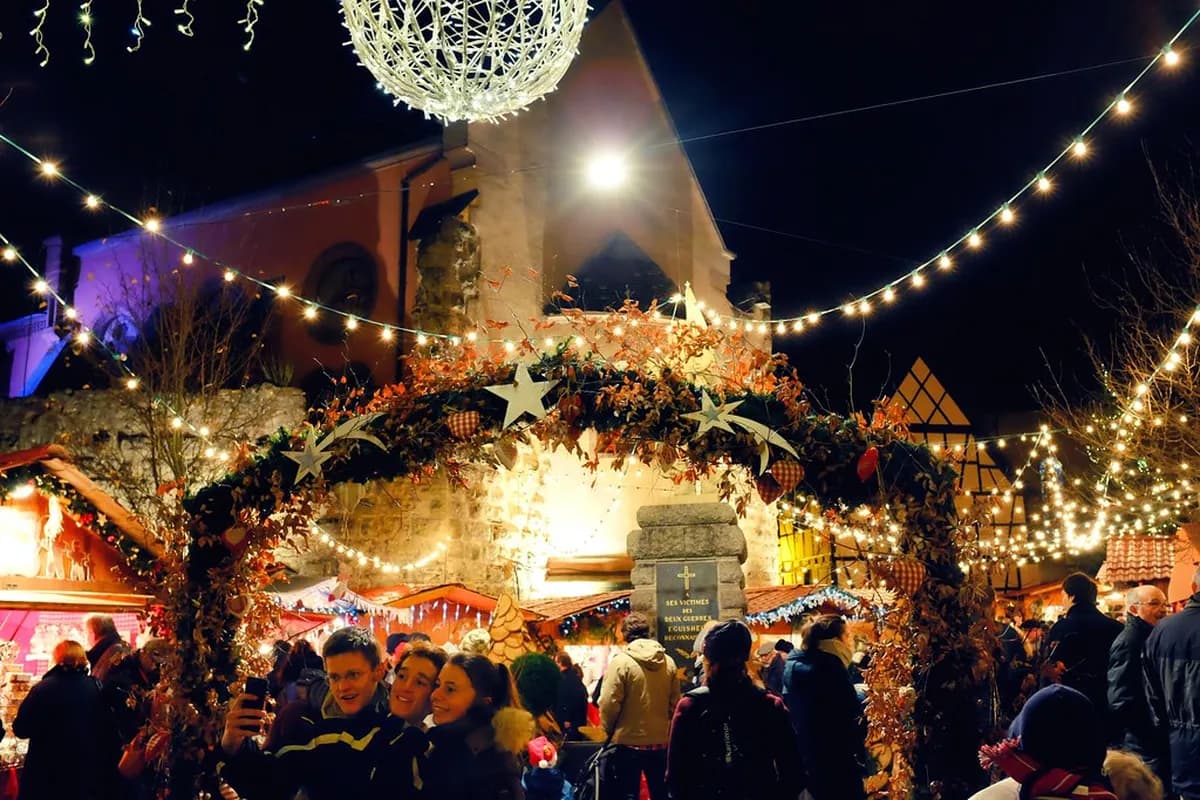
Visitors can enjoy a more intimate atmosphere here compared to larger cities. The market centers on the historic Place de la Réunion and its grand church. Travelers often find the local specialties and crafts more authentic and accessible.
Free guide: Europe's Festival Calendar
A month-by-month map of Europe's unmissable festivals — with the best dates to visit each and a local tip you won't find in the guidebooks.
Check the 2026-2027 Opening Times and Dates
The market traditionally begins in late November and concludes on December 27. Most chalets open daily from 11:00 to 20:00. Check the official www.noel-mulhouse.fr for specific holiday closures and any changes for 2026. The market usually stays closed on Christmas Day to allow vendors to rest.
Fridays and Saturdays often feature extended hours for evening shoppers. Weekday mornings are the quietest times to explore the stalls. You can find a detailed list of best Christmas markets in France and Alsace for date comparisons. Arriving just before sunset lets you watch the lights come on across Place de la Réunion.
The season typically sees over 90 traditional wooden chalets spread across the historic centre. Special events like choir performances often happen on Sunday afternoons. Plan for at least four hours to see everything at a relaxed pace. Admission to the market itself is free.
Discover the Unique History of the Christmas Fabric
Mulhouse was once the European capital of printed textile production. The city honors this past by creating the Étoffe de Noël — the Christmas fabric — every year. A local designer chooses a new pattern and color palette each season. This fabric then drapes the town hall, market chalets, and the pedestrian streets of the city centre.
You can visit the Boutique aux Étoffes to buy unique items made from the official annual fabric. Popular products include table runners, napkins, small fabric ornaments, jewellery, and decorative objects. These items often sell out by mid-December due to high demand. Consider visiting early in the season to secure the best designs before they are gone.
The patterns often draw inspiration from the Museum of Printed Textiles, which holds the world's largest collection of textile images. It is a compelling side visit for anyone interested in design history. You might see similar motifs across the Strasbourg Christmas market stalls, but only Mulhouse makes the fabric the visual centerpiece of its entire Christmas identity.
Experience the Colourful Ambience at Place de la Réunion
Place de la Réunion serves as the heart of the festive celebrations. The colorful facades of the historic buildings create a stunning backdrop for the wooden chalets. Temple Saint-Étienne towers over the square with its impressive Gothic architecture and often hosts free organ concerts during the Advent season.
A large Ferris wheel offers panoramic views of the illuminated city. From the top, you can see the intricate patterns of the Christmas fabric draped across the streets below. Tickets for the wheel usually cost around €6 per person. It is especially magical to ride just as the sun sets around 16:30 in December.
The market layout encourages a slow stroll between the different sections. Look for the Liesel figures that guide visitors through the streets — a local tip recommended by Alsatian travel guides for finding the best stalls. Small wooden bridges and festive arches add to the atmosphere. The area is mostly pedestrian, making it easy for families with children.
Taste Local Specialties Like Carp-Fries and Mulled Wine
Mulhouse is known for a dish called Carpe frites — deep-fried carp served with crispy fries. It is a staple of the Sundgau region south of the city, and you will find dedicated stalls serving hot portions throughout the market. This is not something you will encounter at Strasbourg or Colmar, so make a point of trying it.

Tarte flambée is another Alsatian classic you must try while visiting. This thin-crust dough is topped with cream, onions, and bacon, best enjoyed fresh from a wood-fired oven in the square. Many visitors follow a Strasbourg and Colmar Christmas market itinerary and skip Mulhouse — they miss this regional specialty entirely.
Mulled wine, known locally as Vin Chaud, comes in red and white varieties. The white version is often lighter and infused with local citrus. Gingerbread and spiced cookies are perfect for a sweet afternoon snack. Local honey and artisanal jams also make excellent edible souvenirs to carry home.
Mulhouse vs. Colmar vs. Strasbourg: Which Market Fits You?
All three Alsatian markets are reachable by regional train (TER), but they attract different types of visitors. Strasbourg is the largest and most famous, with an enormous capital-city market that draws over two million visitors per season. Expect crowds, queues at popular stalls, and premium hotel prices across the entire Advent period. It is worth visiting once, but it is not the place for a quiet wander.
Colmar is photogenic and compact, with a medieval old town that feels almost stage-designed for Christmas. It draws photographers and couples who want the fairy-tale aesthetic. The crowds are heavy on weekends but manageable on weekday mornings. The Colmar Christmas market covers several squares, each with a different theme.
Mulhouse is the most distinctive of the three. Crowds are lighter, hotel rates are lower, and the Étoffe de Noël tradition gives the market a cultural layer that the other two cannot replicate. If you are traveling with children or have a genuine interest in craft and design, Mulhouse earns its place as a day trip or even an overnight stay. The 20-minute TER connection to Colmar makes a combined visit very practical.
| Market | Crowds | Unique Feature | Best For |
|---|---|---|---|
| Mulhouse | Low to moderate | Annual Christmas Fabric (Étoffe de Noël) | Design lovers, families, budget travelers |
| Colmar | Moderate to high | Medieval old town setting, themed squares | Photographers, couples |
| Strasbourg | Very high | Largest market in France, 300+ chalets | First-time Alsace visitors |
Use Practical Transport and Parking Advice
Mulhouse is easily accessible via the EuroAirport Basel-Mulhouse-Freiburg, located about 20 minutes from the city centre. A dedicated shuttle bus connects the airport to the Saint-Louis train station, from where a short TER train brings you into Mulhouse. Consult www.tourisme-mulhouse.com for current shuttle timetables before you travel.
If driving, use the A35 or A36 motorway and follow signs for Centre Ville. The Park and Ride (P+R) at Nouveau Bassin is the most convenient option during the market season. A small fee covers both parking and a tram ticket into the centre, avoiding the stress of narrow city streets. For a 1-day visit from Paris, the TGV takes around 2h 40min — faster and simpler than driving and hunting for a space.
The local tram system is efficient and reaches all major attractions. Tickets can be purchased at machines at every tram stop. Walking remains the best way to see the historic market area once you arrive, as the main sites are all within a 10-minute radius of Place de la Réunion.
Any question? Need any advice?
Many travelers ask if Mulhouse is worth visiting over larger cities. The answer is yes if you appreciate textiles and local crafts. It feels less commercial than the Metz Christmas market or Strasbourg. The focus on fabric provides a unique educational element to the trip.
Is the market suitable for non-French speakers? Most vendors speak basic English and are very welcoming to tourists. Learning a few words like 'Bonjour' and 'Merci' goes a long way. The tourist office provides maps and brochures in several languages.
What is the best way to see multiple markets? The regional TER train connects Mulhouse to Colmar in 20 minutes. This makes it easy to visit two markets in one day. Strasbourg is just an hour away by high-speed train.
Don't miss our news and tips!
Look for Liesel's tips posters around the market area. These highlight local secrets about the best food stalls and vantage points. Try the carp-fries at a market stall rather than a sit-down restaurant — it is a more authentic way to experience the local street food. The carp is freshest midweek when deliveries arrive from the Sundgau ponds.
Visit the Temple Saint-Étienne during the day to see the stained glass windows at their best. The winter light filtering through the glass is striking in the late morning. Check the Boutique aux Étoffes early in your trip to avoid disappointment — the most popular fabric patterns often sell out within the first two weeks of the season.
The Ferris wheel offers the best angle for holiday photography across Place de la Réunion. Stay for the blue hour just after sunset to capture the Christmas lights against a deep blue sky. Bring a lens cloth as cold air and breath fog camera glass quickly. Weekday early evenings from 17:00 to 18:00 give the best balance of light and manageable crowds.
Frequently Asked Questions
Does Mulhouse have a Christmas market?
Yes, Mulhouse hosts a famous Christmas market centered on Place de la Réunion. It is unique for its annual Christmas fabric and textile-themed decorations. The market typically features over 90 traditional wooden chalets.
Is Mulhouse Christmas Market worth visiting?
Mulhouse is definitely worth visiting for its unique textile heritage and intimate atmosphere. It offers a more local feel compared to the larger crowds in Strasbourg. The annual fabric designs are a highlight for many visitors.
What is the best month to visit Mulhouse for Christmas?
December is the best month to visit for the full festive experience. Late November is also excellent for fewer crowds and fresh decorations. Most events conclude by December 27 each year.
Mulhouse offers a distinct and colorful take on the Alsatian Christmas tradition. The combination of industrial history and festive cheer creates a memorable visit. Focusing on the unique fabric makes this market a standout regional destination.
Whether you are a foodie or a history buff, the city has something special. Plan your visit for early December to enjoy the best of the market. The warm hospitality of Alsace awaits you in the heart of Mulhouse.
Free guide: Europe's Festival Calendar
A month-by-month map of Europe's unmissable festivals — with the best dates to visit each and a local tip you won't find in the guidebooks.
You might also like


Continue reading
More guides you'll find useful