
Berlin Festival of Lights Guide: Dates, Routes, and Tips
Plan your visit to the Berlin Festival of Lights with our guide to 2026-2027 dates, best walking routes, photography tips, and tour booking advice.
On this page
Berlin Festival of Lights Guide
Berlin transforms into a glowing wonderland every autumn during its world-famous light festival. The city streets become an open-air gallery filled with vibrant projections and 3D mapping. This Berlin Festival of Lights guide helps you navigate the best routes and hidden gems. Prepare to see the German capital in a way you have never seen it before.
Millions of visitors flock to the city to witness the historic landmarks shine in the dark. You will find over 80 illuminated artworks spread across 40 different locations in the city center. Planning ahead is essential to avoid the biggest crowds and see the best art. Our guide covers everything from official dates to the best ways to stay warm while exploring.
Free guide: Europe's Festival Calendar
A month-by-month map of Europe's unmissable festivals — with the best dates to visit each and a local tip you won't find in the guidebooks.
What is the Berlin Festival of Lights? (2026-2027 Dates)
The 21st Festival of Lights takes place from October 9th to October 18th, 2026. During these ten nights, the light show begins at 19:00 and continues until 23:00. Check the Official Festival of Lights Website for any last-minute schedule updates. Each evening provides a fresh chance to see international artists display their work on granite and glass.
Berlin has a long history of celebrating light and art in its public spaces. The event has grown into one of the best light festivals in Europe for its scale. You can expect the entire city center to feel like a massive, glowing playground. Most of the major action happens around the central Mitte district.
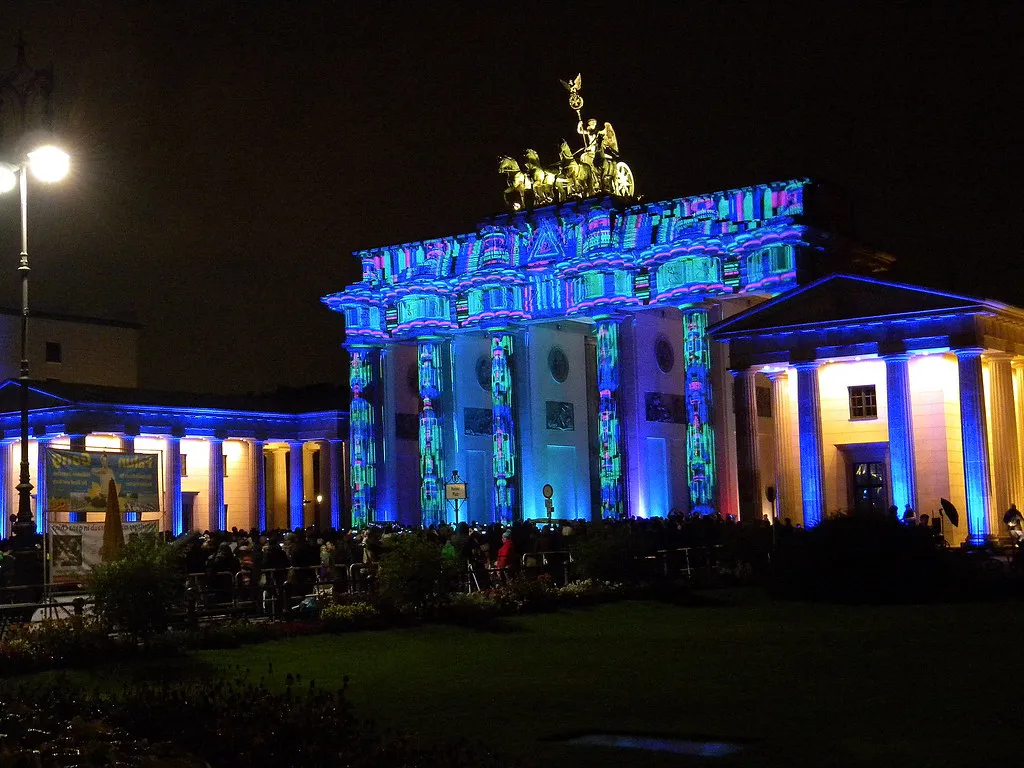
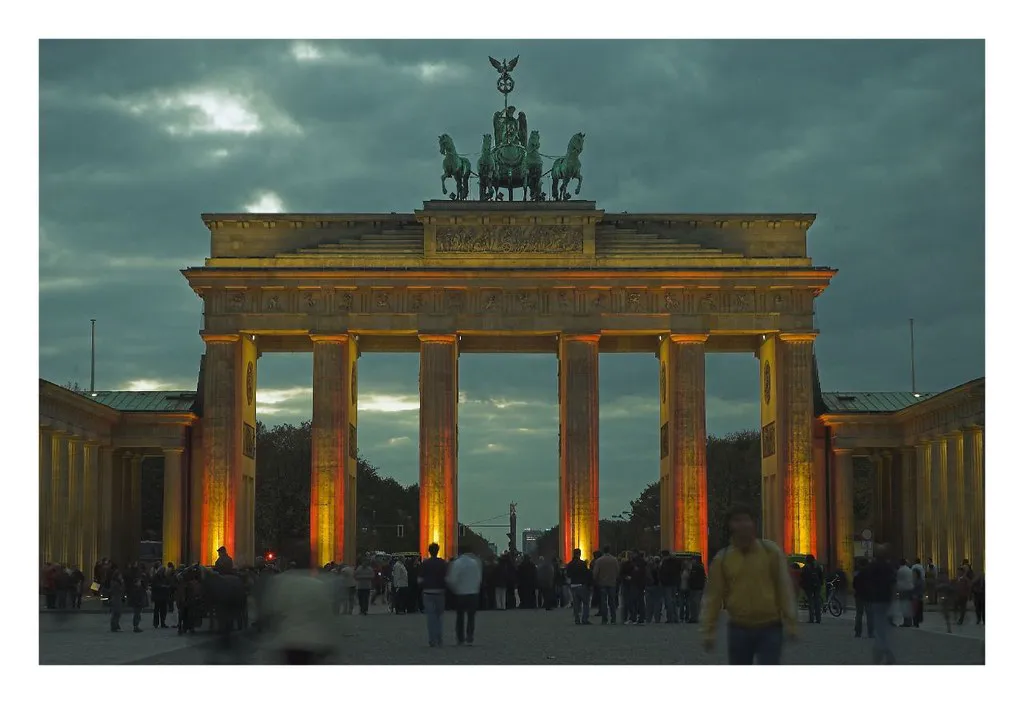
The festival often coincides with other major autumn events in the German capital. This timing makes October a peak month for tourism and hotel bookings. If you want to beat the rush, aim to visit on a weekday evening. Weekend crowds at the Brandenburg Gate can be quite dense after sunset.
Top Landmarks: What Buildings are in the Festival of Lights Berlin?
The festival focuses on the 'Big Five' landmarks that define the Berlin skyline. The Brandenburg Gate at Pariser Platz is the primary canvas for complex 3D mapping stories that shift and morph every few minutes. You will also see the Berlin TV Tower (Fernsehturm) at Alexanderplatz glowing with colorful patterns visible from across the city. These projections often tell stories of unity, history, and future technology.
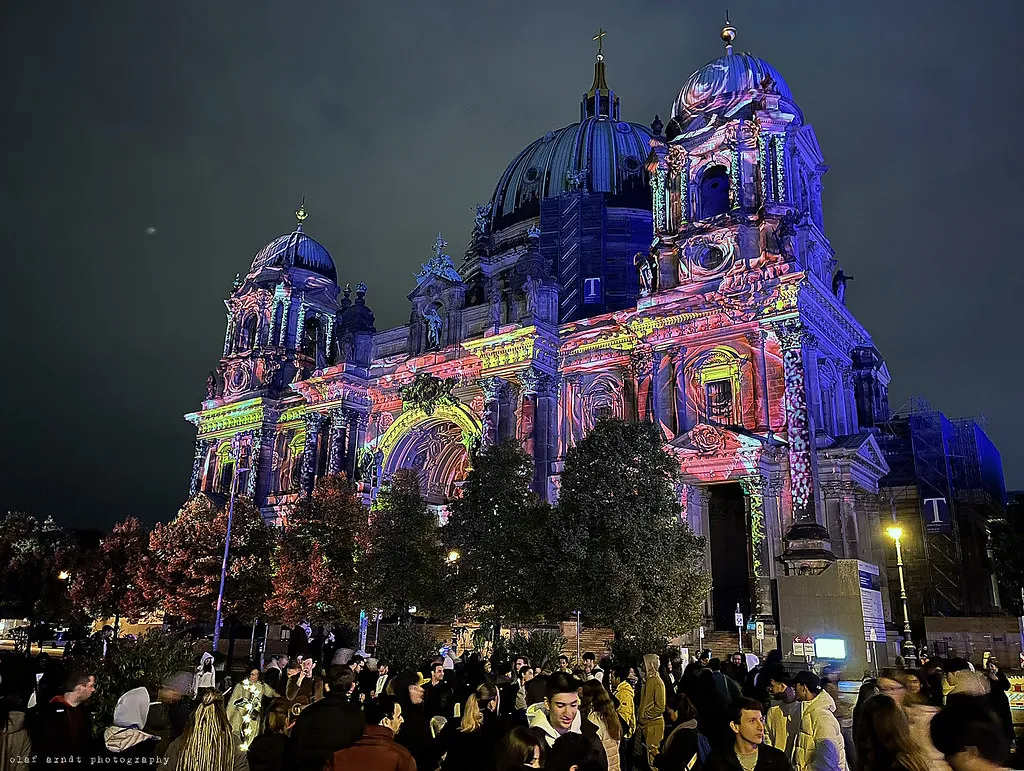
The Berlin Cathedral (Berliner Dom) is another must-see site during the event. Its massive dome and facade provide a dramatic backdrop for intricate light designs, and if you stand at just the right angle, the TV Tower's spire peeks between its spires like a glowing needle. Across the street, Bebelplatz offers a 360-degree light experience on surrounding buildings. This square is often considered the most immersive spot in the entire festival, with projections wrapping every facade simultaneously.
Museum Island hosts several installations that blend art with ancient architecture. The Altes Museum and the Neues Museum feature more abstract, artistic displays, while the Bode Museum on the island's tip creates stunning reflections on the Spree river. Walking through this UNESCO World Heritage site at night feels truly special and is quieter than the busier Pariser Platz area.
Two locations that are often overlooked deserve a dedicated visit. The Gendarmenmarkt square — flanked by the French Cathedral, the German Cathedral, and the Konzerthaus — draws busloads of visitors for good reason: all three historic buildings light up simultaneously for a panoramic effect unlike anything else in the city. And in the Tiergarten, the Victory Column (Siegessäule) rises 67 metres out of the trees and is illuminated in a way that makes it visible far down the Strasse des 17. Juni. Both are worth the short detour from the main Mitte route.
Best Walking Routes to Experience the Glow
A classic walking route starts at Alexanderplatz and moves toward the Brandenburg Gate. This path takes you past the TV Tower, the City Hall, and the Cathedral. You can walk the entire length of Unter den Linden to see several smaller installations. This route covers about 2.5 kilometres and takes roughly two hours with stops.
For a warmer alternative, use the U5 'Lightseeing' strategy on the U-Bahn. The U5 line stops at Rotes Rathaus, Museumsinsel, and Unter den Linden. You can hop off the train, see the lights, and hop back on to escape the chill. This is a particularly useful strategy if you are traveling with children or find the October cold too sharp for a long walk.
Another great loop focuses specifically on the Museum Island area. Start at the Lustgarten and walk around the Spree river toward the Bode Museum. The reflections of the lights in the water add an extra layer of beauty. It is often less crowded than the main Pariser Platz area and rewards patience with some of the best photographic compositions of the whole festival.
Guided Tours: Bus, Boat, and Walking Options
Many visitors prefer a structured experience to ensure they see every major highlight. A Berlin City Tour: Lightseeing Bus is a popular choice for comfort. These hop-on-hop-off buses include live commentary about the history of the buildings and stop at all the main illuminated sites. You can stay warm inside while the bus navigates through the illuminated streets.
Spree river cruises offer a unique perspective of the city's waterfront art. Boats depart regularly from Friedrichstrasse and Nikolaiviertel during the festival. Seeing the illuminated Cathedral from the water is a highlight for many travellers. Be sure to book your boat tickets in advance as they sell out quickly, especially on weekends.
Walking tours are ideal for those who want to hear the artists' stories. Expert guides explain the 'Let's shine together' theme in great detail. You can ask questions and find the best angles for your photography. Most walking tours last about two hours and cover the central Mitte highlights.
Is the Berlin Festival of Lights Free?
Most people want to know if they need to pay to see the lights. The good news is that all public street installations are completely free. You can walk around the city and enjoy the projections without a ticket. This makes it a great option for budget-conscious travellers and families.
However, some specific experiences do require a paid entry fee. The 'In Concert' events inside the Berlin Cathedral run from October 10 to 14 and combine live classical music with interior 3D mapping. Tickets for these exclusive sessions start from around €52.70 per person through visitBerlin: Festival of Lights Tickets. Guided bus and boat tours also come with a standard booking cost.
Read our article on if the Berlin Festival of Lights is worth it for a full cost breakdown. You should also budget for public transport if you plan to cover a lot of ground. A day ticket for the AB zone is usually the best value for visitors. Overall, you can have a fantastic experience without spending much money at all.
See Berlin in a new light
The 2026 theme 'Let's shine together' focuses on unity and global connection. Artists from around the world contribute their vision of a brighter future, using Berlin's landmark facades as their canvas. This theme is reflected in the diverse styles of the 80 illuminated artworks across 40 locations. You will see everything from traditional 3D mapping to interactive light sculptures that respond to the crowd.
It is helpful to understand the history of light festivals in the city. For years, two separate events competed in the same October slot: the Festival of Lights and a rival event called Berlin Leuchtet. Berlin Leuchtet was launched by some of the original Festival of Lights creators but has since disappeared entirely. Knowing this helps you avoid following outdated maps or confusing online listings that still reference the older event.
The festival is much larger in geographic spread than the Lyon Festival of Lights. Berlin's wide boulevards allow for massive projections that feel genuinely cinematic. The artistic quality remains high across all 40 locations, and every year brings new projection technology that makes the colours more vivid. The 2026 edition marks the 21st anniversary, and the organisers typically push the production values higher for milestone editions.
Interactive Installations and Augmented Reality Spots
The Festival of Lights goes well beyond passive watching. Several 2026 installations are designed to respond to the crowd or be activated via smartphone. Augmented reality (AR) features embedded in the official festival app let you point your phone at certain buildings and see layered digital effects that are invisible to the naked eye. These AR spots are marked on the official map and tend to draw smaller, more curious crowds than the main 3D mapping sites.
Photography workshops run during the festival at select evenings, led by professional night photographers who teach visitors how to handle long exposures and light trails in real time. Artist talks are also scheduled on specific dates, where the creators of the major installations explain the concept behind their work. These events are free or low-cost and are listed on the official festival website closer to October. They are the easiest way to turn a casual visit into something genuinely educational.
Children in particular respond to the interactive elements. LED bracelets sold at stalls near major sites will show up as coloured light trails on long-exposure phone shots, which turns the whole family into part of the artwork. Pedicabs and bikes decked with LED strings weave through the crowds and add movement to an already dynamic street scene. If you are visiting with kids, factor in an extra thirty minutes at Alexanderplatz where the ground-level interactive lights are designed with younger visitors in mind.
Photography Tips: How to Capture the Light Art
Capturing the vibrant colours of the projections requires some basic technical knowledge. Use a tripod if you want to take sharp photos without any motion blur. The projections are very bright, so you may need to lower your exposure. Avoid using a flash as it will wash out the light art on the buildings.
The best time for photography is often after 21:30 when the crowds thin out. You will have a clearer line of sight to the Brandenburg Gate and Bebelplatz. Early evening is often too crowded for clean shots without people in the frame. Wait for the 3D mapping loops to reset so you can catch the full story from the beginning. Tripods are set up in long rows at the Brandenburg Gate — fellow photographers readily share and move to give each other room, so don't be shy about joining the line.
Smartphone users should use 'Night Mode' to get the best results. Hold your phone steady or lean against a lamppost for extra stability. Try to include some of the surrounding architecture to give the photo scale. Reflections in puddles after a light rain can create stunning artistic shots and are easiest to find near the Spree riverbanks on Museum Island.
Practical Planning: What to Wear and How to Get Around
October in Berlin can be quite chilly and damp as the sun goes down. You should wear several layers to stay warm during a four-hour walk. A windproof jacket and comfortable walking shoes are non-negotiable items. Don't forget a hat and gloves if the temperature drops below 10 degrees — evening temperatures along the Spree can feel several degrees colder than the daytime forecast suggests due to the river wind.
Public transport is the most efficient way to move between the major sites. The U-Bahn and S-Bahn run frequently throughout the evening festival hours. Avoid driving into the city center as many roads are closed for pedestrians. Parking near the Brandenburg Gate is nearly impossible during the event.
Bring a portable power bank to keep your phone charged for photos and navigation. Cold weather drains batteries faster than you might expect. Carry a small bottle of water and some snacks to keep your energy up. Many cafes near Unter den Linden stay open late for festival visitors, and the food stalls near Bebelplatz accept card payments if you run short of cash.
Official Festival of Lights Combined Experiences & Bundle Offers
For a premium experience, look into the 'In Concert' events at the Cathedral. These multi-day concerts combine live music with stunning interior light art from October 10 to 14. Tickets for these exclusive sessions start around €52.70 per person through visitBerlin. Places are limited and sell out well before the festival opens, so booking early is essential.
Bundle offers often combine a bus tour with a boat cruise for a full night. These packages are great for seeing the city from every possible angle. You can often save money by booking these combined experiences in advance. Most bundles include a specific starting time to help manage the flow of guests.
Some hotels in Mitte offer special 'Festival of Lights' stay packages that include a welcome drink or a late checkout after your night walk. Staying central allows you to walk back to your room easily after 23:00 when the projections switch off. It is a straightforward way to fully immerse yourself in the atmosphere without worrying about late-night transport home.
Frequently Asked Questions
Where is the best place to see the Festival of Lights in Berlin?
The best place to see the festival is Bebelplatz because it offers 360-degree projections on historic buildings. You can also visit the Brandenburg Gate for the most famous 3D mapping displays. For a similar experience elsewhere, check out the Amsterdam Light Festival guide for winter travel ideas.
What time does the Berlin Light Show start?
The light show officially starts at 19:00 every evening during the festival. The projections run continuously until 23:00. Arriving right at the start allows you to see the first loops of the 3D mapping stories before the largest crowds arrive.
Is the Festival of Lights Berlin free?
Yes, the Festival of Lights is free for all visitors to enjoy in public spaces. You do not need a ticket to view the projections on buildings like the TV Tower or the Brandenburg Gate. Only special guided tours and indoor concerts require a paid ticket.
What should I wear to a Berlin festival?
You should wear warm layers and a waterproof jacket for the Berlin Festival of Lights. October evenings are often cold and windy in the city center. Sturdy walking shoes are also important as you will likely walk several kilometres to see all the sites.
Visiting Berlin for more than one festival? See our complete guide to festivals and events in Berlin.
The Berlin Festival of Lights is a spectacular way to experience the city's history. Whether you choose a bus tour or a long walk, the art is unforgettable. Use our tips to plan your 2026 visit and capture the perfect photos. Check the Festivian blog for more travel inspiration.
Berlin remains one of the most creative cities in the world for light art. The 'Let's shine together' theme reminds us of the power of artistic unity. Make sure to book your accommodation early to secure a spot in the heart of the action. We hope this guide helps you enjoy every moment of the glowing German capital.
Free guide: Europe's Festival Calendar
A month-by-month map of Europe's unmissable festivals — with the best dates to visit each and a local tip you won't find in the guidebooks.
You might also like


Continue reading
More guides you'll find useful


