
Rheingau Wine Festival Dates: Frankfurt and Wiesbaden Guide
Find the latest Rheingau Wine Festival dates for Frankfurt and Wiesbaden. Get practical tips on transport, the Pfand system, and the best Rieslings to try.
On this page
Rheingau Wine Festival Dates: Frankfurt and Wiesbaden Guide
Last updated April 2026. Late summer is the best time to experience the Rheingau region. Two major wine celebrations fill August with outdoor tastings, live music, and thousands of bottles of Riesling.
The Rheingau Wine Festival dates are split between Wiesbaden and Frankfurt. Wiesbaden holds its Wine Week in mid-August; Frankfurt follows with the Rheingau Wine Market in late August. Both events draw directly from the vineyards of Rüdesheim and Eltville, making them among the best wine festivals in Europe.
The two events share a name and a grape, but they differ in size, atmosphere, and logistics. This guide breaks down both so you can plan the right visit — or combine them.
Free guide: Europe's Festival Calendar
A month-by-month map of Europe's unmissable festivals — with the best dates to visit each and a local tip you won't find in the guidebooks.
Rheingau Wine Festival Dates and Locations
The Wiesbaden Wine Week typically runs for ten days in mid-August, centred on the historic Schlossplatz. The Frankfurt Rheingau Wine Market opens in late August and closes in the first week of September, centred on the Grosse Bockenheimer Strasse — locally called the Freßgass. Exact dates for 2026 are confirmed by the Tourismus- und Congress GmbH Frankfurt am Main each spring; check their website in April for the official calendar.
The two cities are roughly 40 minutes apart by S-Bahn, making a combined visit entirely feasible in one long weekend. Wiesbaden comes first on the calendar, so if you can only pick one, arriving for the Wiesbaden opening weekend and catching the Frankfurt market a week later is a natural sequence.
| Event | Typical Dates | Location | Scale | Best For |
|---|---|---|---|---|
| Wiesbaden Wine Week | Mid-August (10 days) | Schlossplatz, Wiesbaden | 120 booths, 400,000+ guests | Scale, nightlife, socialising |
| Frankfurt Wine Market | Late August – early Sept (10 days) | Freßgass (Grosse Bockenheimer Str.) | 600+ wines, urban street setting | Food pairings, city sightseeing |
All You Need to Know About the Rheingau Wine Festival
The Wiesbaden festival dates back to 1976. It grew rapidly through the 1980s, expanding from around 33 stalls to more than 100, and the pedestrian strip of stands eventually earned the nickname "the longest wine bar in the world." The Frankfurt market, operating since 1978, developed separately along the Freßgass — a street already famous for its delis and food shops.
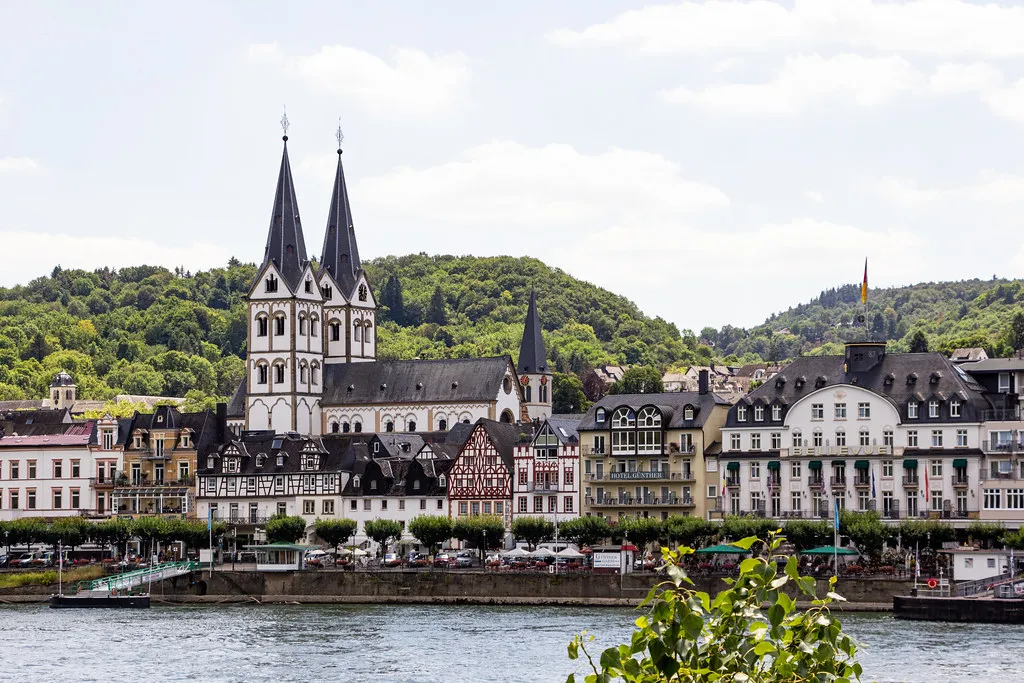
Both festivals serve as platforms for Rheingau winemakers to sell direct to consumers. The focus is on locally produced wines, primarily Riesling, though sparkling Sekt and red varieties also appear. Buying direct from the producer means you can taste wines that rarely reach export markets or even major German supermarkets.
Neither event charges an entrance fee. You pay only for what you drink and eat. The combined reach of both festivals makes this region one of the most significant stops on the major culinary events calendar in central Europe.
The Wiesbaden Rheingau Wine Week (Schlossplatz)
Wiesbaden's festival transforms the Schlossplatz — the city's central square — into a kilometre-long outdoor wine lounge. Around 120 booths from Rheingau wineries line the square, with the Hessian State Parliament, the City Hall, and the Market Church forming the backdrop. Over 400,000 guests pass through during the ten days, consuming roughly 250,000 bottles of wine.
More than 1,000 different wines and sparkling wines are available across the stalls. Three outdoor stages run simultaneous music programmes throughout the day, and the crowd density after 19:00 on weekends can be intense near the church. Visiting on a Tuesday or Wednesday afternoon gives you easier access to the winemakers themselves, who are usually happy to explain vintages without a queue forming.
If wine is not your preference, the Ratskeller stand is the only beer booth at the Wiesbaden festival — a useful detail for companions who do not drink wine. Food options lean toward rich regional dishes: Spundekäs cheese dip with pretzels and Flammkuchen (a thin, pizza-like tart) are the most popular choices at the food stalls.
The Frankfurt Rheingau Wine Market (Freßgass)
The Frankfurt event runs along the Grosse Bockenheimer Strasse, known locally as the Freßgass because of its long-standing concentration of food shops and delicatessens. The market has been a city tradition since 1978. Over 600 wines and sparkling wines are presented, with a strong emphasis on Rheingau Riesling in its many expressions — from bone-dry Trocken to late-harvest Spätlese.
The urban street setting gives this market a different character to Wiesbaden. The surrounding architecture is commercial Frankfurt rather than baroque civic squares, but the density of culinary vendors compensates. Handkäse mit Musik (a curd cheese with onion vinaigrette) and hot pretzels are classics here. The after-work crowd swells the Freßgass noticeably between 17:00 and 20:00 on weekdays.
Frankfurt's market draws visitors who want to combine the wine festival with city sightseeing. The Alte Oper concert hall is a ten-minute walk, and the city's museum embankment is accessible on foot. It makes this one of the stronger options among European food festivals for those pairing culture with tasting.
Getting to the Wine Festival: Transport and Parking
Public transport is the right choice for both cities. In Frankfurt, take the U6 or U7 to Alte Oper, or any S-Bahn line (S1–S9) to Hauptwache or Taunusanlage — all are within a five-minute walk of the Freßgass. In Wiesbaden, the S1, S8, or S9 trains stop at Wiesbaden Hauptbahnhof, from where it is a ten-minute walk to Schlossplatz. Full route details are in our getting to the Rheingau Wine Festival guide.
Parking in Wiesbaden during the Wine Week is severely limited. There are no public car parks dedicated to the event, and central garages fill before the evening session begins. Do not plan to drive to Wiesbaden for this festival. In Frankfurt, parking garages near the Alte Oper exist, but public transport remains faster and avoids the post-festival congestion.
Wiesbaden also offers a "Wine Ticket" — a local bus day-pass sold in conjunction with festival entry that covers the RMV network in the city zone. It is worth buying at the main station if you are arriving by train and plan to explore multiple areas of the city.
Practical Tips: Pfand, Prices, and Glass Souvenirs
First-time visitors are regularly caught out by the Pfand system. When you buy your first glass of wine, a deposit — typically 2 to 5 EUR — is added to the price. You receive either a token or keep the glass itself as the voucher. To recover the deposit, return the glass to a booth belonging to the same winery; returning it to a different winery's stand usually does not work. Budget for this before you queue: arriving with only the exact euro amount listed on the price board will leave you short.
Glass of wine prices at both festivals generally run between 4 and 7 EUR per standard pour. Cash remains the preferred payment method at most stands, though an increasing number accept card. Small notes (5 EUR and 10 EUR) speed up the Pfand transaction considerably. Wiesbaden also sells a special commemorative glass each year — a new design tied to the festival's annual theme — which you can buy new rather than as a used Pfand glass. These make better souvenirs than keeping a standard glass, as the winery may notice.
- Carry cash in small denominations — most stands prefer it for fast Pfand exchanges
- Budget for the glass deposit on top of the listed wine price
- Return your glass to the same winery's booth to recover your deposit
- Buy the official commemorative glass at Wiesbaden if you want a keepsake
- Arrive before 18:00 on weekdays to avoid peak queuing times
Wine Queen Tradition and Rheingau Moments of Pleasure
The crowning of the Rheingau Wine Queen is one of the festival's most distinctive rituals. A new queen is elected annually to represent the region's winemakers and promote Rheingau wines both domestically and abroad. The ceremony typically takes place during the Wiesbaden Wine Week, and attending even part of the crowning event gives a sense of how seriously the region takes its wine identity. The Rheingau has produced a Wine Queen since the tradition began in the 1930s.
The concept of "Rheingau moments of pleasure" — a phrase used by organisers — encapsulates what the festival aims to offer: tasting wine in the context of the landscape and culture that produced it. Pairing a glass of Rheingau Riesling Spätlese with the fruit and wine platters available at the Wiesbaden stalls is a genuine expression of this idea. The interplay of stone-fruit aromas in the wine with fresh seasonal fruit on the plate is something that takes on more meaning when you have seen the Rhine vineyards that produced the bottle.
For food pairings beyond fruit platters: the regional Spundekäs cheese dip cuts through the acidity of a dry Riesling well, while Flammkuchen works better alongside a demi-sec sparkling Sekt. Both are easy to find at multiple stalls in Wiesbaden. Frankfurt's Freßgass market leans more toward charcuterie and pretzels, which pair well with the fuller-bodied Riesling Trocken styles.
Frequently Asked Questions
What are the dates for the Rheingau Wine Festival 2026?
The Wiesbaden Wine Week typically runs for ten days in mid-August. The Frankfurt Wine Market follows in late August and ends in early September. Exact dates are usually confirmed by the Tourismus- und Congress GmbH Frankfurt am Main in early spring.
How does the glass deposit (Pfand) work at German wine festivals?
You pay a small deposit, usually 2 to 5 Euro, when buying your first glass. You receive a token or the glass itself serves as the voucher. Return the glass to any stand from the same winery to get your cash back.
Is there parking available at the Wiesbaden Wine Week?
Parking is extremely limited in central Wiesbaden during the festival. Most visitors use the S-Bahn or local buses to avoid traffic. If you must drive, use the parking garages near the main station and walk to Schlossplatz.
The Rheingau Wine Festival dates offer two distinct ways to enjoy German culture. Whether you choose the scale of Wiesbaden or the urban charm of Frankfurt, the wine is exceptional. Those who enjoy late summer events should also check the Bad Dürkheim Wurstmarkt for more fun.
Remember to use public transport and carry cash for your glass deposits. If you are looking for other unique seasonal trips, consider the Alba White Truffle Festival in the fall. Proper planning ensures a memorable and stress-free experience in the heart of Germany's wine country.
Free guide: Europe's Festival Calendar
A month-by-month map of Europe's unmissable festivals — with the best dates to visit each and a local tip you won't find in the guidebooks.
You might also like


Continue reading
More guides you'll find useful


