Is Roskilde Festival Worth It? 7 Key Factors to Consider
Is Roskilde Festival worth the price? Read our expert review on the Orange Stage, camping culture (Silent vs. Party), total costs, and the unique non-profit vibe.
On this page
Is Roskilde Festival Worth It? An Honest 2026 Review
Yes, Roskilde Festival is worth it for those seeking a communal, non-profit musical pilgrimage. If the high Danish prices deter you, Sziget Festival offers a more budget-friendly alternative. This guide provides an honest look at the 2026 festival experience. Last updated March 2026.
Planning a trip to Denmark for this eight-day event requires significant logistical effort. The festival is famous for its non-profit status and the legendary "Orange Feeling." Most visitors find the unique social atmosphere justifies the premium ticket price. We break down the costs, camping options, food scene, and musical highlights below.
Free guide: Europe's Festival Calendar
A month-by-month map of Europe's unmissable festivals — with the best dates to visit each and a local tip you won't find in the guidebooks.
The Music: From Orange Stage Legends to Artist Discovery
The heart of the festival is the iconic Orange Stage, originally christened by the Rolling Stones. Standing in the massive crowd during a headline set creates an unmatched sense of scale. Security uses a pit system with colored wristbands to manage the front rows. Arriving early for the "pit run" is essential for seeing major stars up close.
Beyond the main stage, the festival excels at showcasing emerging global talent. Stages like Apollo and Gloria offer intimate settings for electronic and experimental acts. The schedule often runs until 03:00, allowing for deep musical exploration every night. Many attendees discover their favorite new artists on these smaller, high-energy platforms.
The sound quality across the grounds remains consistently high according to attendee reports. Organizers prioritize a diverse lineup spanning rock, hip-hop, and world music. With more than 160 bands from 30+ countries typical in any given year, this variety ensures the event appeals to a wide demographic. Check the best music festivals in Europe for similar genre-spanning lineups.
The Railway Split: Picking the Right Campsite
One logistical challenge that catches first-timers off guard is the Railway Split. The campsite is divided into East and West sections by an active railway line. If your group spreads across both sides you will spend a disproportionate amount of time walking between them. Decide on East or West before you arrive and coordinate with your group accordingly.
Roskilde offers several themed campsite zones, each with its own rules and atmosphere. Understanding the differences before you buy is the single best decision you can make. Here is a breakdown of the main options:
- Silent & Clean — Enforces complete silence from 22:00 to 10:00. No music, no raised voices. Veteran attendees and older visitors gravitate here because sleep actually happens. The zone has grown significantly in recent years as demand increased.
- Clean Out Loud — Parties continue through the night, but all campers must clean up after themselves daily. The "clean" rule is strict and enforced. Good option if you want the party atmosphere without the post-apocalyptic litter piles found in the general zones.
- Settle 'n' Share — An application-based camp where each group must contribute a daily activity or experience for other festival-goers. Think morning 5 km runs, live acoustic sessions, badminton tournaments. Around 180 camps receive approval each year. It is genuinely the most social and surprising part of the festival grounds.
- Camp B (general East) — Smaller than Camp C and popular with veteran international attendees. Social but manageable, it draws a crowd that is up for a party but also capable of using a rubbish bin.
- Camp C (general East) — The notorious 24-hour party zone with massive homemade sound systems and nightclub-style lighting rigs. If you need sleep, this is not for you. It is only a three-minute walk from Camp B, so you can visit without committing to it.
The takeaway: book your zone intentionally. The campsite experience is half of what makes Roskilde unique, and the wrong zone can ruin an otherwise excellent week.
The Price Tag: Budgeting for a Week in Denmark
A full festival ticket for 2026 costs approximately 2,525 DKK (around €338 / £290). This covers all eight days of camping and access to all stages. While expensive, it is comparable to Glastonbury in terms of value per day. One-day tickets are available for those who cannot commit to the full week.
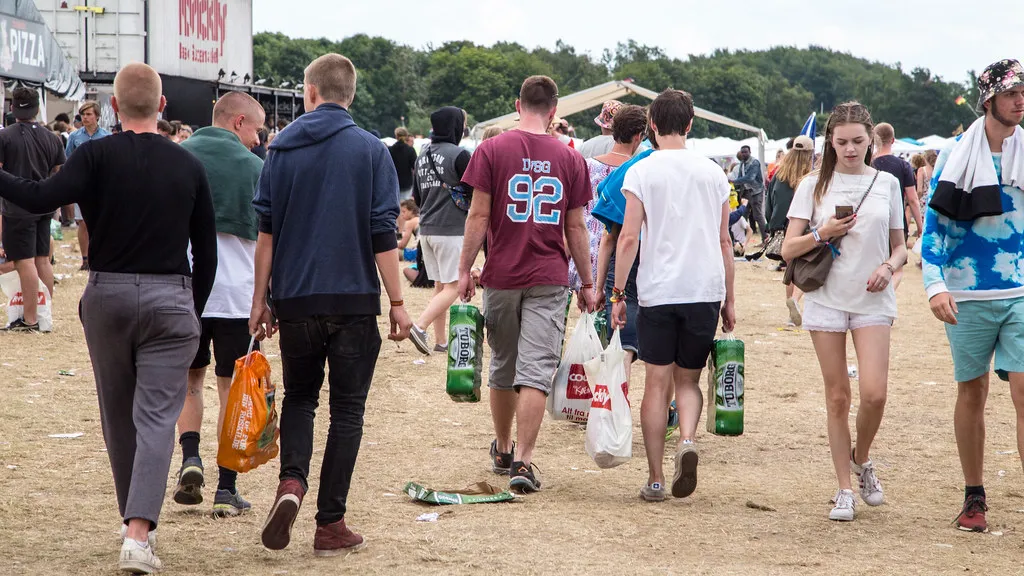
Daily spending on food and drinks typically runs between 300–500 DKK depending on your habits. Buying beer in the camping areas costs around 16–25 DKK per can, which is cheaper than Copenhagen bar prices. Bringing supplies from a supermarket before arrival significantly cuts this down. Many veteran campers treat the first Sunday shopping run as a core part of their arrival ritual.
Volunteering is the most common way to attend for free. Roskilde relies on around 31,000 volunteers annually — a figure that is not a typo. You work set shifts and gain full festival access in return. For budget travelers, this transforms an otherwise expensive week into one of the most affordable major festival experiences in Europe. Check Hostelworld Denmark if you prefer a bed over a tent for the nights before and after the festival.
The Non-Profit Mission: Where Your Ticket Money Goes
Roskilde Festival is one of the only major music festivals in the world that operates as a non-profit. Every year the event donates its entire surplus to humanitarian and cultural causes. In a typical year that surplus runs between 2 and 2.7 million EUR, distributed to charities selected by the Roskilde Festival Foundation. This is not marketing language — it is the legal structure of the organisation.
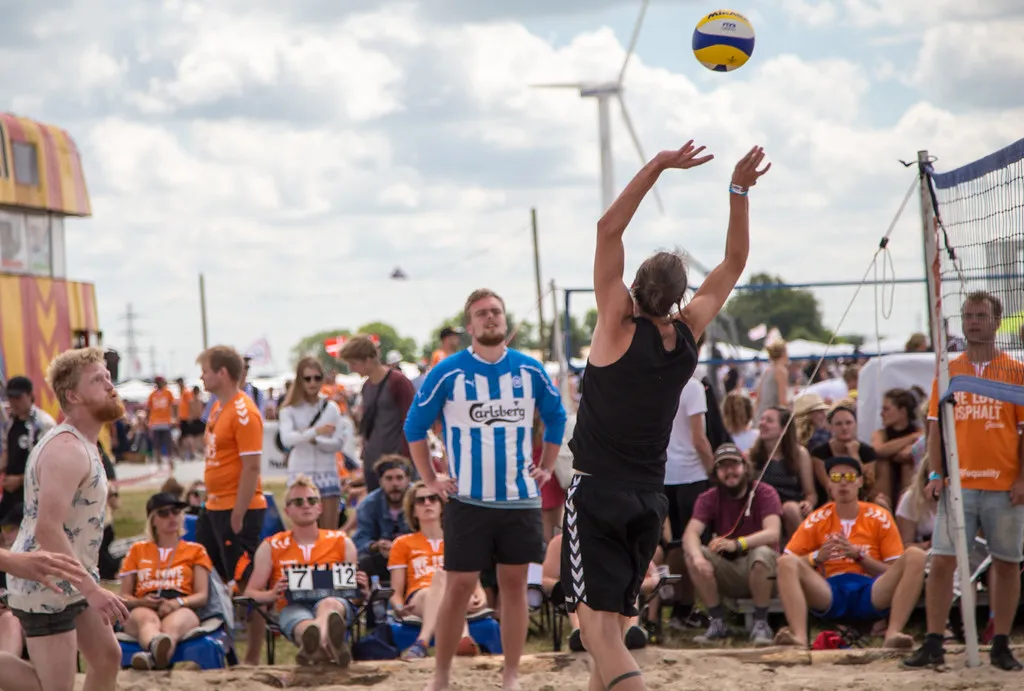
This mission fundamentally changes the atmosphere on the ground. Attendees consistently report feeling like participants in a cause rather than customers at a product. The "Orange Feeling" — a specific Danish term for the collective euphoria that builds over the week — is inseparable from this shared sense of purpose. Veterans describe it as something that compounds year after year, which explains why many return for 10, 20, or even 30 consecutive editions.
The sustainability commitment follows from the same ethos. According to YOUROPE Case Study data, the festival runs structured waste-reduction programs across all campsite zones. The Clean Out Loud and Settle 'n' Share camps have daily cleaning obligations built into their entry conditions. This is not optional and it is one reason the sanitation standards at Roskilde consistently exceed those of comparably sized commercial festivals.
Food and Facilities: Survival on the Festival Grounds
Food at Roskilde is a genuine highlight rather than an afterthought. The festival food courts host leading Danish restaurants invited on the condition that they serve a menu they do not normally offer — and change it every two years. Past editions have included a Michelin-starred Thai restaurant, modern smørrebrød counters, and high-end Indian street food. A standard meal runs 60–80 DKK. Budget travelers can live well on spaghetti carbonara at around 60 DKK or a roast pork sandwich from one of the Danish stalls.
There are food courts in both the East and West campsite halves, so you are never more than a short walk from a hot meal regardless of where your tent is. Beer runs 16 DKK per can in the camping zones and 20–40 DKK inside the festival arena — notably cheaper than standard Copenhagen nightlife prices. Bringing your own food and drinks into the camping area is permitted and widely practised. Outside alcohol is not allowed inside the music arena stages, and glass bottles are banned site-wide.
Facilities are better than most camping festivals. The portable toilets are maintained to a noticeably high standard — a reflection of Danish civic culture that carries over to festival behaviour. Showers cost 10–20 DKK and are available across the site, though hot water runs out quickly in the mornings. Phone charging stations and luggage check counters for valuables are available at multiple points. Bring your own power bank as a backup.
Practical Logistics: Transport, Packing, and Timing
Getting to the festival is straightforward via the dedicated Roskilde Festival railway station. Trains run frequently from Copenhagen Central Station and take roughly 25 minutes. The key point is to check which campsite half — East or West — your group is in before arriving, because the walk from the wrong exit can add 40 minutes to your arrival. The railway line does not just define the campsite geography; it defines your daily commute within the grounds.
The weather in late June and early July in Denmark is unpredictable. According to Climate Data Denmark, rain is common even in peak summer. Dust becomes a factor during dry spells on the gravel paths. Waterproof boots, a packable rain jacket, and a good sleeping mat are non-negotiable. An inflatable sleeping mat in particular is the single item that separates a comfortable week from a miserable one.
The festival runs from late June into early July each year. The first four days (Sunday–Wednesday) are dominated by camp culture, smaller performances, and the building social energy. The main stages open on Thursday when the largest daytime crowds arrive. Day tickets are available from Thursday onward for those who want to skip the camping experience entirely, though doing so means missing the social rituals that define the "Orange Feeling." Commuting back to Copenhagen after a 03:00 set is expensive and exhausting — camping is always the better option. Consult a European music festival packing list before you depart.
Final Verdict: Is the "Orange Feeling" Worth the Investment?
Roskilde Festival is a marathon of music, community, and Danish culture. The sheer scale and eight-day duration can be overwhelming for first-time attendees. However, the non-profit mission makes every krone spent feel worthwhile, and the campsite culture is unlike anything else in the European festival calendar.
The "Orange Feeling" is a real phenomenon. It is the cumulative effect of shared purpose, communal living, and world-class music over a week. It is not manufactured and it does not appear on day one — it builds. That is why so many attendees come back for consecutive years, and why a 30-year veteran will describe a weaker lineup year as still being a great week.
- Pros: What visitors usually love
- Incredible non-profit and charitable mission
- Legendary Orange Stage musical atmosphere
- Strong focus on sustainability and cleanliness
- Diverse lineup of global and local acts
- Deep sense of community and the "Orange Feeling"
- Themed camps (Silent, Clean Out Loud, Settle 'n' Share) that suit different needs
- Cons: What may disappoint
- High ticket cost and Danish prices for food and travel
- Unpredictable and often rainy weather in late June
- Extremely loud campsites in the party zones
- Significant walking distances, especially if split across the railway line
- Physical exhaustion from the full eight-day duration
Verdict: Yes, it is worth it for the atmosphere, mission, and campsite culture. Best for: Music lovers who enjoy communal living and want a festival with genuine social purpose. Skip if: you hate camping, need consistent sleep, or are on a very tight travel budget. Alternative: Primavera Sound for a city-based festival with better weather and no camping requirement.
Frequently Asked Questions
How much does Roskilde Festival cost?
A full 8-day ticket costs about $365. You should budget an additional $50 per day for food and drinks. Total costs for a week often exceed $800 excluding travel.
What is the average age for Roskilde Festival?
The average age is approximately 24 years old. However, many veteran attendees in their 40s and 50s attend by using the Silent & Clean camping zones.
Can you bring alcohol to Roskilde Festival?
Yes, you can bring your own alcohol into the camping areas. However, you cannot bring outside drinks into the actual music arena stages. Glass bottles are generally prohibited for safety.
Roskilde Festival is more than just a music event; it is a cultural institution. The combination of world-class music and non-profit values creates a unique environment. While the costs are high, the experience of the "Orange Feeling" is truly distinctive. Plan your 2026 trip early, choose your campsite zone deliberately, and book trains from Copenhagen well in advance.
Free guide: Europe's Festival Calendar
A month-by-month map of Europe's unmissable festivals — with the best dates to visit each and a local tip you won't find in the guidebooks.
You might also like

Continue reading
More guides you'll find useful