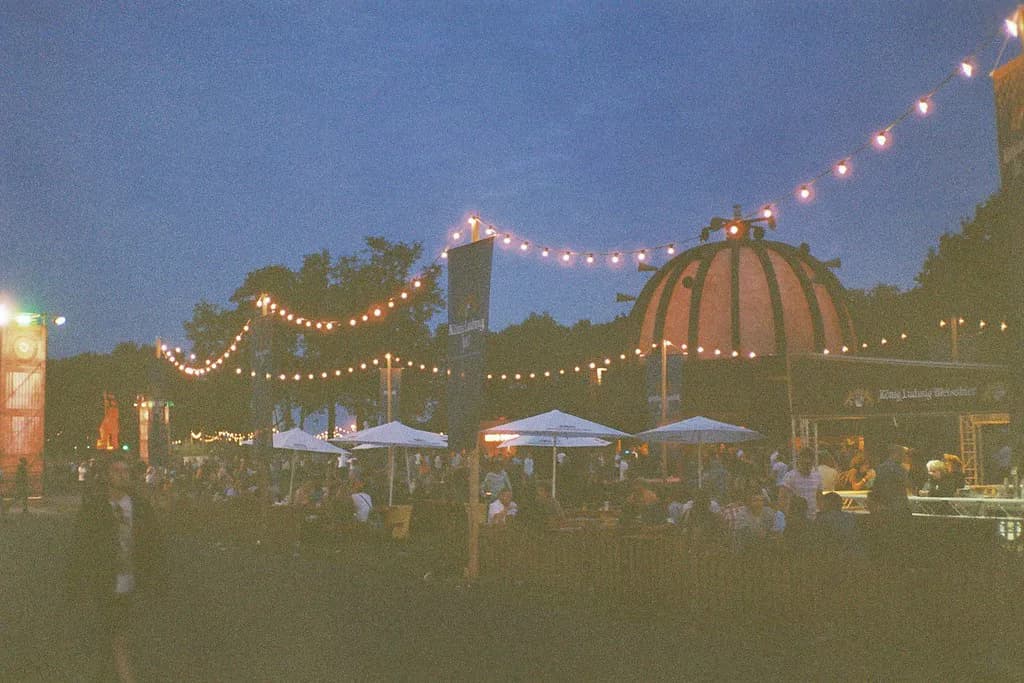
How To Get To Lollapalooza Berlin: 6 Best Transport Options
Master your trip to Lollapalooza Berlin with our guide to S-Bahn routes, shuttle services, airport transfers, and parking tips for the Olympiastadion.
On this page
How To Get To Lollapalooza Berlin: 6 Best Transport Options
Last updated June 2026. Knowing how to get to Lollapalooza Berlin before festival weekend makes all the difference. The event takes place at the historic Olympiastadion and Olympiapark on July 18–19, 2026, drawing over 60,000 attendees each day into Berlin's western suburbs. Getting the route wrong — or choosing the wrong station — costs you time in the crowd instead of time at the stage.
Part of our Best Music Festivals in Europe series.
Berlin's public transit network is genuinely one of the best in Europe for large events, but the Olympiastadion area has a quirk that catches first-timers out: there are two stations with nearly identical names, each at a different location around the park. This guide covers all six viable transport methods, flags that station naming issue clearly, and gives you the post-show exit strategy that locals use to beat the 60,000-person rush. Before you head out, check our European music festival packing list for what to carry on festival day.
Free guide: Europe's Festival Calendar
A month-by-month map of Europe's unmissable festivals — with the best dates to visit each and a local tip you won't find in the guidebooks.
Public Transportation: S-Bahn and U-Bahn Access
The S-Bahn S3 or S9 lines are the fastest options from the city centre. Both stop at S-Bahn Olympiastadion station, which puts you about a 10-minute walk from the main festival entrance on the northern side of the park. Trains run every 5–10 minutes from major hubs — from Alexanderplatz the journey takes roughly 25 minutes, from Zoologischer Garten about 12 minutes, and from Friedrichstraße around 20 minutes. A Zone AB single ticket costs €3.50 and covers the whole trip.
The U-Bahn U2 line stops at U-Bahn Olympia-Stadion — a different station, on the southern edge of the Olympiapark. Walking from the U-Bahn exit to the festival gates takes 12–15 minutes rather than 10, and involves navigating through the park rather than the direct northern approach. The U2 connects Pankow in the east to Ruhleben in the west, so it is genuinely useful if you are staying in Charlottenburg, Wilmersdorf, or the Ku'damm area. The fare is identical: €3.50 for a Zone AB ticket.
A 24-hour Zone AB day pass costs €9.90 and is worth buying if you plan to make any other trips that day. Download the BVG or VBB Fahrinfo app before you arrive: both apps sell tickets digitally and show live platform updates, which saves you from the long machine queues that form at the station before the festival opens. Always keep your ticket on your phone screen or carry a paper copy — ticket inspections are common on event days.
One practical note on accessibility: the S-Bahn Olympiastadion station has step-free lift access and is the better choice for parents with strollers heading to Kidzapalooza. The U-Bahn U2 station at this end of the line involves a longer walk with more uneven terrain through the park, which is manageable but slower with a buggy.
Regional Trains and Long-Distance Bus Routes
Travelers arriving from outside Berlin can use the RE1, RE7, or RB14 regional trains into Berlin Hauptbahnhof, then transfer to the S3 or S9 westbound. The regional trains are included in the standard VBB zone fares if you travel within the tariff area, but check your starting zone carefully since some originate in Zone C or beyond. Schedules are less frequent than the S-Bahn — expect trains every 30–60 minutes rather than every 10 — so build in transfer time at the main station.
Long-distance buses from major German cities and European hubs arrive at the Zentraler Omnibusbahnhof (ZOB) in Berlin. The ZOB is located very close to the festival grounds at Masurenallee — a short walk or one S-Bahn stop puts you at the venue. FlixBus, Megabus, and other operators serve Berlin daily from Hamburg, Munich, Amsterdam, and Warsaw, making this a genuinely cheap entry route for fans traveling from elsewhere in Europe. Check our guide to the cheapest music festivals in Europe for more budget travel tactics.
Here is a quick comparison of travel times to S-Bahn Olympiastadion from key Berlin starting points.
- Alexanderplatz → Olympiastadion (S3/S9): approximately 25 minutes, €3.50
- Zoologischer Garten → Olympiastadion (S3/S9): approximately 12 minutes, €3.50
- Friedrichstraße → Olympiastadion (S3/S9): approximately 20 minutes, €3.50
- Berlin Hauptbahnhof → Olympiastadion (S3/S9): approximately 18 minutes, €3.50
- ZOB → Olympiastadion (on foot or one stop): approximately 10–15 minutes, €3.50 or free on foot
Official Festival Shuttle and Private Transfers
Lollapalooza Berlin periodically operates an official shuttle service from select pick-up points in the city centre. Check the Official Lollapalooza Berlin Website as the festival date approaches — shuttle details and booking links are typically published three to four weeks before the event. These shuttles are priced per trip and sell out early, particularly for the post-show run on Sunday night.
Private transfers via taxi, Uber, or Bolt are available across Berlin, but there are two important constraints. First, private vehicles are directed to a designated drop-off zone on Flatowallee, which adds a 5–8 minute walk to the main gates. Second, surge pricing kicks in hard during the 30-minute window after each headliner ends — expect fares of €40–€60 from the city centre at those moments. Pre-booking a private transfer for a fixed return time (before the final act finishes) is the way to avoid surge entirely.
Rideshare is most practical for groups of three or four splitting the fare, or for festivalgoers with heavy gear who want door-to-door service. For solo travelers or pairs, the S-Bahn undercuts private transfers on both price and journey time on most routes across the city. Check the where to stay for Lollapalooza Berlin guide to position yourself on a direct rail line and skip the transfer question entirely.
Cycling and E-Scooter Navigation
Cycling is popular for festivalgoers staying in Charlottenburg, Wilmersdorf, or Spandau. Berlin has well-maintained bike lanes running toward the Olympiapark from the west, and the ride from the Ku'damm area takes about 15–20 minutes. Bike racks near the venue fill up quickly, so arrive early and lock your bike to a fixed structure rather than relying on temporary festival stands. NextBike and Call-a-Bike (Deutsche Bahn's rental network) both operate in this part of the city if you do not own a bike.
E-scooters from Tier, Lime, and Bird are widely available across central Berlin. Be aware that the festival typically designates no-parking zones for scooters directly in front of the main entrance — you must end your rental in a permitted zone, which may be 200–300 metres from the gates. Check the operator's in-app map before you approach. Scooter rental runs around €1 to unlock plus €0.20–0.25 per minute, so the total cost for a 20-minute ride is comparable to a single transit ticket.
Cycling and scooters both avoid the crowded train platforms after the show, which is their main advantage over rail. The trade-off is that riding back into the city in the dark — even on well-lit streets — requires a functioning phone battery and a working light on the bike. Pack a small power bank and use the app navigation back rather than guessing the return route.
Airport Transfers from Berlin Brandenburg (BER)
If you are flying in for the festival, the most efficient route from Berlin Brandenburg Airport (BER) is the FEX (Flughafen-Express) to Berlin Hauptbahnhof, then the S3 or S9 westbound to Olympiastadion. This combined journey takes roughly 60–70 minutes from terminal to festival gates. Alternatively, the RE7 or RB14 regional trains also run from BER to Hauptbahnhof and accept the standard VBB Zone ABC ticket at €4.40 for the full trip.
The S9 S-Bahn runs directly from BER to Olympiastadion without a transfer, stopping at every intermediate station. The journey is longer — around 80–90 minutes — but requires no change of train, which is useful if you have luggage. The S9 is a good choice if you land early on Friday and want a stress-free direct connection before the festival opens. For Sunday arrivals heading straight to the gates, the FEX + S3/S9 transfer is faster.
Taxis and rideshare from BER to the venue cost €60–€80 depending on traffic and time of day. This is rarely worth it unless you are in a group of four or more splitting the fare, or arriving very close to a set time and needing to guarantee your arrival. Road traffic near the stadium on festival days is significant, and a cab caught in the Westend approach road congestion can take longer than the train.
Driving and Parking Constraints at Olympiastadion
Driving is the least practical option for Lollapalooza Berlin 2026. The residential streets surrounding the Olympiapark are partially closed to non-resident traffic during the festival, and official parking lots at the stadium fill up before the first act. Road closures and diversions mean that GPS routes can lead you into dead ends or long detours through the western suburbs.
If you need to drive, the most practical approach is to use a Park and Ride (P+R) lot further out. Spandau and Westkreuz both have parking areas with direct S-Bahn connections to the venue. Park your car there, buy a Zone AB ticket, and ride the last stretch by rail. This is significantly cheaper than paying for event-day parking at the stadium (when it is available) and avoids the worst of the inbound congestion.
The issue that catches most drivers is the return journey. When both festival days end, around 60,000 people attempt to leave the Olympiapark simultaneously, and the roads seize up for 45–60 minutes. Many rail-savvy regulars walk 15 minutes north to Pichelsberg S-Bahn station instead of queuing at the main Olympiastadion station — this small station on the S3 line is less obvious on maps but consistently has shorter queues and faster boarding after the headliners finish. Whether you drove or took the train, the Pichelsberg exit strategy is the single most useful local tip for getting home quickly.
Ticket Prices and Age-Specific Access
Lollapalooza Berlin 2026 tickets are sold via the official website. A single-day ticket starts at €119 and a two-day weekend pass starts at €207. The festival also offers Comfort and VIP tiers at higher prices. Tickets are not included with Berlin public transport passes — you pay for transit separately.
The festival is genuinely all-ages. Kids weekend tickets for ages 7–12 cost €10, and Teen weekend tickets for ages 12–15 cost €99. Children under 7 enter free when accompanied by a ticket-holding adult. The Kidzapalooza area is a dedicated family zone inside the park with its own stage, workshops, and a ball pit — it runs across both festival days. Families should aim for the S-Bahn Olympiastadion entrance rather than the U-Bahn approach, as the northern entrance is closer to the Kidzapalooza zone and the station has lift access.
The Fashionpalooza fashion hub and the Grüne Kiez sustainability area are also part of the park layout. Knowing which entrance is closest to your area of interest saves walking time once you are inside. The festival map is published on the official site ahead of the event — download it or take a screenshot before you leave your accommodation, since data connectivity inside the packed festival grounds can be unreliable.
Frequently Asked Questions
Can you Uber to Lollapalooza Berlin?
Yes, you can take an Uber to the venue, but traffic is often extreme. Drivers must use designated drop-off points away from the main gates. Expect to pay €30-€50 / ~$33-$55 from the city centre during peak hours.
Which S-Bahn line goes to Olympiastadion?
The S3 and S9 lines both serve the Olympiastadion station directly from central Berlin. These trains run every 5 to 10 minutes during the festival. The journey from the main station takes about 20 minutes.
Is public transport included in the Lollapalooza ticket?
No, Lollapalooza Berlin tickets typically do not include free public transportation in the price. You must purchase a separate VBB ticket for Zone AB. A 24-hour pass is the best value for most festival attendees.
Visiting Berlin for more than one festival? See our complete guide to festivals and events in Berlin.
Getting to Lollapalooza Berlin is straightforward once you know the S-Bahn S3 or S9 is your fastest route and that S-Bahn Olympiastadion and U-Bahn Olympia-Stadion are two different stations at different sides of the park. Buy your transit ticket digitally via the BVG or VBB app before you arrive, leave early enough to clear security, and plan your exit via Pichelsberg to beat the crowd. For more summer inspiration, check out our guide to the best summer music festivals in Europe by month.
Whether you arrive by S-Bahn from Alexanderplatz, by bus from another European city, or by FEX from the airport, the Olympiapark is well connected and the festival itself is one of the best-run large events in Germany. Enjoy the music, the Fashionpalooza buzz, and the unique energy of Lollapalooza Berlin 2026.
Free guide: Europe's Festival Calendar
A month-by-month map of Europe's unmissable festivals — with the best dates to visit each and a local tip you won't find in the guidebooks.
You might also like


Continue reading
More guides you'll find useful