
European Midsummer Traditions Explained Travel Guide
From Sweden's maypole feasts to 10,000 people watching sunrise at Stonehenge, here's how Europe marks Midsummer 2026 around 20-24 June, plus booking tips.
On this page
European Midsummer Traditions Explained
European midsummer traditions explained often highlight the magical peak of the solar year. Across the continent, people gather to celebrate the longest day with fire and flowers. These ancient customs connect modern travelers to the deep agricultural roots of rural life. Understanding these rituals helps you appreciate the diverse European festival traditions explained by local historians.
The summer solstice marks a time when the sun barely sets in northern regions. Communities organize massive bonfires and dance around tall maypoles to ensure future harvests. Visitors can join these public events to experience authentic folklore and local hospitality. In 2026, the dates to watch are the evening of 23 June and the day of 24 June, when most celebrations reach their peak.
Free guide: Europe's Festival Calendar
A month-by-month map of Europe's unmissable festivals — with the best dates to visit each and a local tip you won't find in the guidebooks.
Origins of the Summer Solstice
The Midsummer holiday has roots that stretch back to the Bronze Age. Early civilizations used stone circles to track the movement of the sun across the sky. This astronomical event dictated the timing of planting and harvesting for millennia. The word "solstice" itself comes from the Latin solstitium, meaning the moment the sun stands still.
Ancient Norse culture split the year into only two seasons — Summer and Winter. The point when the sun reached its zenith was a time to pray to the fertility gods Freyr and Freyia for an abundant harvest. Burning aromatic herbs and wildflowers was a pagan ritual meant to ward off evil spirits, which were thought to be especially powerful on Midsummer's Eve. These practices formed the bedrock of the pan-Scandinavian traditions still practiced today.
Christianity absorbed rather than erased these customs. The Church aligned the solstice with the Feast of St. John the Baptist, fixing his birthday on 24 June. This gave Midsummer a religious anchor while allowing bonfires, dancing, and feasting to continue. The result was a centuries-long fusion of pagan and Christian symbolism that persists across Europe to this day.
Midsummer Traditions by Country
Each country in northern and central Europe has shaped Midsummer into something distinctly its own. The shared elements — bonfires, flowers, and feasting — appear everywhere, but the details diverge sharply once you cross a border.
Sweden is where Midsummer is celebrated most intensely. Stockholm empties as locals head to the archipelago or countryside to dance around a decorated maypole. The maypole itself, covered in leaves and flowers, traces its roots to an ancient Roman tradition of dancing around a decorated tree for the goddess Flora. Families eat pickled herring, new potatoes with dill, and strawberry cake while singing traditional drinking songs. Skansen open-air museum in Stockholm hosts a large public celebration open to visitors.
Finland marks Juhannus with lakeside bonfires and long sauna sessions. Birch whisks and cold-water dips are as central to the evening as any food or song. Danes celebrate Sankt Hans Aften by burning effigies of witches atop their bonfires — a tradition meant to drive evil spirits away before the second half of the year. Congregations join in singing "Midsommervisen," a hymn to summer's light, before the flames are lit.
Latvia's Jāņi celebrations stand out for their intensity of folk custom. Men wear crowns of oak leaves and women weave intricate flower crowns from local wildflowers. Homes and barns are decorated with greenery, bonfires burn through the night, and cheese-making is a communal ritual unique to Latvian tradition. In Estonia, Jaanipäev (St. John's Day) is one of the nation's most significant holidays, with families gathering around fires on the evening of 23 June. Local legend holds that a magical fern flower blooms only on this night — whoever finds it gains great fortune.
In the UK, Midsummer is not a national holiday but draws its largest crowds to Stonehenge in Wiltshire, where up to 10,000 people gather to watch the sunrise align with the Heel Stone. The monument was engineered for this moment, and witnessing it in person is a genuine spectacle. Smaller folk fairs with music and bonfires continue Celtic and Anglo-Saxon traditions across rural England.
Midsummer Magic and Folk Beliefs
Superstition plays a massive role in the history of the summer solstice. Young people once believed that picking seven types of wildflowers in silence and placing them under their pillow would bring a dream revealing their future spouse. Some traditions added a second method: gazing into a well at midnight to see the face of the person you were destined to marry.
Rolling in the morning dew was another common ritual for health and beauty. Many believed the water on this specific day held unique healing properties, stronger than ordinary dew. Bathing in springs or decorating homes with greenery and blossoms was also thought to promote good health, since water and plants were considered especially potent on Midsummer's Eve.
Bonfires were not just for light but also for protection. The smoke from the flames was thought to bless cattle and crops. In Norway, coastline communities lit bonfires one after another along the shore — like a string of lanterns visible for miles. At Flekkefjord in southern Norway, old wooden boats are set ablaze on the water, a tradition dating to the 1800s that UNESCO has now recognized as intangible cultural heritage.
Iceland, Greenland, and the Furthest North
Iceland's solstice traditions are more superstitious than religious, and they are among the most unusual in Europe. Icelanders celebrate Jónsmessa on 24 June, when wishing stones and magical herbs are considered especially potent. Folk belief holds that on this night, cows can speak and seals shed their skins to take on human form. Rolling naked in the early morning dew is said to cure illness — a survival of very old healing ritual.
The Huldufólk — the hidden people, or elves — are also central to Jónsmessa lore. Sitting at a crossroads on Midsummer's Eve is said to attract elves from all four directions, offering riches to anyone who can resist following them until dawn. Most visitors to Reykjavik watch the midnight sun dip briefly below the horizon and rise again, a genuinely eerie sight in a city that stays light through the night.
Greenland ties the solstice to national identity in a way no other country does. The national day, Ullorteneq ("the longest day"), has been marked on 21 June since 1983. Flags are raised, patriotic speeches are given, and traditional costumes are worn across the island. In Ilulissat, the midnight sun lasts two full months; in Qaanaaq in the far north, it persists for three and a half. This unbroken daylight still drives the rhythm of fish-smoking and winter food preparation.
How Sun Worship Shaped European Culture
Ancient solstice rituals centered on powerful sun deities and fertility gods long before Christianity arrived. In Slavic regions, the figure of Kupala represented the union of fire and water at the height of summer. Museum collections across Poland, Ukraine, and the Baltic states hold small carved idols and embroidered textiles dedicated to these solar beings. The symbols — solar wheels, flowering branches, paired human figures — moved from divine icons to folk decoration over centuries.
Maypole dancing carries its own lineage of sun worship. The decorated pole was a stand-in for the axis of the world, around which the sun appeared to revolve. As Christianity spread north, the maypole survived because the Church framed the dancing as harmless seasonal joy rather than pagan rite. Open-air museums such as Seurasaari in Helsinki and Skansen in Stockholm actively preserve this history with live demonstrations each June.
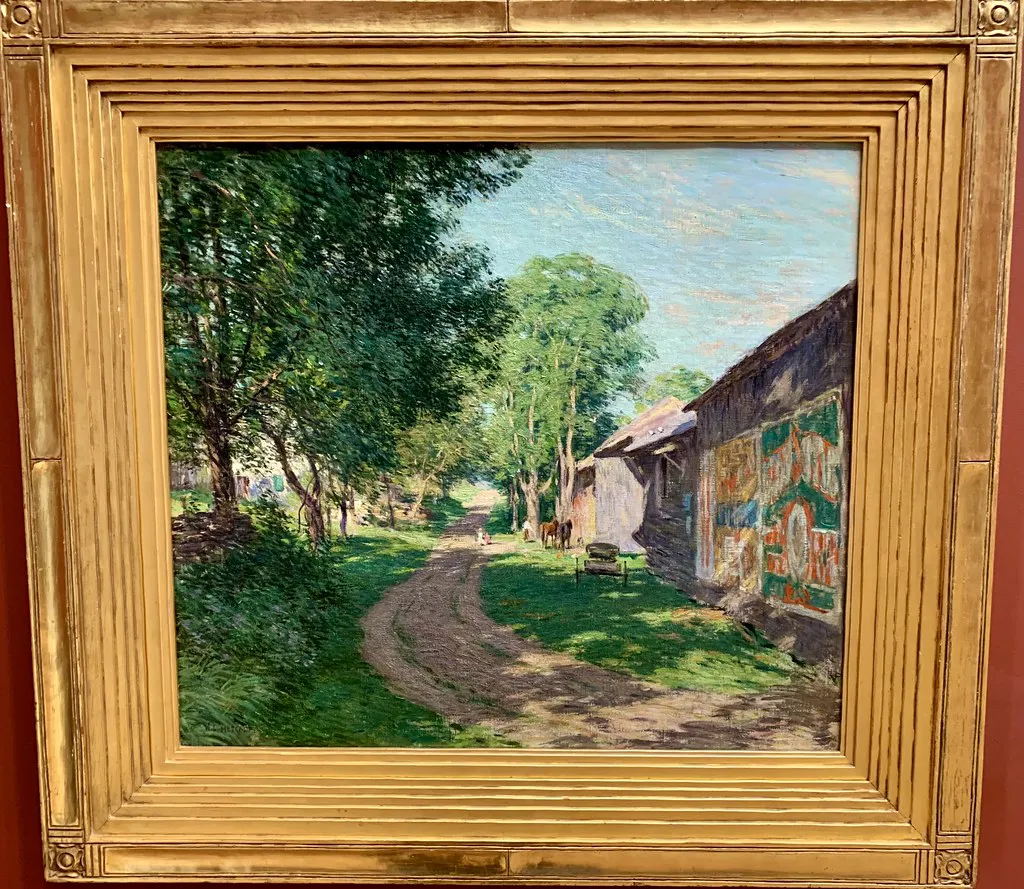
Folk art provides a vivid visual record. Embroidered linens in Sweden, Latvia, and Estonia frequently feature the sun, stylized flowers, and dancing figures in saturated colors. Paintings like Peder Severin Krøyer's Midsummer Eve Bonfire on Skagen Beach (1903) and Wilhelm Marstrand's depictions of Swedish lake-boat races capture a world that still echoes in contemporary celebrations. Seeing these works in Copenhagen, Stockholm, or Riga adds context that no bonfire alone can provide.
Budget-Friendly Ways to Join the Celebrations
Midsummer is an excellent time for travelers on a budget to visit Europe. Most bonfire events and maypole dances are free for the general public to attend. Community crown-making workshops appear in local squares across Scandinavia and the Baltic states, and children are actively welcomed to join folk songs and games. Learning about European festival etiquette and customs ensures your family feels comfortable participating rather than just observing.
Packing your own food saves money at festival stalls, where prices spike over the holiday weekend. Be aware that many shops and grocery stores close early on Midsummer Eve — sometimes by 14:00 — so stock up the day before. Public transport runs special late-night schedules in most Nordic capitals, with family passes offering discounts on trains and city buses through the weekend.
The single biggest budget mistake is booking accommodation late. Hotels in Sweden and Finland often sell out months before June. Rural farmstays and lakeside cabins are a cheaper and more immersive alternative to city hotels. Book by February for the best rates, particularly around Lake Siljan in Sweden's Dalarna region, where the lake-boat races on the weekend before Midsummer draw visitors from across the country.
How to Plan Your Midsummer Trip
Successful trips require knowing how to plan a European festival trip well in advance. The Midsummer weekend falls on the Friday-to-Sunday closest to 24 June; in 2026, the main celebrations run from the evening of 20 June through 21 June in most of Sweden and Finland. Stonehenge access for the 2026 solstice on 21 June requires advance registration — check the English Heritage website for free ticketing details, which usually open in April.
Deciding what to pack for a European festival depends on your specific destination. Northern nights remain chilly even when the sun is still visible at midnight. Bring a light waterproof jacket, comfortable walking shoes for long outdoor hours, and insect repellent if you are heading into forests or lakeside areas. A reusable water bottle matters more than you might think — hydration queues at large outdoor sites are long.
Road closures near bonfire sites and pedestrianized town squares are common on Midsummer Eve. Check local transit apps the day before you travel. In Sweden, trains heading out of Stockholm toward Dalarna sell out by late May, so pre-purchasing rail tickets is non-negotiable. Ferry services to the Swedish archipelago islands operate on holiday timetables — confirm schedules directly with the operator rather than relying on aggregator apps.
Why Midsummer Endures
The enduring pull of Midsummer is not nostalgia but something more active. Every generation adapts the celebration to its own circumstances — the Danes have recently started burning male figures and cows instead of witches; Iceland's Huldufólk gatherings now draw curious tourists alongside believers; Greenland has turned the solstice into a statement of national sovereignty. The holiday absorbs change without losing its core.
Sustainable festival practices are becoming more common to protect local environments. Organizers now use eco-friendly materials for maypoles and public decorations. Many events have shifted away from single-use plastics for cups and plates since 2023. Joining these celebrations with reusable containers and respect for park rules is both practical and expected by locals.
Midsummer brings people together regardless of their background or nationality. It serves as a reminder of our shared connection to the changing seasons. Whether you are dancing in Sweden, watching fires in Latvia, or sitting at an Icelandic crossroads waiting for elves, the experience offers a direct line to a Europe that predates its borders.
Frequently Asked Questions
What are common Midsommar traditions?
Common traditions include dancing around a maypole, wearing flower crowns, and eating pickled herring with potatoes. Many people also light large bonfires to celebrate the sun. You can learn more about these events in our guide to what is carnival and why it is celebrated across Europe.
Why do Swedes put flowers under their pillow at Midsommar?
This is an old folk tradition intended to reveal a future spouse in a dream. A person must pick seven different types of wildflowers in silence. They then place the bouquet under their pillow on Midsummer Eve to trigger the prophetic vision.
What are the traditions of Midsummer night?
Midsummer night traditions focus on fire, water, and magic. People jump over bonfires for luck and wash their faces in the morning dew for health. It is also a time for singing traditional folk songs and staying awake until sunrise.
How is Midsummer celebrated in Europe?
Celebrations vary by country but usually involve outdoor gatherings and communal feasts. In the north, the focus is on the midnight sun and greenery. Southern regions often combine the solstice with religious feasts honoring St. John the Baptist.
Visiting Europe for more than one festival? See our complete guide to festivals and events in Europe.
European midsummer traditions explained a world where nature and folklore meet. From the stone circles of England to the forests of Estonia, the sun remains the star. Taking part in these rituals offers a unique window into the soul of the continent.
Whether you are dancing in Sweden or watching fires in Latvia, the experience is unforgettable. Plan your 2026 trip early to witness these magical moments for yourself. The longest day of the year is waiting to welcome you with light and joy.
Free guide: Europe's Festival Calendar
A month-by-month map of Europe's unmissable festivals — with the best dates to visit each and a local tip you won't find in the guidebooks.
You might also like


Continue reading
More guides you'll find useful


