How To Experience Up Helly Aa Fire Festival Travel Guide
Up Helly Aa in Lerwick, Shetland lights up the last Tuesday of January when 1,000 torchbearers burn a Viking longship. Plan flights, halls and timing.
On this page
How To Experience Up Helly Aa Fire Festival
The town of Lerwick becomes a vibrant Viking stronghold during this massive annual fire festival. Travelers from across the globe gather in Shetland every January to witness this incredible spectacle. You will find a unique blend of ancient Norse heritage and modern community spirit in every street. Learning how to experience Up Helly Aa Fire Festival requires early planning and a love for adventure.
The celebration marks the end of the Yule season with fire, music, and elaborate costumes. Local volunteers spend thousands of hours preparing the hand-crafted Viking longship and torches. Seeing the night sky glow with orange light provides a memory that lasts a lifetime. This guide covers everything from the morning parades to the legendary all-night hall parties.
Free guide: Europe's Festival Calendar
A month-by-month map of Europe's unmissable festivals — with the best dates to visit each and a local tip you won't find in the guidebooks.
What Is Up Helly Aa?
Up Helly Aa marks the end of the Yule season on the Shetland Islands. The name itself is a mix of Old Norse and Scots — "Up" signals the end of a period, "Helly" derives from the Old Norse word for holy days, and "Aa" means all. Put together, it translates loosely as "the end of all the holy days." The festival is held on the last Tuesday of January each year and lasts a full 24 hours.
At its core, Up Helly Aa is a community-driven celebration that belongs to the people of Shetland. It is not a tourist show — it is a living tradition sustained by hundreds of local volunteers who devote an entire year of preparation to make it happen. Visitors are welcomed warmly, but the spirit of the event is most deeply felt when you approach it with that understanding.
There are actually 11 different Up Helly Aas held across the islands between January and March each year. Lerwick's is the largest and most famous. The smaller rural festivals offer a more intimate atmosphere and are worth considering if you cannot make the Lerwick date or prefer a quieter crowd.
The Galley: The Heart of the Festival
The galley is a hand-built Viking longship constructed specifically for Up Helly Aa each year. Skilled local craftspeople build it using traditional techniques, and the color scheme remains a closely guarded secret until the morning of the event. The galley burning tradition began in 1889 and has been a cornerstone of the festival ever since.
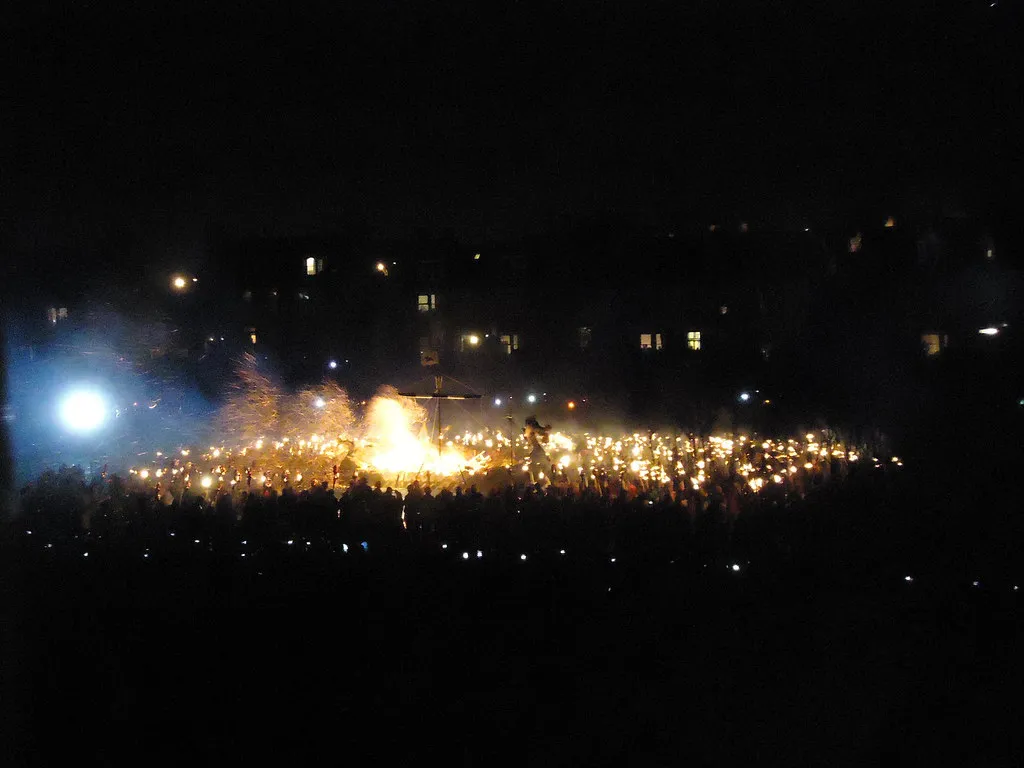
On the morning of Up Helly Aa, the galley is paraded through Lerwick's streets before being positioned at the Bressay Ferry Terminal for most of the day. This gives everyone — locals and visitors alike — the chance to photograph it up close before it meets its dramatic fate. By evening, it is moved to King George V Playing Field where it will be burned.
The Guizer Jarl stands inside the galley as it circles the park, leading a final round of singing before climbing out. Then every torchbearer throws their flaming torch into the ship simultaneously. The entire galley ignites within minutes. It is the most photographed moment of the entire festival — and worth every second of the cold wait.
The Guizer Jarl and His Squad
The Guizer Jarl is the leader of the festival and represents a chosen figure from the Norse Sagas. Becoming the Jarl is one of the greatest honors in Shetland — a role that requires 15 years of committee service before a person can be appointed. On the morning of the festival, the police symbolically hand over control of Lerwick to this Viking chief. The identity of his chosen Norse character is kept secret until the moment of the first reveal.
The Jarl Squad consists of around 65 members who all dress according to the Jarl's chosen theme. While the Jarl's helmet, shield, and armor are passed down each year, the squad crafts its own matching outfits — most are handmade or locally sourced in Shetland. The attention to detail in the carving and construction is extraordinary. Worth noting for 2026: since 2023, Jarl Squads are open to members of all genders, marking a significant and long-overdue change to a tradition that was historically male-dominated.
Even if you cannot visit during Up Helly Aa itself, the exhibition in the Galley Shed displays previous Jarl Squad outfits and past galleys year-round. It is the best way to understand the scale of craftsmanship involved in the event.
Other Up Helly Aa Squads
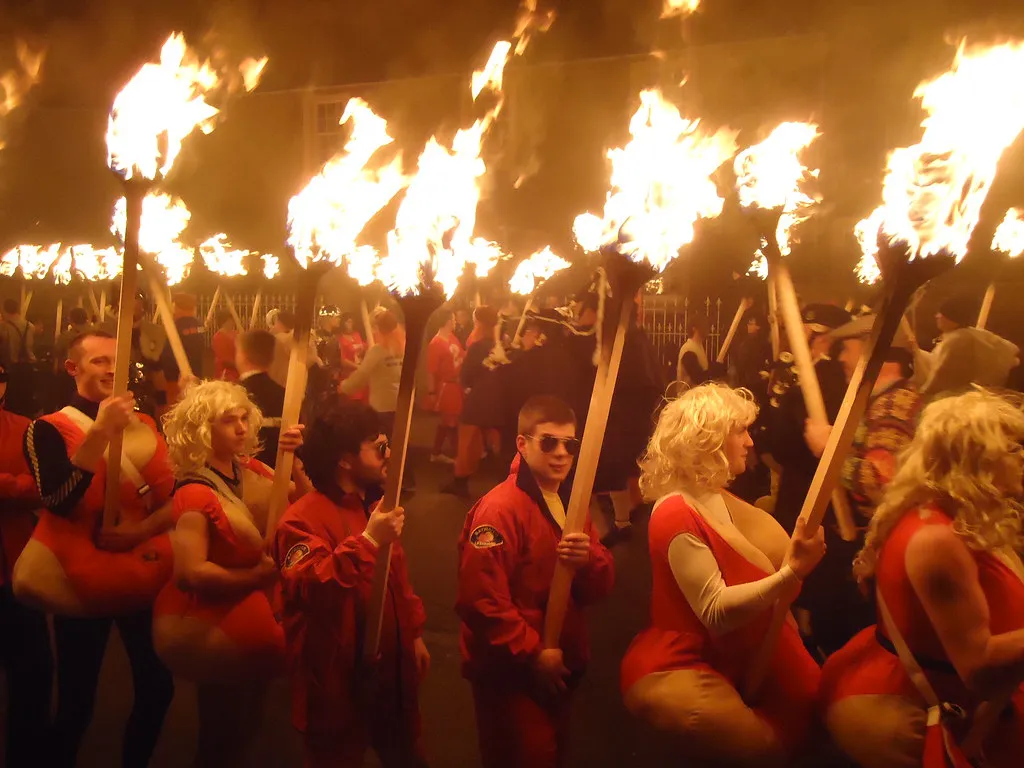
The Jarl Squad is not the only group in the procession. Dozens of other squads — each with up to 25 members — join the march, making up the roughly 1,000 torchbearers that fill Lerwick's streets. Only the Jarl Squad is permitted to dress as Vikings; this is a specifically reserved honor. Every other squad chooses its own theme and designs its costumes in secret throughout the year.
The range of costumes is extraordinary. Some squads go satirical, mocking local news or political figures from the past year. Others go absurd, choosing themes from pop culture, history, or pure comedy. When you spot participants in ordinary jeans and t-shirts during the procession, that is not a wardrobe failure — their actual costume is too flammable to wear near open flames, so they save it for the hall parties afterward.
The squads perform a short skit, song, or dance at each of the 11 halls through the night. Each performance is tailored to the hall's audience. This is the part of the festival that is hardest for visitors to access — but the most memorable for those who manage it.
How the Up Helly Aa Day Unfolds
The day starts at 8:20am when the Jarl Squad makes its first public appearance, marching through Lerwick's streets to the British Legion where the galley is waiting. Shortly after, the squad parades to the Market Cross, where the "Bill" — a large hand-painted proclamation — has been mounted for all to read. It is filled with local humor, inside references, and commentary on the past year's events. Traditional Up Helly Aa songs follow.
The squad then moves to the Bressay Ferry Terminal, where the Jarl climbs into the galley for official photographs. After the photographers finish, the public gets a chance too. For the remainder of the afternoon, the squad visits hospitals, schools, and care homes across Lerwick. There is also a ticketed meet-and-greet at the Shetland Museum — these sell out quickly, but it is one of the best opportunities for visitors to get close to the Jarl's Squad.
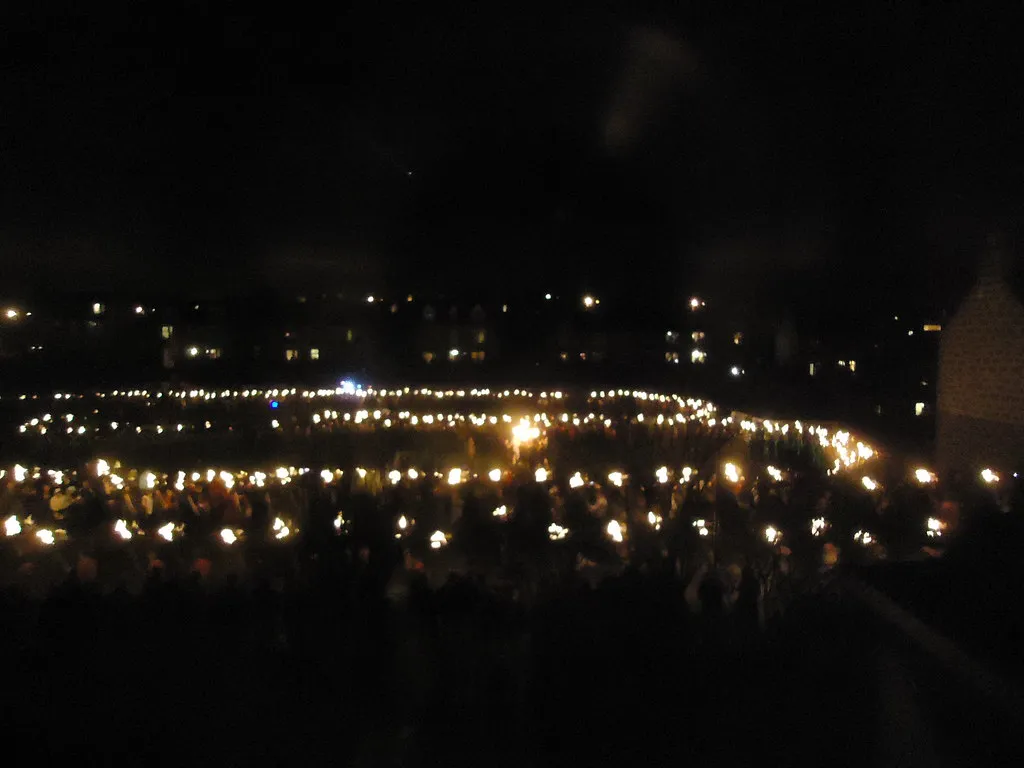
At 5:30pm, the Junior Up Helly Aa takes place — a smaller version led by local schoolchildren with their own galley burning. Attending the junior event is a practical move: it gives you a good position and a full dry run of the experience before the main event. At 7:30pm, a signal rocket fires over the Town Hall and the torches ignite. The main procession marches through the streets and ends at King George V Playing Field for the galley burning. Arrive at your viewing spot by 6:30pm at the latest.
The Real Up Helly Aa Party Begins
Once the galley is burnt, the celebration moves into 11 different public halls across Lerwick. Each squad visits every hall through the night to perform its skit or dance. The atmosphere is unlike anything else — fiddle music, traditional Shetland songs, elaborate costumes, and a community in full celebration. Locals party until 8:00am or 9:00am, and the day after is a public holiday in Lerwick specifically to allow for recovery.
Securing a hall ticket as a visitor is notoriously difficult. Most halls are private events that require a personal invite from someone already attending. The exception is Lerwick Town Hall, which sells tickets to the public — this is the one hall where visitors can purchase entry directly and guarantee a spot inside the celebration. Tickets sell out fast, so check the official Shetland's Fire Festivals website as soon as the event date is announced.
If hall access proves impossible, the town's pubs offer a lively and accessible alternative. Many stay open through the night and fill with guizers still in costume. This is much like how to experience Notting Hill Carnival — the official venues are the goal, but the street and pub atmosphere has its own energy worth experiencing.
Getting to Shetland: Ferry, Flight, and Whether You Need a Car
Reaching the Shetland Islands requires planning. The quickest option is flying with LoganAir from Edinburgh or Aberdeen — the flight takes about an hour. However, Sumburgh Airport sits roughly 25 miles from Lerwick, so you will need a bus transfer or taxi on arrival. Book flights at least six months ahead for the January Up Helly Aa window; seats disappear fast.
The overnight Northlink ferry from Aberdeen to Lerwick takes 12–14 hours and is popular with travelers who want to bring a vehicle. Book a cabin — the North Sea in January can be rough. The ferry arrives in the morning, giving you the full day before the festival begins. It also means you have transport on the islands without needing to arrange a hire car separately.
A car is not strictly necessary if you plan to stay in Lerwick for the festival only. The town center is walkable and the parade route is compact. However, if you want to explore Shetland beyond Up Helly Aa — the dramatic cliffs, the prehistoric site at Jarlshof, or the smaller rural Up Helly Aas — then having your own vehicle is a significant advantage. The island's bus network is limited and does not serve all areas reliably.
Find Accommodation for Your Stay
Accommodation in Lerwick sells out close to a year in advance for the Up Helly Aa week. Begin your search as soon as you decide to go — this is not a trip where you can book last-minute. Guest houses such as Norlande Guest House and Carradale Guest House are centrally located for the procession route. Lerwick Hotel offers more rooms and an on-site restaurant, though it is a longer walk from the center. Isleburgh House Hostel is the best budget option for groups willing to book a full dorm.
If Lerwick itself is fully booked, look at Scalloway or other nearby villages. Staying outside town means you will need a reliable rental car. Private home rentals sometimes appear on short notice — local community boards and social media groups in Shetland are worth monitoring in the months before the event.
Keep in mind that many local restaurants and businesses close on the day after the festival — Wednesday is a public holiday in Lerwick. Plan your meals in advance and stock up on provisions if you are arriving for a multi-day stay. Breakfast options in particular will be very limited the morning after the galley burns.
A Brief History of Up Helly Aa
Despite its Viking imagery, Up Helly Aa is a relatively modern festival — less than 150 years old. It grew out of an older tradition of tar barreling, where young men dragged burning barrels through the streets of Lerwick. The practice is thought to have intensified after the Napoleonic Wars, when returning soldiers brought back a taste for dramatic fire displays. By the early 19th century, tar barreling had become a regular but increasingly dangerous event.
In 1874, authorities banned tar barreling entirely after years of property damage and safety concerns. A more organized torchlit procession replaced it. By 1889, the burning of a boat had been added to the ceremony, and shortly after, the Viking theme was formally introduced to honor Shetland's Norse heritage. A Guizer Jarl was eventually appointed to lead the event, and the modern Up Helly Aa was born.
The festival has been cancelled only a handful of times — most notably following the death of Queen Victoria in 1901, during both World Wars, and during the COVID-19 pandemic. This is one of the best cultural and national festivals in Europe precisely because it is a genuinely living tradition, not a commercial reconstruction of something ancient.
The Up Helly Aa Exhibition and Shetland Culture
If you are visiting Shetland outside the January festival window, the Up Helly Aa Exhibition at the Galley Shed is the essential stop. It displays previous years' galleys, Jarl Squad armor, and detailed historical photographs. Seeing a full galley up close gives you a real sense of the craftsmanship and scale involved. The exhibition typically opens in the months leading up to the festival and remains accessible for much of the year.
Shetland Museum and Archives provides broader context on the islands' maritime history and Norse influence. The museum's collection explains how Old Norse shaped the local dialect, place names, and customs that still define Shetland today. For visitors arriving a day or two before the festival, the museum is an excellent way to understand what you are about to witness.
Local art galleries scattered through Lerwick display work by Shetland painters and craftspeople. These quieter cultural stops offer a useful contrast to the intensity of festival night. Many artists draw directly from the landscape and tradition of the islands, giving their work a specificity that is hard to find elsewhere.
Frequently Asked Questions
Can anyone go to Up Helly Aa?
Yes, the street parades and the galley burning are free for the public to attend. However, the hall parties require tickets which are very difficult for tourists to obtain. It is similar to how to experience Bastille Day where street events are open to all.
Is Up Helly Aa worth it?
Absolutely, it is one of the most unique and visually stunning festivals in the world. The combination of fire, Viking history, and Shetland hospitality creates an unforgettable experience. You must be prepared for cold weather and large crowds to enjoy it fully.
What happens during Up Helly Aa?
The day consists of morning parades, a junior procession, and a massive evening torchlight march. It culminates in the burning of a Viking longship and all-night celebrations in local halls. The entire community participates in the event through various roles and squads.
What do people wear to Up Helly Aa?
Guizers wear elaborate costumes that range from Viking armor to satirical outfits. Visitors should wear very warm, layered clothing and waterproof gear for the Shetland winter. Avoid wearing expensive coats near the procession as sparks from the torches can fly.
Experiencing Up Helly Aa is a bucket-list item for anyone who loves history and fire. The dedication of the Lerwick community ensures that the tradition remains authentic and powerful. You will leave the islands with a deep respect for the Viking spirit and local culture. Start your planning today to ensure you don't miss the next spectacular burning.
Free guide: Europe's Festival Calendar
A month-by-month map of Europe's unmissable festivals — with the best dates to visit each and a local tip you won't find in the guidebooks.
You might also like


Continue reading
More guides you'll find useful